Tag: mobile applications Page 6 of 10

Spotify Mobile: 3UK bundles with HTC Hero

A couple of weeks ago, I pondered Spotify’s impact on music business models and suggested that mobile may have a role to play in the monetization end of it (which is, unless you’re Twitter, an inherent part of a business model indeed). It didn’t take them long:

Today, the UK arm of 3 – always one of the more creative carriers – announced a handset (and not a bad one either) to be bundled with Spotify Premium (i.e. on the go and no ads): users will pay £99 up front, and then £35 a month for 24 months for a tariff including a Spotify Premium subscription covering both PC and mobile, 750 minutes voice calls, unlimited texts, data and Skype-to-Skype calls. Listen up: all bandwidth included. For a streaming service. Now we’re talking!

3 said that the Spotify Premium service was

worth £240

which suggests that they might want to stick to the £9.99 price point (which would surprise me). But then it is hard to tell which bit of such announcements is marketing and which actual price-setting for the sake of royalties and such like…

3 also said

that the deal with Spotify would extend to other products in the coming months, including 3’s mobile broadband service.

Again, I am curious about the price point: the way it is, it would be a nice marketing deal for Spotify but it could be said that not much was going for taking exactly that offer vs just signing up as it is already. A little discounted however (with the difference paid for by 3’s marketing department) might change the ball game altogether…

It’s all good though: I for one am truly intrigued by the prospect of having more than 6 million tracks (equating to, what?, 6 terabyte or so of music) on my phone!

And one little thing on the side: it is – again – an app and not the mobile web that they choose – in spite of bandwidth apparently not being an issue at all. It is thus another argument for the superiority (for the time being) of apps over mobile web when it comes to UI and input constraints.
Motoblur & Android Fragmentation: The Follow-Up

Yesterday, I blogged about Motorola’s Motoblur UI, which adds an additional SDK for its specific APIs beyond the standard Android stacks. I reckoned that this might mean more fragmentation, which would push it a step closer to the nightmare that was/is J2ME.

I received two quick reactions to this: one reader commented that this was only bad if you wouldn’t have good tools and compilers. To him (@tederf), I would respond that, while it is certainly true that good tools reduce the friction, raise efficiencies and alleviate overall pain, the smallest common denominator is always just that. In my previous companies, we used to produce up to seven or eight different J2ME builds in order to maximise performance of our games on the huge spread of handsets. Could we have done with one build? Probably. Would the result have been great? Almost certainly not!

Anyway, the more interesting reaction came from the good folks at Motorola themselves. They reckoned (via Twitter; they are @motoblur) that:

with all due respect, I feel you’ve misunderstood motoblur, and android fragmentation concerns are a wee bit overblown.

Now, now. I offered them a guest post here in order to explain this further. I have unfortunately not yet had a response (which I take, applying Twitter attention spans, as lasting silence). But I still wanted to use the opportunity to elaborate a little more on this (and, no, I will not lament Moto’s lost opportunity to feature their wares on this humble site).

To clarify a couple of things outright:

  1. I would be delighted would I be mistaken (and note that I am not a techie, so this is a distinct possibility!).
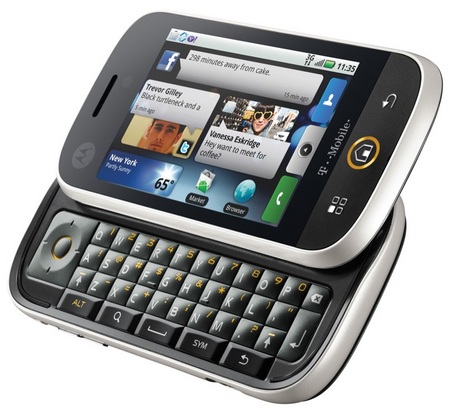
  2. I would be equally delighted would Motorola manage to regain some of its lost ground. The world clearly would be a better place with another strong manufacturer regaining old strengths (although maybe with better UI this time around – which Motoblur certainly seems to offer [see picture on the right of the Motorola CLIQ!).

But let’s go back to the general issue of Android fragmentation threats (the fact that I pointed this out – again – en cas de Moto is of course purely coincidental).

So let’s dive in: with open source software, there is always the intrinsic possibility that fragmentation will occur. Why do people customize it? Because they can! vendors, developers and operators that make up the Open Handset Alliance (which releases Android) can tweak is in whichever way they like (or “need” to) and for any number of reasons: to protect IP, to optimize performance on their network or for certain devices or simply because they feel they need some distinguishing factors, some degree of uniqueness. The result can be, however, as one analyst puts it that

there will be multiple flavors of Android, all of them incompatible with each other. That, in turn, necessitates different versions of each application or updates to accommodate the entire device ecosystem. On the whole, such activity negates the cost efficiencies inherent in the idea of a standard, open operating system, and potentially makes the Android Market a confusing place to shop for widgets.

And that’s what you call fragmentation. Interestingly, there were rumours that Google had made the Open Handset Alliance members sign “non-fragmentation agreements” but it seems that this is either not true or not enforceable.

Others point out that HTC, Samsung, Dell, Verizon, (may I add Motorola?) all have phones on the way that run on different software to the others. Reports of version conflicts, lack of backward compatibility, etc, etc. I mean, hell, there is even an “alternative” Android app store (with 223 apps as of tonight)… Sounds familiar?

Dear Motoblur, if it is different with your SDK, please enlighten us! I am sure I will not be the only one applauding!

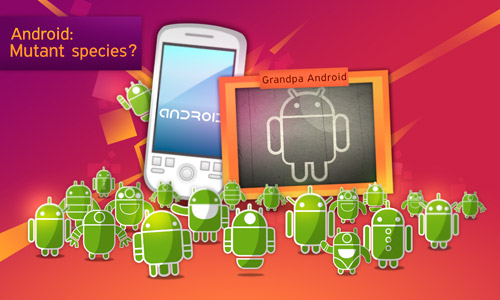
Image Credit: http://www.visionmobile.com

Carnival of the Mobilists # 195

Chetan Sharma’s blog Always On Real-Time Access is this week’s host for the Carnival of the Mobilists. This week’s edition features posts looking at mobile and social networking, mobile application development, 5 reasons why mobile VoIP has (so far?) failed, another iteration looking into the shortfalls of mobile advertising to date, a presentation on concepts and technologies behind real-time demand data, and last but not least – for all of us who weren’t there – a CTIA round-up. Lots of goodies, so go read it here.

More Fragmentation: Android & Motorola’s Motoblur

A new round of fragmentation looms. It is something I have been fearing for a while now: that OEM (and carriers) would make use of the open source of the likes of Android and LiMo to produce their very own flavour of apps. So after Vodafone’s 360 announcement (with customized LiMo storefronts, etc), Motorola announced so-called “signature apps” from a number of developers that are all delivered through Motorola’s new “Motoblur” user interface, which

is based on the Google-backed Android platform for mobile systems. Motorola [will] offer an additional SDK for its APIs beyond what is available for Android.

And then it said that

Over a period of time–we’re not there yet–we’ll allow the APIs to be available so people can develop many more applications than we can think of ourselves, but it’ll take us a little bit of time to mature ourselves to a place that we could open up APIs.

Ouch. An additional SDK. Which is not yet there yet. Whilst the Motoblur UI looks actually quite nice, this sounds suspiciously like another round of walled gardens, onerous internal and external QA, fragmentation and pretty much a fall back into the traps of the J2ME uber-customized world where one needs to support hundreds of devices for a commercial roll-out (with the trouble of course being that, all too often, that work meant that it would no longer be commercially very sensible). Oh dear…

It makes one want to call out for a quick advancement of HTML5 with Gears and all, so that one won’t need apps after all. The issue of connectivity and usability, etc would of course still be there. Such despair…

Enter One-Click on Mobile – Amazon & Handmark

Here’s a nice deal: smartphone content specialist Handmark integrates Amazon’s new mobile payments service into its mobile content stores. This includes, most notably, also the famed (and sometimes damned) 1-Click functionality whereby users can (just like on iTunes; Apple licenses the 1-Click patent) buy content with just one click. The store will then use whichever credit card they have previously entered. To mobile users, bruised and tired of multiple clicks and onerous navigation to purchase a single piece of content, this is a true piece of added value (and one that was often hailed on Apple’s benchmark app store).

From what I can see, Apple still leads in the fewest number of clicks but Amazon’s offering comes relatively close. Amazon’s service seems to offer a wider range of functions though: a user can pay, reserve, settle, run refunds, cancel, etc, etc, and, last but not least, a fairly established and recognized dispute resolution system, all through the Amazon API. Rather neat indeed! The transaction fees then are a dream for every mobile content provider: in the ranges customary for mobile content ($0.99-9.99), the fees range from 1.5%+$0.01 for Amazon Payments balance transfers to 5%+$0.05 for credit card payments. This, dear carriers, equates to a revenue share to the provider of 90-95%!

We will arguably see a whole range of app store providers taking this model up, in particular amongst those without a prior billing relationship. Carriers might be tempted to license the model, too, in order to facilitate the order flow (although I doubt that they will adapt the revenue shares, too): I would be surprised if Amazon could not adapt the back-end to integrate with a carrier’s billing module (although those commercial discussions would surely be interesting…).

It is a compelling case of transferring an existing brand with proven ease of use to the mobile web (where it will thrive first) and app stores the world over.

Carnival of the Mobilists #194

Ahead of CTIA later this week, this edition of the Carnival of the Mobilists is being hosted by Tsahi Levent-Levi on his VoIP Survivor blog. This week brings an incredible line-up of topics and contributors: A couple of posts on mobile advertising (including mine pleading for engagement as a crucial factor of ad success), the ideal app store, mobile learning and a whole host on the use of mobile apps in the workplace (including one with a Blackberry in a bakery!) and corporate environment in general plus a look on service and feature requirements for mobile phones in the developing world.

All very good indeed! So head over and set aside a good hour to read! You’ll find it here.

The Future of Advertising is in Engagement!

A lot is being said about mobile marketing, mobile advertising, capturing “consumer’s” imagination (if not only their eyeballs). And everyone says: “yes, I get that, social, mobile, always-on, always with them, cool!” Online ad spend outstrips TV already (at least in the UK), and mobile is arguably the next big thing; it is so much cooler, too: personal, accessible, always-on!).

So how do you execute? Banner ads? Text ads? Virals? “Ah, yes, virals are cool, I heard about them!”

There’s a busload full of mobile advertising networks out there, blind, premium blind, premium (check here for a great overview). And what do they do? Well, banner ads, text ads, the usual. Does it work? Anecdotally, sort of… Most developers and publishers I know that engage in this sort of activity make their money in two ways: either they are being commissioned by an advertiser to do it (good because you’re being paid!) or they use it as complementary (sic!) revenue; on a stand-alone basis, it would not feed them.

Why is the conversion not soaring? After all, mobile allows for unprecedented targeting (IF you do it. See here how not to do it): users have their phones always with them, it is always on, you can fall back on historical behaviours, etc, etc.

I would posit that it is because most advertisers still think of it in terms of consumers: beings that sit on the other (sic!) end of the message and who consume whatever I, advertiser, want to tell them. It is not, alas, true engagement, and this is where arguably the future lies.

So how do you engage? Many options. A good one is by being sincere (Zappos, the online shoe retailer that was recently acquired by Amazon, is a great example). Another one is by engaging rather than preaching. Not so easily done with banners. Easier done with something more interactive. Such as – an example – games and apps. On Apple’s app store, there are some great successes for this type of thing: German car manufacturers seem to be good at this! Audi did one, German developer Fishlabs did a couple of games for Volkswagen, Artificial Life for BMW, and then there is Waterslide Extreme, which is basically a Barclaycard ad (and badly executed: they could so easily have accommodated the RFID function, which the original cinema and TV ad is meant to promote; alas, they ignored it!) which despite its shortfalls was incredibly successful. But these are exceptions to what I think might well become the rule. On the app side, there are e.g. Pizza Hut and Gap that were recently featured (for free!) in Apple ads. Wow!

It seems obvious when you think about it: games truly engage (users – not consumers! – interact with them actively) and they can do so in a much more subtle manner (less invasive). At the same time, the user (not: consumer) spends a lot more time with the brand than with a banner ad.

It is, alas, a space of unknown dangers and unprecedented adventure: never-before seen creatures (scil. formats) and strange folks (scil. developers) roam weird landscapes (scil. mobile platforms). This is how brands and their agencies often experience mobile. They "get" it, don’t get me wrong but they are still fairly unfamiliar with it. And because the big pots of gold sit with the brands and they don’t want to risk cutting access, they’ll rather (and rather too often) stick with what they perceive as the trusted old paths. It’s not so good then that the freshest fruit grows on the trees in this new land and no longer in the wastelands of banner ads…

Watch this space then. It will only be a question of time (I hope) before we’ll be seeing a new wave of non-intrusive, interactive, fun brand engagement. And games and apps will lead the way!

Page 6 of 10

Powered by WordPress & Theme by Anders Norén