
Didn’t the world change and quickly? Only a few years ago, mobile games worked like a supermarket: if you have shelf-space, you rule. The early kings of mobile gaming 1.0 (which many users today won’t even know about) were the ones that “owned” the relationships with mobile operators (or carriers if you prefer that word), OEM and the like. Those relationships guaranteed that you would be in front of consumers. Those of your competitors who didn’t? Well, tough luck. Today, the picture is very different. There were a few waves since those early days: the Wild West days of iOS and Android (which didn’t happen simultaneously but with similar patterns), the rise and fall of the Zynga empire (and folks who thought that that approach would cure all [business] evils of gaming and, in its latest pattern, the rise of Supercell, Kabam and King and the scratching of heads (and lay-offs of people) in a lot of other gaming outfits.
So what’s this all about then? Now, I won’t be able to offer you the full Monty in just one small blog post (it’s bloody late already) but there are a few pointers that show both the opportunities but also the pitfalls of the whole thing.
Fun Matters
Ilkka Paananen is the CEO of Supercell who are, arguably, the undisputed money-spinners these days. $2.4m/day is their benchmark, and that was a while back. In Q1/2013, they made $179m in revenues and $109m in operating profits (or so says the FT). Their two (!) games ride comfortably in the top-5 of the top-grossing charts of Apple all around the world, sometimes #1 and #2, sometimes #2 and #4 but never far off… When asked, Ilkka (who is as nice a person as you’ll ever meet) will always tell you that fun is what matters first and foremost (and I reckon this is what young master Pinkus wishes he had known earlier…). Ilkka managed to combine a dream of the free-wheeling nature of the likes of Valve, Inc. with the experience he gained in running as tight a ship as Digital Chocolate who, from the olden days of mobile gaming, were amongst the ones who had perfected the tightly-strung mastery of processes and engines. The result were – now famously – a number of canned projects plus two of the most profitable games (on an ROI basis) produced ever.
Alas, Ilkka will tell you that fun matters. If your game is rubbish and no fun, no one will like it, at least not longer term. Some earlier appstore succresses might have wanted to take note… It is an important bit to remember though: games are part of the entertainment side of things. And entertainment is about fun. No fun = no (long-term) success. There is only so much conning you can do…
Marketing is Part of Design
In the olden days, you had developers and suits. The former had grand ideas and the latter were a pain in the rearside. The success of a game always was due to the former and the success was always claimed by the latter. Now though, even the geekiest of developers has realized that you need to market efficiently if you want to be successful (which also means that your company has a chance of survival). Here’s a post you should read in this respect (it is a bit patronizing but there is a lot of good – if harsh – insight there nonetheless).
Building Brands is Cool (and Hard)
So, let’s go and build a brand, right? Because then we can replicate things, right? I mean, Rovio did this with Angry Birds, right? Yes, they did. How many others do you know who did? Not very many, right? Because, you know, it is not easy. Many tried (and are trying). Many see some traction. None I know of have had counterfeited bobble hats sold in San Francisco so far (yes, there are hand-knitted Angry Birds beanies on sale every weekend at the farmers market at the Ferry Terminal in SF! No, I haven’t seen beanies of the Cut-the-Rope frog yet…).
If you can get it right (and there is some magic (and hard work required), building an entertainment brand is insanely rewarding (just ask Walt Disney, George Lucas, Stan Lee, etc.). However, it is also very hard to do. And it is not for the faint of heart. So think twice… Oh, and hire the right people (two of Rovio’s rockstars just started his own thing in this realm. Go, Andrew!).
Those Bloody Whales
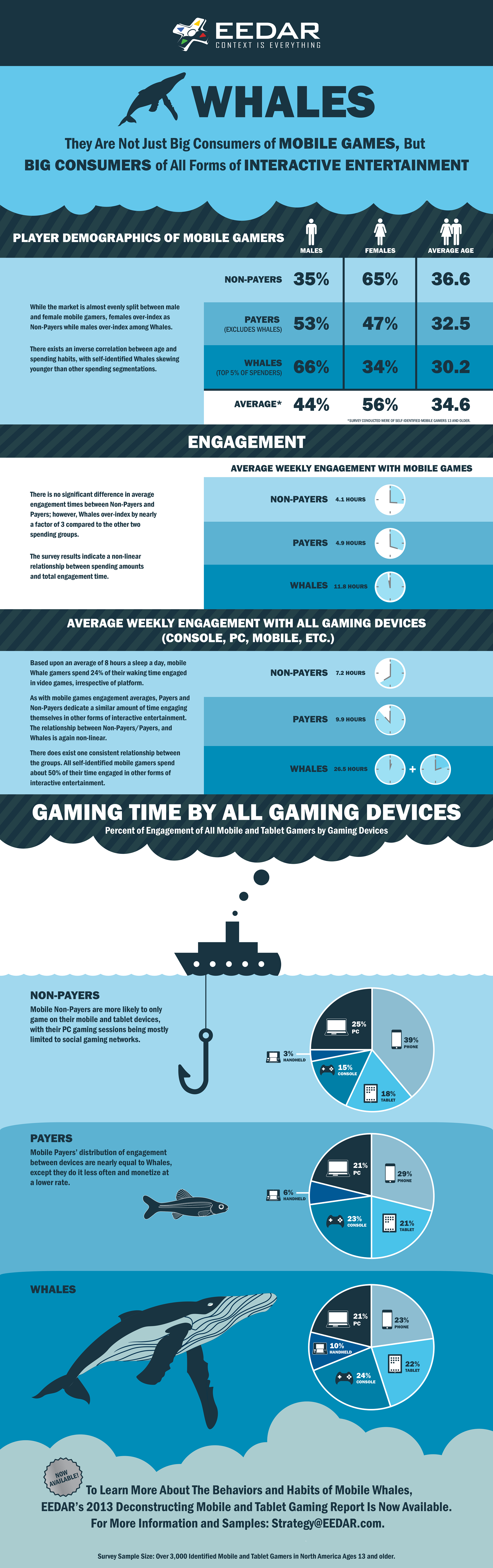
There was a time when only one-legged near-pirates hunted whales. Nowadays every game developer and their dogs (or cats or rats or pet hedgehogs do). According to Forbes, here’s (well, below) is why. Those are the folks who bring in the money. By my reckoning, the numbers Forbes calls out are not actually the industry benchmark but – perhaps – an averaged out number. This means that, if you’re good at what you do, you should be pulling in a lot more than what their article has you believe you should. And that is something that can be a little daunting. So, kids, there goes your easy career in game development…
Before I link to this Forbes thing then: it is not easy, mind the fun, get some kudos to them suits and be in for the ride… 😉
Here’s the Forbes article (from which I copied the infographic below and where you can get the fully scalable version).
 I signed up for the pre-order of the


 So here’s the mother of all IPOs then, and it was coming a long way. The web was buzzing, today analysts of any couleur are commenting and reading through the fine print of
 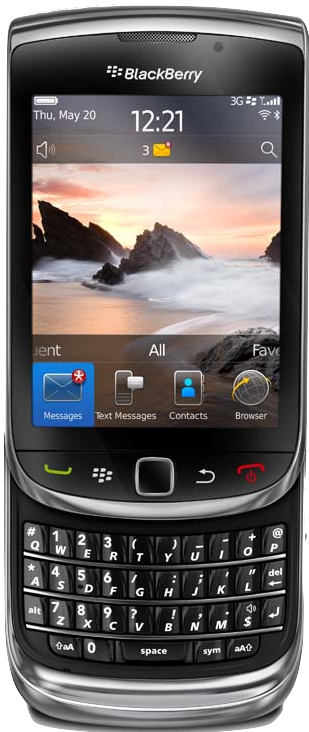 Quick recap: I was looking at device options (the contracts I tend to be on are unhealthily big, which normally gives you a free device on top of it, and why the heck not). Since I already have an iPhone (3 and 4), a Google Nexus and various Nokias, I thought what next? Do I try out another Android device? Do I give Windows Phone 7 a go? Or do I return to my old love, Blackberry. And the last one won me over. So I fell for it, and went with the brand-new
 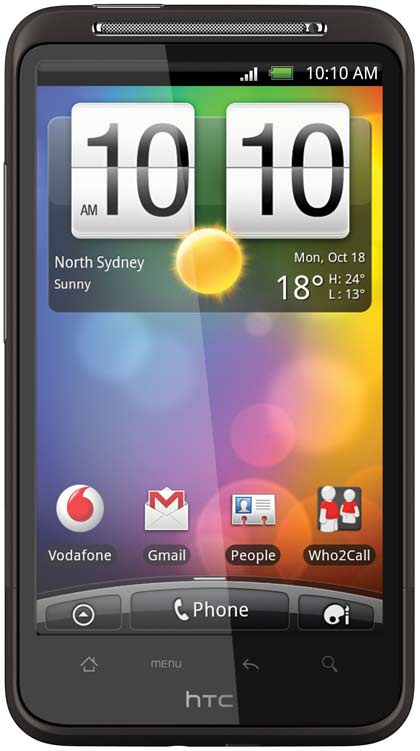 So – you probably guessed it – I gave it back and exchanged it for an HTC Desire HD. Only a couple of years ago, this would have been unthinkable. Not only was I a fairly die-hard Blackberry fan but to replace a Blackberry with a Taiwanese newcomer handset? Voluntarily? Noooo! However, it is gorgeous (besides being a bit of the big – no, really big – side). It does all the things that so frustrated me on the Blackberry so much better. Well, slicker at least. E-mail set-up is a breeze for Gmail but only a little less onerous than on the Blackberry for others (and, yes, the QUERTY does help for weird password combinations), but, once done, it works really well. And then, there’s of course the little things: 8 mega-pixel camera with stunning quality (although the lens sticks out a little at the back, which might be not so good), comparatively wholesome goodness when it comes to apps (in spite of the shortfalls of Android Market), heck, it synced all my apps from my Nexus automatically. And, Apple get this, it adds little raindrops (and a windscreen wiper) in one quick animation should it rain where ever you are (which, in England’s North-West, it does quite a lot, I’m afraid). Sweet! Browser works beautifully, maps come with proper satellite navigation on par with dedicated devices, and so on, and so forth.
 Every now and again, war breaks out on the web. Or, rather, a full-on discourse of learned scholars on the world at large or, in our case, mobile in particular. This week saw one such blog fights and, no, I am not talking about Wikileaks. The formidable Robert Scoble (he of recent
  Scoble first, he, never shy for words, delivered a swift and damning verdict on Nokia: Illustrated ventured Eastwards again to LeWeb last week and took stock of Europe’s smartphone pulse.he reckons that Nokia is dead because none of his friends has one or, if they do, they don’t like it. People pile up in Apple stores and wax lyrical about the apps they find on the iPhone and iPod Touch. Nokia is arrogant rather than cognisant of its shortfalls and he has not recently heard of a strategy. The people (and/or Scoble’s friends) love iPhone. Case closed.
 It’s always a little more difficult to summarise Tomi’s posts as he doesn’t do quick ones. Who knows him is aware that he is a big fan of numbers, of big numbers, in fact. And this is why he hangs on to Nokia: because, you know, their numbers are big! His original post goes – very, very simplified – like this: he sets off to compare Apple with Porsche (as opposed to, say VW). He didn’t reference
  And here’s why (hint: Tomi did get it right but then got carried away on the Finnish ticket): Tomi nailed it in his first post when he compared Apple to Porsche. Apple is not (or not yet?) competing with the Volkswagens and Toyotas of the mobile world. Now: in the automotive world, Porsche failed with the big coup (but, let’s remember, only just!). Apple might yet pull it off. The starting point is not dissimilar: super-high margins, a very comfortable lead in the luxury segment and loads of cash. Porsche over-reached (driven by a perhaps over-zealous ruler). Apple might, well…
 You hear it often (most recently by
