
 All the way back near when it was founded, I wrote a post about giffgaff, an MVNO with a twist running on (and actually owned by) the UK operator O2 (which is of course now owned by Telefonica). The twist with giffgaff is that it termed itself as being “people-powered”. Nice buzzword, huh? When I wrote that post, it was pretty much on the basis of early news, PR and not much more. Now, though, I know better what it is because, you see, I just swapped the phone deals for my two children over to giffgaff (away from Vodafone where they were on a 30-day-rolling contract).
No Frills
So, here’s what it does (and, more significantly, doesn’t): giffgaff doesn’t have shops, it doesn’t have sales reps, call centres, etc. In other words: it doesn’t have much overhead. It does have a network (not its own, it piggy-backs on the mothership, i.e. O2), simple tarifs, very low prices and the quickest way I have ever ordered any phone product online.
Beating the Power Law of Distribution (?)
But how, do you ask, can they run a network with all its customer queries, moans and whining, small and big problems? And that is exactly where I originally voiced concerns: You see, they use fora instead. If you have a question, just post it to their forum and the users will answer. According to the power law of distribution, this is a tricky one as only very few users contribute a lot and most contribute nothing. However, by the looks of it, they answer a) more quickly and b) more competently than a poorly paid, poorly trained, probably somewhat frustrated (whatever happened to the glistening career) call centre worker. The MVNO has a programme for users encouraging to participate in the community. They will earn points (convertible in additional phone credits) for spreading the word (marketing) and helping out other users on the fora (customer service).
So (and here’s a theme for me): giffgaff effectively used some basic tools from the social and commercial toolbox to drive customer acquisition and customer service: incentivise people and, in doing so, make sure you align their commercial interests with your own.
And whilst there seem to have been growing pains, it seems to work more or less really rather well. And all this for £12 per month for a “bucket” of 250 minutes, unlimited texts and unlimited (!) data. Can’t beat that!
Is There More?
This then got me thinking: what if they would expand on this bucket (and, perhaps, forum) ideas and start customizing them for the more “discerning” user. Something for SME for instance, travelers, professionals, etc. Higher bucket prices but better tailored for business needs. Premium buckets for, say, dedicated concierge services (the crux is that the customer service required for that is quantifiable and directly accountable). With the basics still covered (cf. supra under “No Frills”), it should still be possible to run the basic service at similar margins (and note that I assume that they have positive margins) but start building in the fatter bits of the market in return for the higher reliability, security and no hassle that business users require. The thing is, you see, they do not require tedious and generally hopeless customer service over phone lines you have trouble even finding or reaching (20 minute waiting time is not rare as we probably all know).
Such a service would probably not for everyone but. You would have to be comfortable to transact your business online (but more and more people – and, yes, probably 100% of readers of this blog – do so anyway), you would arguably have to have at least a basic understanding of some tech issues (again, cf. supra) but, hey, you would be targeting the growing part of the economy, i.e. the one that either is purely digital or successfully leverages (terrible word, I know) digital outlets for its business. Bingo!
There Are Blueprints Galore!
 Come to think of it: it is exactly how so many of the online stalwarts disrupted traditional businesses. And it seems almost ironic that this has not yet happened in an industry such as mobile telecoms! Amazon (first books, now almost everything), Zappos (first only shoes, now part of Amazon and, well almost everything), eBay, PayPal, First Direct and any other number of online banking services), Charles Schwab, eTrade and those folks (stock trading), Okado (groceries), Money Supermarket, confused.com, etc. (insurance brokerage), etc., etc., etc., etc. Virtually all e-commerce business models rely on realizing higher efficiencies through digital scale combined with lower overheads.
And virtually all of them originally were told that this was a niche for a few, that only geeky people with no money would use it. And in virtually all those cases, the doubters were wrong. So, then, O2, let your “gaffer” (that’s the title the giffgaff CEO goes by) lose and go for it. There’s money to be made (and I might just be persuaded to leave Vodafone, too).
To the others (Vodafone, are you listening?): it’s not too late. Get in whilst you can!
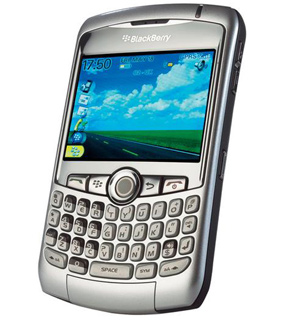
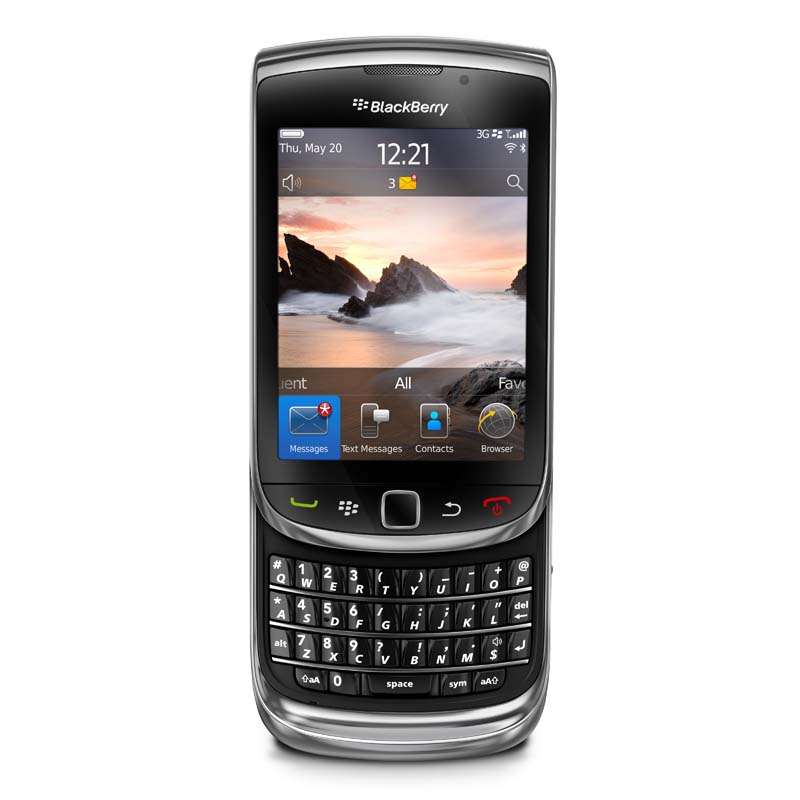 Step 2: tariffs. With an unhealthy amount of traveling abroad to do, my main cost item on phone bills regularly is data roaming, so this is where my sensitivity lies (because of the eye-watering bills I regularly get, I am not bothered about 600 or 900 UK any-network minutes costing £5 more or less), and it became clear quickly: Orange, T-Mobile and 3 are out of the race (their charges are even higher than O2’s). Vodafone looks good (about 1/3 of O2’s rates) but O2 claims to still have their Blackberry tariff for international data roaming (although I struggled to find it on their website). Now, THAT would bring my bill down by a cool £150-200 a month or so. Enter Blackberry. The
 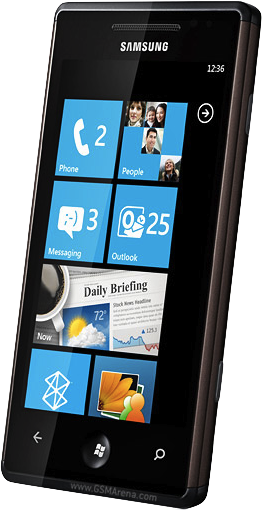 And then I started to compromise: anything exclusive to Orange, T-Mobile or 3 was out of the question (because data roaming is pretty much a killer for me), which boils it down to Blackberry and O2 or any of the others on Vodafone (which would mean that I couldn’t get what started being my favourite, the Samsung Omnia 7). Hang on: I compromise over some shoddy pounds? Is the handset then not so all important as one might have believed when reading all those blogs, news blitzes and tech publications over the last months?
 It’s been looming and was long expected but today Vodafone
 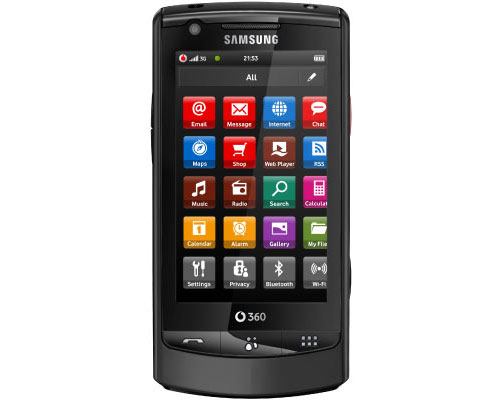 Anyway, back to Vodafone. They have realised (and, credit to them, admit it!) that a vertical implementation where you only get the full scope of 360 services if you have one of two phones doesn’t work. And, well, that’s somewhat obvious, isn’t it? Or is it a reasonable assumption that all my friends will all of a sudden (and at the same time) exchange their various handsets for a Samsung M1? No, I thought not either.
 On a sideline: I will be moderating a panel on “How to Make Money as a Developer” this week at
  Quick facts: I am an iPhone user. I wanted one, I am based in the UK. What to do? Switch to O2, which had the exclusivity for this. This post is not about bandwidth, 3G availability or anything like that – I have not (much) to complain about this actually. It is not about the iPhone either.
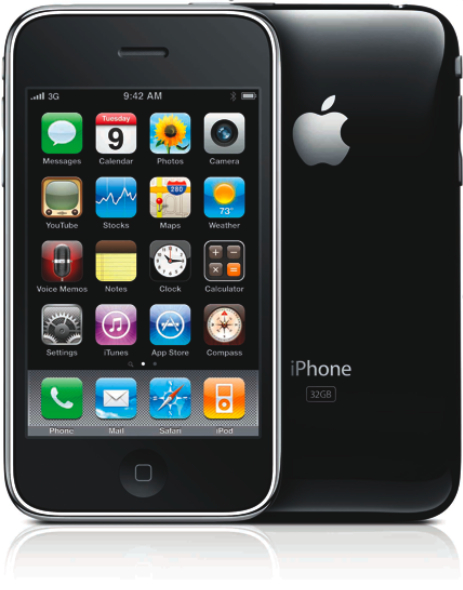 Back story: I have an iPhone 3G on a £45/month plan, which gives you countless voice minutes and lots of SMS and unlimited data – in the UK that is. In short, I do not normally have to pay anything for (UK) calls and texts, hence the tariff. Now, if you dare travel with your iPhone, you’re in for nasty surprises. The only thing O2 UK has to offer is slices of 10 or 50MB of data for some hefty sum.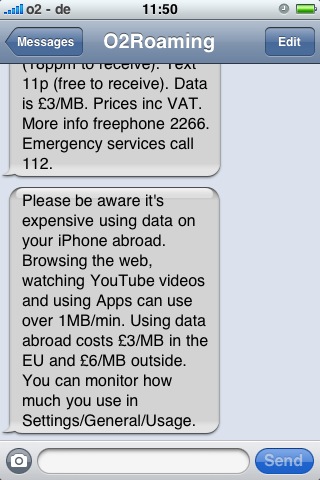
 We live in a world where sharing has become an It-word. Contribution, engagement have all fast become pinnacles of every marketing expert’s arsenal.
 The network is a good (?) old-fashioned solid one, namely from O2. But that’s where it ends. Sales, marketing, customer service, brand development and the general business decisions will apparently all be made (or at least proposed or advised on) by giffgaff’s own users. I already found an entry in its forum calling for users calling for two rotating board-seats for users (though that will probably remain to be seen). giffgaff does have a gaffer (CEO in old-fashioned corporate speak) with a back-room (management team) overseeing the whole thing (and that team,
  After the
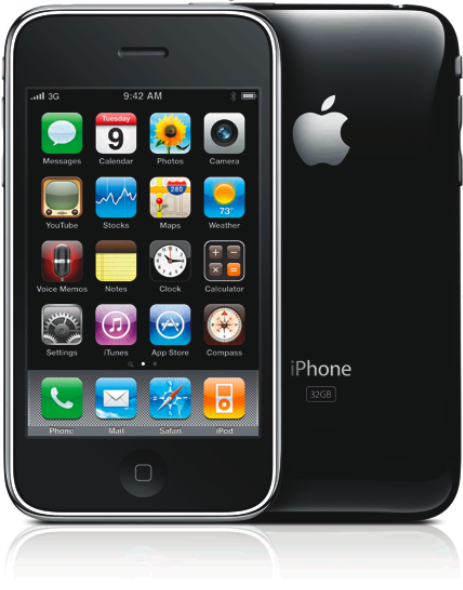
  The all-the-rage iPhone (can someone please come up with a worthy competitor, please, so we have other things to talk about, too?) is said to be increasingly the businessman’s (and woman’s!) phone of choice.
 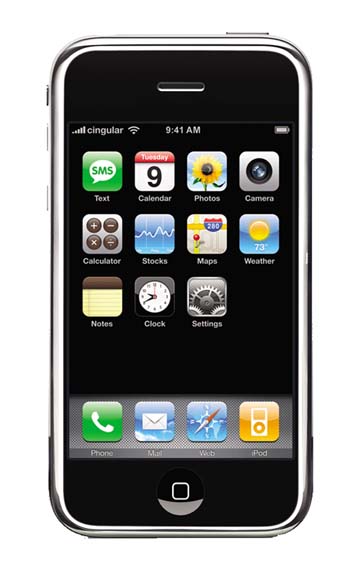 I am not sure how it is elsewhere but in the UK where O2 holds the reigns on the iPhone, it appears that this might only be true for the ones that work for very generous employers (or those whose IT departments are not very cost-conscious) or that have only domestic businesses to pursue. Because when one attempts to make one’s iPhone travel-proof (and, remember, the data usage is what makes it such a delight!), you get somewhat of a rough awakening: transferring your all-you-can-eat data plan to international territories, fail. No such thing. No can do. The only thing one can do is buy a data packet of either 10MB (for £20) or 30MB (for £50). And this even though I am on one of the dearer packages on offer.
 Now, would I own a Nokia N-97 with a Vodafone contract, I would