Tag: iphone Page 9 of 16

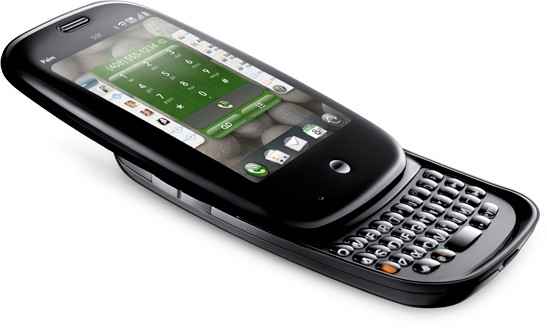
Palm Pre syncs with Apple, and more!

Palm came out with a bit of news that reiterates the old wisdom of joining who you cannot beat. The Pre will apparently be able to sync with Apple’s iTunes and iPhoto apps. Apparently, the Pre makes iTunes think it is an iPod or something. The whole thing apparently fails on the DRM side, so no “old” iTunes for the Pre then… What Apple will say to this? Well, that remains to be seen. They surely won’t be happy. But on the other hand, they will probably want to avoid any in-depth tussle over the question of their proprietary software, monopolization and all.

We also learned that, because Palm Executive Chairman Rubinstein is an old Apple hand, “the engineering culture at Palm bears some similarities to [Apple’s]”. There you have it.

But the Pre is doing even better on the music front: its MP3 player includes onboard support for Amazon’s MP3 Store. Files are downloaded directly over the air to the device. Now that’s pretty cool!

More coolness comes with search: the Pre searches, and then – if you want – it searches some more, in Google, in Twitter, … Neat, very neat!

Now, on to the app store. Oops, it is called “web catalogue” at Palm. How many apps at launch? Um, “a dozen or so”… Ah…

So will it succeed? Of course it will: according to Roger McNamee, managing partner of principal Palm investor Elevation Partners, all iPhone users with expiring contracts will switch to the Pre at 4.25pm. There you have it, again!

Android Wave rolls in

No, this post will not muse over Google’s new Wave announcement today. I rather wanted to give a brief update on the wave of Android devices that is promising to roll in over the course of this year. I had posted on this before (e.g. here and here), and Google, at its Google I/O developer conference gave a hint (yes, funny enough through Yahoo! News…) on the size of the deployments we can expect this year. And its not bad at all: 18-20 Android phones this year tells us Andy Rubin, Google’s Sr. Director for Mobile Platforms. The article then goes on to quote a number of analysts on earth-shattering insights but let’s leave these aside.

Android’s advantage was always going to be two-fold:

  1. As an open-source platform based on a Linux kernel it would be a) cheap and b) stable. This is invaluable for handset manufacturers as it reduces their development costs for new handsets significantly. I have no hard numbers but the rumoured ones are fairly high…
  2. Because it is a stand-alone OS rather than a combo of hardware and software (as the iPhone or – at least for the time being – Blackberry devices are), it will be used and deployed by a plethora of manufacturers rather than only one. And, well, this results in many more devices in the market (think MS DOS vs. Apple OS).

And this is now starting to show…

In terms of increase of “smart” phones (and these will, I would suggest, in the future include models we would today class as “feature” phones) this is seriously good news. How a slick and versatile operating system can spurn extended use of a mobile device beyond voice and SMS was impressively shown by the iPhone (8% smart phone market share equal 43% of web requests). Others are catching up (cf. here and here) and the more is the merrier when it comes to providing devices consumers actually can use. Avoid the term of “educating the consumer”; the consumer is quite educated but if people need a customer service helpline to even open the box (courtesy of a cider ad in the UK), one must not be surprised that people do not use it. Ease of use rules and well-made operating systems support that.

Are you Smarter…?

mathbordThe sales power of the Apple App Store is legendary with its 1bn+ downloads in record time. I have repeatedly held though that the other end of this ecosystem, i.e. the entry door to the app store (and related SDK and all) – and its relative ease of use – was an equally imporant contributor to Apple’s success. And now we have a beautiful example on how cool this really is: in Chicago, an 11-year old and his 9-year-old brother designed and programmed an application called “MathTime” that has just gone live on the app store. It provides random addition, subtraction, multiplication or division problems and their solutions.

The creators, Owen and Finn Voorhees, worked on it for 9 months and it is now live on the app store, which means available for sale in every country the iPhone is currently available – on deck so to speak! Try this with a J2ME app…

Now, I do not want to belittle Owen’s efforts (it is spectacularly awesome for any 11-year-old!) but this would arguably not have been possible on any other (mobile) software platform. Even if some smart kid might be able to write such a programme. To get it into live distribution on official on-device app stores (or operator portals) would be just utterly unthinkable. Try close those deals with all them operators. Good luck.

I have not seen the MathTime in action but since Apple approved it to go live, it must have passed at least certain thresholds. The whole ecosystem on any of the “classic” carrier channels would have thwarted any attempt to do the same. Would it have worked on Android Market? On the Blackberry App World? Nokia Ovi? I don’t know but it does not really matter since they are basically only further iterations of the model that Apple came out with first: a cr0ss-carrier, multi-territory, single-SKU deployment channel with a fairly regulated development environment. Fragmentation? Hah! Multi-channel distribution? What?

It is here where we should sing Apple’s praise: to make it possible that 5th graders can not only write but publish an application is truly stunning! That their dad needs to front it as the seller for being the only adult involved in the process is then only a touching and even more pronounced little detail, isn’t it?

Palm Pre & iPhone: O2 wants it all

o2_logo_no-bubblesO2 has won the exclusive distribution rights for the Palm Pre in the UK it is reported. This is noteworthy as the carrier also is the exclusive distributor for the iPhone in the country, so putting the iPhone “killer” next to the ubiquitous uber-smartphone might be a bit of a daring move? Or is it? Let us bear in mind that there are a lot of voices that caution about the operators’ for the iPhone: huge average data consumption on flat rate plans is not likely to drive ARPU. Apple managed to break the old operator model by taking chunks of the revenues realized through its devices and it does not share in any content sales. Apple does not allow anyone to put their brand onto its device (I am struggling to find any O2-related information on my iPhone, and even I think they might have taken it a bit too far… So, the Palm Pre deal actually does a couple of things:

  1. It gives O2 a shot at what might (or might not) be the next big thing (although analysts expect that – at least initially – sales will be much lower than for the iPhone: “Its going to sell principally into the base, to existing Palm owners and existing Sprint subscribers”).
  2. It allows O2 to put a little more leverage in its relationship with Apple. Having a device on its roster that has a powerful specs, an appealing interface and something like a cult following (although the cult appears to being a smaller one than the one of the Apple fashionistas) would help O2 in future negotiations.
  3. If (or when?) the exclusivity period for the iPhone ends (which commentators expect to happen soon), O2 would have another uber-cool gadget exclusively (I for one swapped over to O2 to get my hands on an iPhone).

So whilst few people do not know much, the combination of the above provides any number of good reasons for O2 to go for the Pre (assuming the business model agreed with Palm is not too bruising; but one can expect Palm, which has to fight its way back into the market, to be slightly less demanding than Apple), which promises to being a fairly cool device indeed: besides having a lot of all the things the iPhone has (touchscreen, multi-touch, cult following) and some more (QWERTY-keyboard) it beats Apple on home court: take Apple’s aversion to cables, the Pre doesn’t have to be “plugged” into anything; you just place it next to its touchstone charger and it charges by magnetic induction. Steve Jobs will be fuming about this one… oh, and it runs 15-20 apps simultaneously. The one question might be: which apps? But, hey, let’s see where they’ll get to…

Handset Choice: Ease of Use Rules!

A lot of iPhones later, the industry now also has it black on white: Ease of use is the primary reason influencing the choice of a handset for users. Or so we are being told. It is not that surprising, is it? Here’s the top answers users gave on what they look at when buying a new phone. It is taken from 1,500 interviews that were conducted for Nuance, a top sponsor of MEX (which is, you guessed it, a conference on Mobile User Experience).

So any vested interests aside, here’s the top results:
  1. Ease of use (69.0%)
  2. Screen Size (61.4%)
  3. Coolness Factor (61.1%)
  4. Camera (60.8%)
  5. Range of Accessories (58.4%)
  6. Keyboard (58.1%)
  7. Battery Life (56.6%)
  8. Music Playback (50.9%)

Vodafone's App Store: Bigger than Apple?

It was only a question of time before the first carriers would release themselves from the iPhone-imposed stare and come out all action, and the biggest of them all (by sales), Vodafone, has now raised the curtains on its very own app store. It is the biggest app store to date: Vodafone has more than 289m customers who will – eventually – all be able to access the store (which makes it a cool 8x or so larger than Apple’s). Unlike on Apple’s App Store, you also do not need a credit card (which, however, you are likely to have anyway when you can afford an iPhone) whereas Vodafone, being a carrier, will bill to their customer’s phone bills directly. Very, very cool, huh?

So imagine the power of an app that would go live on Vodafone’s carriers all at once. But before we get carried away, let’s have a look at the numbers:
Orange UK (in its recently released Digital Media Index; see here) suggested that 4.87% of its users downloaded one game in 2008 (770,000 downloads p.a./ 15.8m users) but this is without an app store but with the traditional catalogue-style offerings.
For Vodafone Group, this would equate to 38,500 downloads per day (289m x 4.87% / 365). If (or when) it includes this offering beyond its own 27 local carriers to its 40 network partners (including Verizon Wireless!), one would be looking at North of 1bn users and, hence, 100,000+ downloads per day. Now, with an app store, this should – theoretically – be further boosted, let’s say doubled, arriving at 200,000 downloads per day.

How does this compare with everyone’s darling/nemesis (delete as appropriate), the iPhone: I had previously calculated that Apple’s app store sees some 4,000 per minute or 5.7m per day… This however includes all those free downloads (about 22% of all apps are for free), so let’s say the ratio is 1 paid: for 40 free (which is on the high end of assumptions) or 1:15. This would equate to 144,000 to 380,000 paid downloads per day. So Vodafone’s 200,000 wouldn’t look completely out of order, would it?
There’s even more: Vodafone’s decision to bill to the phone bill is only one potential booster since it minimizes friction for the user (Apple: credit card/iTunes account, Blackberry: PayPal, Nokia Ovi: a mix?, etc). The other – and longer-term potentially even bigger one – is geo-awareness: since Vodafone owns the network, it knows where any of “its” users’ mobile is at any given time. Now link app usage with geographical location and you could be on to something fairly unique. There is little in the market so far but then: had Apple run its campaign of “bettering life’s little problems” in June 2008, it would have looked fairly bleak, too!
So: huge potential but where are the pitfalls?
There’s UI and handset fragmentation, if I dare say so. Even though it probably hurts by now, let me repeat: Apple has one model and one deployment method and it nailed content discovery (not perfectly but better than anyone else). Job done. Vodafone has hundreds of handsets on its “to be supported” list. Some are like the Porsche’s of their trade (“first available on s60 devices“; ooooh), others are the equivalent to a pedal-powered toy car. The costs for developers to support all these is significant, the cost of management is arguably, too.
Most importantly though, it takes the simplicity and thus ease of use out of the game. And I would posit that this is a big contributor to the (Apple) app store’s success: simplicity from entry (ingest an app into the store), management (price, etc) to consumption (download and active use). This will be a tough one for Vodafone to overcome, and it is indeed the one point where OEMs have much better opportunities to “get it right”. That the relationship between carriers and OEMs is not always without strain has only recently been proven again, sooooo: the jury is probably still out on that one.
Having said this, Vodafone is better positioned than most carriers though because of its sheer size and footprint. Smaller carriers might struggle to offer developers similar incentives to support their respective offering because they don’t scale as well.
For Vodafone, I am concerned that the multi-level complexities they have to deal with (number of handsets x number of operating companies x number of languages x all additional info [geographical and otherwise]) might pose a strain on its ability to roll out quickly and decisively. It might not be as huge and life-changing as Apple’s app store but it would certainly lift the “mainstream” of app downloads to whole new level. I am an optimist, so, come on, Voda!

Android to grow 900% in 2009

There are reports and there are reports. From the latter category, we are being enlightened with the latest growth predictions for Android and they come out at a whopping 900% for 2009, compared to “only” 79% for the iPhone. The report does not hide the fact that the calculatory basis may not be fully comparable as it is expanding from a low base.

Moreover though, when looking at the models applied by Apple and the Google-led Open Handset Alliance, these are quite different and it is therefore to be fully expected that Android-powered handsets will overtake iPhone numbers sooner rather than later. Would they not, it would simply reflect on extremely poor performance: Apple has always applied a model that combined hardware and OS: both came from the same mould and from one hand. This is a huge contributor to its superior usability: it can be woven in a seamless way.

However, on the other hand, this is also what arguably cost Apple the war over the desktop: Microsoft-powered systems grew exponentially, last but not least because the OS was available on hardware from any number of manufacturers whereas Apple’s OS was only available on, well, Macs. The same applies now to the iPhone. Apple’s one product that bucked that trend was the iPod, which commands an impressive share around 70%. This however is the exception rather than the norm. And it is unsurprising, too: it is extremely unlikely that one manufacturer and the limited number of models it can bring out will be able to cater to the needs and tastes of any number of people and demands equally.
The above does of course not mean that Apple did much wrong: the model seems to be working beautifully. The app store might only have contributed $20-45m or so in profit (or revenue?) to Apple (which is not that much considering that this is the harvest from more than 1 bn apps) but it also sold 13.7m iPhones and 22.7m iPods in 2008 alone, and this will have contributed nicely. Now, take this together with the Mac boom (which still only equates to c. 10% market share), which arguably is partly to “blame” on the popularity of iPhones and iPods (many users will experience the legendary UI only on one of these devices), and you have a good company.
The Android model is the opposite of this: here, a large number of companies get together to build an OS, which can then go (and be customized) on a myriad of devices from a myriad of manufacturers. At the start of the initiative, it was Google and 34 others, including China Mobile, KDDI, Sprint, TIM, T-Mobile, Motorola, Samsung, HTC, Intel and eBay (cf. here). Today, the alliance boasts (if I counted correctly) 47 members. As per the above equation, it would be very surprising if the numbers from this model would not exceed the ones from Apple’s. In 2009, we will be seeing Android devices from HTC (the front runners on this with the G1 and the Magic) as well as from Samsung, LG, Sony Ericsson and probably dozens more. Can they sell more? Yes. Will they sell more Android devices than iPhones in 2009? I don’t know. Maybe not. Will they still grow by 900%? Yes, of course, as we are still looking at small numbers at this time: if I make $100 turnover in year 1 and $900 in year 2, I still cannot live of that but I will have grown 900%… Will they be able to grow by 900% in 2010? That will be more difficult as their starting point will be different. Very wise insights, huh? 😉


Page 9 of 16

Powered by WordPress & Theme by Anders Norén