 Welcome to the Carnival of the Mobilists, which has finally arrived on this blog, and how timely, too!
Last week marked not only the launch of the long-awaited Palm Pre but also featured Apple’s Worldwide Developer Conference (without Steve Jobs threatening to quit this time), so the theme would appear to being set: it is all about smarter phones, is it not?
And, lo and behold, this is exactly what this week’s worthy posts focused on, and from a variety of angles. It apparently energized some of the best and brightest to set pen to paper (or thumb to keyboard; can somewhat come up with an updated simile, please?). So off we go:
We are first and foremost being treated (!) to another of Tomi Ahonen’s epic posts, this time a journey through the times of the smartphone, from Nokia’s first Communicator (oh, how I loved my “brick”) to the iPhone, N97. Specifically, he looks at how differently the concept developed in the US vs the rest of the world. He also tells us where he thinks the real future lies (hint: not in apps apparently…). It is an absolute must-read even if a) you’ll need a good cup of coffee and a bit of time to read it and b) Tomi’s Finnish heritage does shine through on more than one occasion… 😉
Ajit Jaokar’s Open Gardens Blog follows on this theme: he argues that the Web just moved and that this will impact the balance of power with the web winning (hint: this is coming closer to where Tomi thinks we’re going, too).
Peggy Anne Salz’s MSearchGroove blog lends its space to Ben Jacobsen, the former Director of Global Marketing for Opera, who has some numbers to put against predictions that apps won’t really matter by looking at the real value of the app industry (it’s apparently $3.2bn in 2009 growing to $7bn in 2013) and the opportunities for app stores (hint: it is not Apple that rules). He also – rightly – points out however that the fact that Opera’s Mini browser is the top downloaded Java application of all time provides a good outlook on where the real opportunity lies.
Judy Breck suggests that smartphones have become a defining tool to ensure social equality in education: she urges to give smartphones to Washington DC school kids to make sure access to information is the same irrespective of class and income.
If you want more proof on how the web enhances your mobile experience, here you go: Aaron Chua shows us some intriguing examples of mobile applications that combine mobile device functionality with the information available online. Geoff Ballinger throws in his comparison of the price plans competing in the UK with the new iPhone 3GS’s tethering option (just in case you were wondering if it made sense).
And then, here is a voice reminding us that there is not only the web to connect to but the real world, too: Andrew Grill gives us a heads-up on Unilever’s thoughts on mobile coupons. They realized that they might be able to reach youngsters who might not be so keen on cutting out paper coupons anymore…
Before I go, here are two very noteworthy posts on events you should try not to miss:
Caroline Lewko’s WIP Jam Sessions stage events on various mobile open source topics in Amsterdam, Berlin and Marseille.
And then of course Rudy de Waele opens Mobile 2.0 on 18/19 June 2009 in beautiful Barcelona.
And Rudy has a special goodie for Carnival readers: he is giving away 2 FREE TICKETS to both the developer day (otherwise sold out!) AND the conference. Here’s how to win the ticket: send your definition of what is Mobile 2.0 in a tweet tagged #cotm to @mobile20 before this coming Tuesday 14h (CET). Rudy will choose the best and announce the winners on the day.
Post of the week goes to Tomi Ahonen’s tour de force of the smartphone world (but he also receives a caution for being maybe a little too rose-tinted over Nokia – I am referring to their recent innovative forces rather than their early revolutions…).
Now go, click those links and dive into what will hopefully bring you (even more) insight and inspiration. Have a great week!
Image credit: http://tinyurl.com/mg2lto

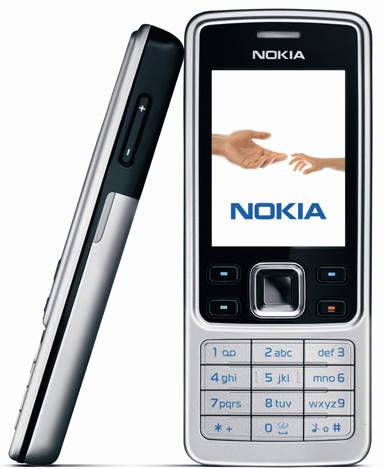 Here’s our monthly update on the best-selling phones as derived from accessory sales by Swedish company Krusell. They seem to be having a new product line: the iPhone shows up now (and as a “new entry” no less). It is arguably to show the limited value of this table in terms of overall sales.
 AR stands for Augmented Reality and it is one of the dreams of game developers: merge the virtual and real worlds in a game and explore new horizons. This has been a pretty futuristic feature until recently: shown off at trade shows but never really seeing the (commercial) limelight. And even in the brave new world of the iPhone, it doesn’t fly – yet.
 It is early July and we have not been reading analysts’ estimates on how much Apple may or may not make from application downloads through its app store for at least, what, 2 weeks (here’s a piece from a while ago). High time for another round then…
  Now this is
  Here’s a
 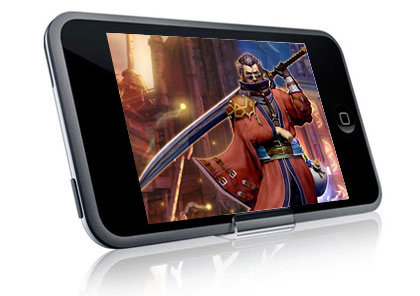 And then – another indication on how far we have gone – the NY Times starts to whine: it notes that “despite Apple’s relentless advertising of its App Store, it seems that the availability of applications is not the primary driver of phone-buying behavior.” Doh. Now, here’s a finding. 74% of the respondents said the device “allowed” them to check their e-mail and calendar, and it allowed them to consolidate multiple devices into a single device whereas “only” 67% cited the availability of new games and applications. Only 67%, huh? Brave new world!
 The breath of fresh air that Apple has been bringing to the mobile content industry does not seem to end. However, this time, it is not so much fresh air by Apple but rather a borrowed deodorant from Microsoft (more specifically the iPod killer called Zune) and that is app-sharing. Whilst this might be largely superfluous for the Zune (how often will you find a group where more than one person has one? – as the good folks from the Apple Blog
  They’re coming… The big entertainment players are increasingly gearing up to take charge of their mobile destinies. Whereas previously a lot of the big movie studios would simply license out the rights to mobile applications and games to independent game companies (Gameloft and Glu having been particularly active), they seem to increasingly embrace the medium themselves. Sony, Disney, Paramount – they have all recently been self-publishing on the – erm – iPhone. Other mobile platforms? The 98% non-iPhone handsets? Erm, maybe later…