Category: Thoughts Page 4 of 6

Big Data is Awesome. Or it is Not.

Only a few quick thoughts after inspiring days…

Big data has opened a lot of channels (and, no, not only to the NSA). The computation of vast amounts of information has incredible opportunities – quite literally the stuff movies are made of, right? And, of course, this means that there are both insanely awesome as well as insanely scary opportunities out there. Oh, and then there are insanely boring ones, too.

The difference between the first two and the last is in the ability to, well, compute it cleverly, i.e. use adaptive techniques. Because – as I never tire harping on about – it all doesn’t matter unless you can provide context. Context, however, is a fickle beast. Because it tends to shift; it is not a steady target. So the true magic lies in the ability to adapt, to vary your responses to an analysis depending how a specific data set develops and changes. And, no, that is unfortunately not mundane. Emerging data sets have the terrible instinct to multiply in options (think of the rice corns on a chess board example). So to tackle that process procures a very pure form of awesome. And that, my friends, is what we need to strive for!

If you have been following, it is not news to you that I am immensely intrigued by these dynamics. But for tonight, that is all.

Oh America, where art thou?

I am pretty angry, America (OK, American government; that is)! What on earth are you doing? (oh, and hello, NSA, thanks for checking in).

Let me open with Plato (Laws):

“Where the law is subject to some other authority and has none of its own, the collapse of the state, in my view, is not far off; but if law is the master of the government and the government is its slave, then the situation is full of promise and men enjoy all the blessings that the gods shower on a state.”

Those were the days, huh? Shame…

Daddy is Cheating…

You know, I have suspected for some time. But I didn’t want to believe. Lipstick on your collar? Hey, there’s a good explanation, right? Right? But now I saw you with that other girl. And, you know, she wasn’t even the gorgeous blonde where I might have grumbled but acknowledged that she’s pretty hot (sorry for the outdated simile, ladies). But what I am looking at is greed, suspicion, police state perversion. And that is not good!

So now the scene is set, let’s go. You see, I have been a loyal friend for decades. I have been working with your companies, furthered your wealth in the process, befriended your people. I am a fan of your forefathers (Jefferson and Lincoln count amongst my biggest heroes) and I defended your values (and, believe me, the latter wasn’t always easy, what with all that Bush, gun-slinging, death-penalty stuff that is often not easy to understand to Europeans). Other than being atheist, I think I’d fit (or would have fitted) right in with you (even though I’d order smaller burgers).

NSA Dragnets

And now this! So, you have been running huge dragnets, it seems (never mind the details, I will leave those to Michael Arrington); by the looks of it even the most rose-tinted version is pretty nasty).

And you also have the audacity to say that a secret court to which I cannot appeal is sufficient legal oversight. And the President (yes, I am looking at you, Mr Nobel Peace Price-winning Obama) doesn’t even dare to crawl out of his White House to defend this (being humbled wasn’t enough, it seems; you should have acted upon it!).

And then, quite besides the scale of this alone, you find it perfectly OK to just about capture everything from everyone who doesn’t happen to hold a US passport. Never mind if she has shown to be a friend of yours or not. Earthlings of a lower class we are then. You basically declare war on everyone else (because that is really what you do, right? It is OK to spy on people even to further the US cause; given your tight language these days, I take it this includes industrial espionage; I mean you were on it for a while, no?).

So, let me break this down: for me as a European (although, as far as I understand, I might as well be a war-mongering nutcase of Klingon origin), you do not think I should be afforded any rights – and not even think of the rule of law or access to courts or any such fancy stuff? Further, even as it concerns your own people, you still think secret courts to which no one can appeal and that do not publish their opinions, that have none of the “checks and balances” that made your system famous are sufficient? Are you kidding me? Have you all – after all – inhaled and, for that matter, way too much?

Friends don’t Matter

This is to the first point: So you, America, think that no one other than you matters. Friend or foe – no difference. I find this appalling. What do you think this will get you? More friends? More visitors that hatch nasty plans for your downfall? Probably the latter. You know, I do not wish you bad. But I am not sure if I will be as motivated to go out of my way the next time. Don’t you know we live on a globe (as in global – get it?) with many people and regimes that require a certain amount of goodwill, trust and – for goodness sake – decency? What do you think? That we will just swallow shallow press releases referring to dubious “we acted within the law” statements? Whose laws? Who is overseeing those? Who is testing you? Who is checking your power? Where, oh where is due process?

You see, the American constitution is a blueprint for law students all over the world because it introduced the principle that the various powers within a state need to be checked and balanced against each other. They must not bloody collude to provide some lop-sided monster! Wake up! How can it be that not vast majorities of your lawmakers are up in arms over this? How can it be that this gentle, inclusive dream of a President (yes, we all loved you very much, Mr Obama) hides behind, I don’t know what. How can it be that he not only simply carried on but – apparently (I trust the Guardian more than your press releases, Mr President) – extended this highly doubtful grip on the world’s information? How could you have drifted away so far from the path of the righteous and right? I am horrified!

I live near Manchester. That is in the UK. We have an Abraham-Lincoln-Square there. And in the middle of it is a statue of the great man with a facsimile of the letter he wrote to the workers over here. Because they suffered when America fought for its independence. And Lincoln was grateful. Mr Obama, you failed! You don’t write thank-you-letters. You’d rather read our letters and try to extract as much information as you possibly can to further whatever cause it is you are pursuing. Shame on you!

Secret Courts, Habeas Corpus & Due Process

Now then, let’s knuckle down a bit. One of the pre-eminent rights that define the pride of the US Constitution is the right to due process. Would I first have to travel to the US, get myself arrested to be able to cry habeas corpus? If this your understanding of it, make yourself acquainted with the “effet utile” or direct effect: a law (or indeed the constitution) should be interpreted such that it gives direct effect. It is – if you need a reminder – related to your very own Implied Powers doctrine. And you are now saying that this only applies to US citizens? Oh, hang on, you do. You signed the treaty but did not ratify as you

consider[…] many of the provisions of the Vienna Convention on the Law of Treaties to constitute customary international law on the law of treaties (source)

What the bloody f***? Get yourself some lawyers that think straight rather than trying to exploit every friggin’ loophole, will you? You consider it customary but don’t ratify? Huh? I’ll have some fun in that court…

What would you say if your citizens in the UK, Germany, Italy, France, Spain, etc. were being denied due process? You’d be howling. How dare we? And you? Do not give a flying [you get it].

So listen: a secret court is something for oppressive regimes, for states that have nasty stuff to hide, for the folks that you are so trigger-happy to pursue. They are NOT for enlightened democracies. Change it! Now!

The dichotomy between Sharing and Transparency is NONE

You know, I happily share stuff, I really do. I know Google scans my e-mails for keywords to serve me the “right” AdWords (it fails more often than not). That’s fine. You know why? Because they told me. It’s transparent. And that (Google and all you others, are you listening?) is the word! I am a little more suspicious about the moral compass of Mr Zuckerberg, but, hey, I’m in for the right. The thing though is this: the “contrat social” (that’s French, and, no, it’s not communist) in the digital world is one of reciprocity when it comes to being transparent. Tell me what you want to do so I can decide if I will take you up on your offer. Spying and dragnets are not included in this definition! Not by one bit (get it?)!

Your behaviour – and the obscene ignorance to the present day you show whilst displaying it – does also highlight the antiquity of ancient laws (you know that your own spying law dates from 1917, right?) when it comes to digital communications. So let’s get this straight: I use the services of Google, Facebook, Skype Apple, Amazon and Microsoft and, rarely (I’m a little old, you see), YouTube (I don’t use the others – and hadn’t even heard of PalTalk before the Guardian/Washington Post revelations). And that’s perfectly fine. I know they collect data. Because, you know, we all know they’ve got to live and there’s this great big network thing going on with ads and stuff; that’s OK. Now, am I in any way related to the US? Not really, right? I mean: I have visited but never lived there. I am working with Americans in various ways (this is not a bad thing, right?). But to treat me as a subject because my domain happens to be hosted stateside (which I guess it is), because I happen to use the above services is, frankly, ludicrous. It is like establishing an exclusive jurisdiction in China for owners of iPhones. Because, you know, that is where they actually are built. And you don’t even blink? Shame on you! Is this where your great big dream descended to? Good Lord, this is sad – and, of course, scary.

What do you want me (and all us 6.5 billion non-US-Americans) to do? Stop using the “nasty 9” plus DropBox, Evernote, Twitter, Instagram and everyone else because, you know, it can only be a matter of time before you haul them in, too? That’s great. Just great! I suspect you really believe you’ll get away with it, right? And the worst thing is that you probably will. But you haven’t understood a thing.

This is not what this was set up for. A good society – and the digital one is built on this very concept – is based on concepts of trust and reciprocity. Your cold-war antics don’t fit into this. They won’t help either. Don’t you realise that stuff gets worse, not better, the more you behave like a rogue state? You won’t be winning like this! And that would be sad. Because that was one cool dream you had!

You, America, are – can I say it? – getting paranoid about way too much stuff, America, and it spoils your good looks, you know. The country where milk and honey flows, the place where the grass is greener starts looking aged and not so bright anymore. Ruthless and reckless you appear more often these days. This is not good. Because, you know, I’d like to like you again. Your recent behaviour doesn’t do you any good whatsoever. And you, Mr President, have a whole lot of work to do to win me back!

Bad day!

PS: BlackBerry did not endorse this message. As for everything (but particularly on this post), this is my very own and personal anger…

PPS: To my American friends: you know I still love you! 🙂

The Power of Platforms (Part 2)

A couple of weeks ago, I looked at the power of platforms. In that post, I tried to trace the line from the shift of platform power and suggested that (in mobile) after carriers and operating systems, we would now be looking to services and applications. I specifically pointed out the shift that Apple’s initial break-up of the first powerhouse, the network operators (or carriers if you prefer that term) was under threat from Android, which itself struggled with a number of things.

Android has the challenge of platform fragmentation (and Tim Cook had some scathing remarks and stats as to that tonight). So our current poster-boy rushes to make use of the time lent to it whilst the others are busy with fragmentation (Android) and new platform roll-outs (Microsoft and, yes, BlackBerry).

Apple Reacts

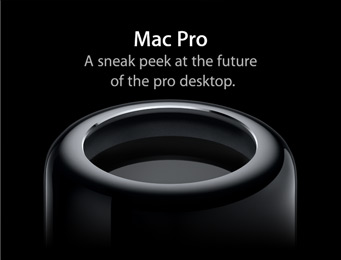
Now, today, Apple showed us that it understands this thing (unless it was incidental but I doubt that): the products it presented at its annual WWDC weren’t so mindblowing if you’re not an out-and-out fangirl (OK, maybe with the exception of the new Mac Pro; that was pretty cool). But aside from that, they showed overdue UI adaptations and slick weather apps plus they borrowed a little bit from Microsoft (gasp!) on the “flat design” (which shouldn’t have been that big a surprise as I’m sure this was the first time that Sir Jony Ive looked longingly to Redmond) as well as from BlackBerry (even bigger gasp!) on the innovative (and insanely useful) gesture controls, which make life a lot easier on a small screen (and I would argue that the BlackBerry Hub is a whole lot more useful than the bits and pieces Apple showed us tonight).

Tight Service Tie-ins

However, the big one was not in these rather cosmetic changes (unless you believe the “biggest, best, boldest” ever rhetoric of the Apple execs. It was deeper and more profound but also such that one doesn’t necessarily want to harp about it all that much (and you’ve got to hand it to them: boy, do they run product presentations well). If you watch the video of the presentation again, you will realise this was mostly about tying in services and applications: Air Drop, iWork on iCloud (might work if they only would get Pages and Numbers up to scratch; hyped about Keynote though, so I can finally force my 80 MB decks down people’s throats on Windows machines…), iTunes (with radio or not), improvements on mail, calendar, etc., sharing options that include Facebook and Twitter out of the box, etc, etc all do one thing: they tie into the platform better. They deliver additional hooks that make it harder to switch to someone else. And that is smart.

This will work as long as there is no application or service platform evolving that may choose someone else – perhaps (gasp!) even to the exclusion of iOS. Because, you see, Apple for the time being only (!?) leverages its current OS platform power. It “only” makes use of the might it has from the previous regime in order to carry it into the next one. It does so better than most (all?) at the moment but it is still a crutch, and a crutch won’t win you a race. And hence I will sit waiting and watching. Because OS is not the last frontier of platform domination!

#justsayin’

Wearable is the New Black

Ever since I have been working with and speaking about mobile technologies and its unique features, the fact that it was, erm, mobile was and remains key. This sounds odd at first sight but when you look back at the relatively brief history, you’ll see that the number of use cases, addressable user base and, consequently, mass effects with subsequent ubiquity depend crucially on size, weight, etc.

Does Size Matter?

For a while, this meant people were taken down a path where everyone thought that the biggest innovation in mobile tech was building ever smaller phones. That was until people realized that a minute screen and tiny buttons weren’t really that helpful after all. I remember holding the Nokia 8890, which was so tiny that I struggled to even make a phone call with it (and there was more to come).
At the moment, we see the opposite: user interfaces rule and bigger seems better (5” screens seem fast becoming the norm).

Usefulness Matters!

So why are all these very smart people that design phones get it wrong seemingly so often (or why else the yo-yo effect in phone sizes?). The key is usefulness. Back in the mobile dark ages, no one was bothered with web browsing, 3D games, etc because it was not available. Too little bandwidth, too poor screens, too little computing power. In that context, smaller size equaled higher portability and therefore better accessibility to the limited uses one had, namely making and receiving phone calls and texting (which the pros could do blindly, one-handed in the pocket anyway, which is why size didn’t matter that much after all).

Different story today: people try to do everything on their phone, including uses that often are not (yet) mobile optimized (how many web pages don’t render properly still today). Power is there, beautiful screens readily available, max it out. Enter the monster-size touchscreen phones, phablets and what-not.

Size & Form Follow Use Case

Note that the use cases I mentioned are all application-driven, not hardware-driven (they are – sometimes – hardware-constrained, but not driven by it).

This means that, where you can provide applications in a form factor that is less in your way; in other words, smaller or, shall we say, of a less intrusive format, that latter one wins. Who wants to haul a 5” phone around on a warm summer day where you don’t wear this bulky coat with the practical pockets?

Wearables: Google Glass and then?

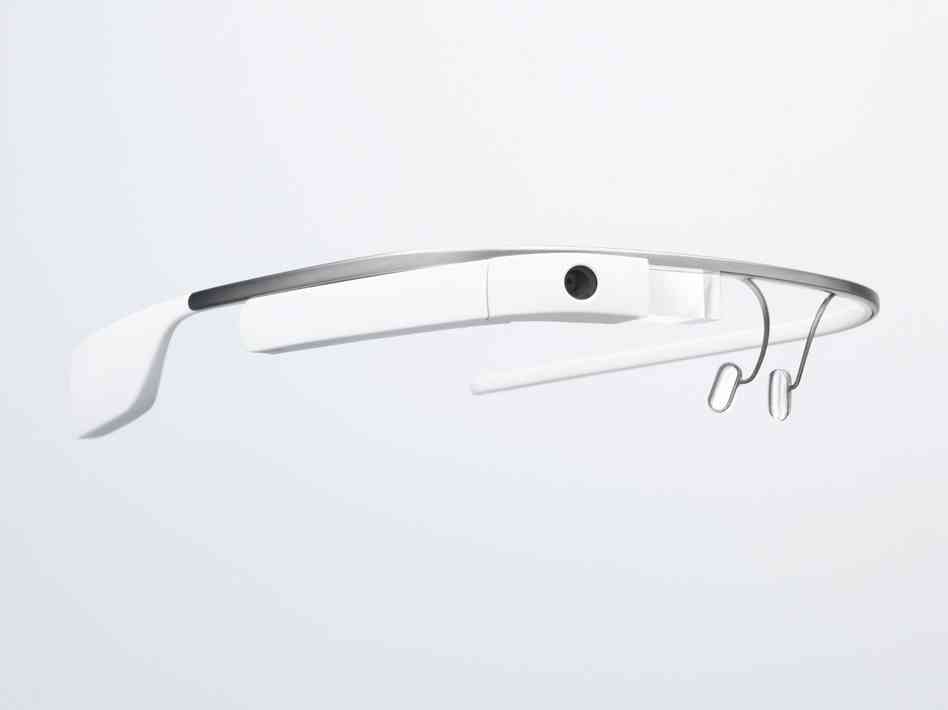
In recent weeks, the (geek) world was in awe (or joking about) Google Glass and envious of (or mocking) every one who had one. And, of course, media, politicians and assorted doomsday prophets were quick to point out the dangers and challenges of the device: privacy concerns, etc. etc.
Most of the stuff I have seen is focusing on everyday tasks for all of us (here is a list of available applications). But then, hey, Google Glass is a Google product and Google is, first and foremost a company with a very broad target market: everyone. Note that I have never worn one of these (I was merely close to destroying a pair when I accidentally – and literally – bumped into Sergey Brin and nearly knocked them off him). But why do we think that there can only be these broad, consumer-focused use cases?

There is of course a lot more going on in the wearable space: people look at smart fibres that could be used in clothes that could charge devices; any number of sports companions are already in the wild and – judging by my Facebook stream – prosper. Nike’s + system, Adidas miCoach and any number of specialized bicycle enthusiast things combined with slick software seem to do the trick.
Back to Usefulness

However (and that’s a big however) the overall usefulness is pretty limited so far. Why, you say? (because you are, after all, likely to be some tech-loving uber-geek – or why would you otherwise still read these lines?). Well, because you need any number of connections, adapters, cables, actions to upload, download, post, combine, data-dump, you name it in order to make use of the data your snazzy hipster devices and accessories collect. This is great fun and helps drive innovation (or, perhaps better, exploration) of what might or might not work. But (and, again, a big but), it won’t cut it for John Doe/Smith/Mueller. Because it is not useful (enough).

Form and Context Matter

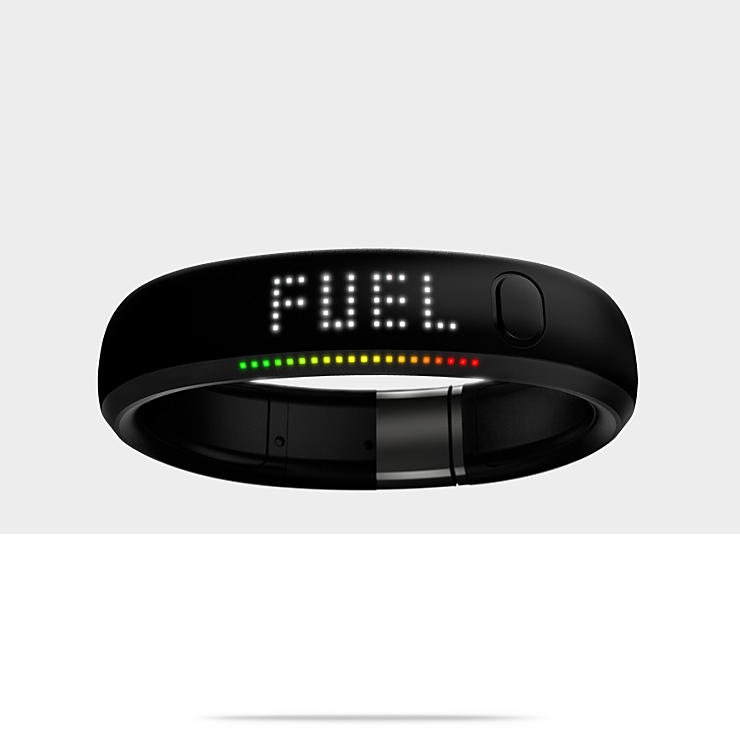
And this is where it gets really interesting: Nike’s Fuelband is rather unintrusive. What isn’t is the frigging download to my phone or computer to actually make sense of it. Because, a wristband doesn’t offer the best user interface on its own (this is not criticism; I think it is a pretty cool device and there is a balance to strike between durability, comfort and information supply). You need to switch on Bluetooth (which you will normally have off to save battery), sync to your phone and then action it. Or you plug it into your computer (plug! What?) and do the same. Media breaks kill interaction. Additional steps make people lose John Doe’s attention. And therefore it is not (yet) ideal. Now then, the combo of a sensor-equipped wearable device, low-energy Bluetooth 4 (which you can leave on as it consumes so little the battery is likely to outlive your device) and some invisible background sync to other devices? Much closer.

And this is where Google Glass (and other devices in that mould) start coming into their own: they offer new interaction opportunities that weren’t there before. They help remove media breaks. Will we all be walking around with a set of those things at dinner parties? Probably not (unless you’re Sergey Brin; I bet he would). Would they make a ton of sense though if I was working as, say, a UPS delivery driver (maps? delivery schedule?), a construction engineer (plans? lay-outs? static calculations?). You bet!

It is always the combination of form and context. Because: when I am going out to a black-tie dinner, that good old minute Nokia phone would probably still not make as big a bulk in my dinner jacket as this big current-day smartphone does. And you know what? My kids could still reach us!

The Power of Platforms

Mary Meeker has just released her almost iconic annual “Internet Trend” report. In it (on slide 7), she points out that 88% of the smartphone OS share is now “made in USA”. Now, this might be good for the patriotic US soul but it signifies a much more important thing and that is the shift from carrier control to platform control. If you are an EU politician, you may lament that the current winners are from North America, but the fundamental shift does not actually depend on it (there will be Canada on the map next year again, and we may well see some Asia-led one, too).

The forced break-up by Apple

The introduction of iOS by Apple moved the access to the ultimate customer, the end user, from carrier to platform owner. With hindsight, carrier execs are probably pulling their hair out that they allowed this but they were falling all over each other when Apple came out with its shiny iPhone back, when?, in 2007.

This introduced a monstrous disruption in the telecoms industry as it marked a move from where carriers could dictate what they would or would not allow over their networks to being virtually at the mercy of the platform owners. It was, however, less about the shiny devices (though it helped their market cap to untold heights) but more about the platform approach. And therefore, Apple was, of course, quickly joined and then swiftly overtaken by Android. Today, they now rule the roost (though Apple is fast falling behind).

The Power of (Somewhat) Open Systems

Seen from today, a lot of criticism of the early leader, Apple, is centered around closed systems. People complain that iOS is too restrictive and does not allow them to do what they want to do (take any number of services, be it iCloud, iMessage, Game Center or anything else – they only function on Apple devices). Alas, back in 2007, that didn’t sound so bad. Because, you see, back then there was a) hardly any interaction and b) the one there was was restricted in “my” (haha) carriier network. But then, who cares, right? My friends are on any number of networks, and they change frequently, too. The carriers, however, thought that they could tie people in. Hell, some even thought they could become cool (anyone remember Vodafone Live!?). But that should not happen. And therefore the world changed.

Then came Android and, with it, the ability to dip into an even larger ecosystem, namely Google’s. I mean, who doesn’t use them, right? And with their “don’t be evil” motto, they took it up another notch. The Apple users were thenceforth fanboys and irrational, high-spending hipsters. Proper geeks would go with Android. Now though Google also starts showing signs of wanting to rule the world. The don’t be evil thing hasn’t been heard for some time…

The Next Step?

And if you go through Ms Meeker’s deck a little further, you’ll find a lot of slides where Sina Weibo, Tencent, Amazon, eBay, etc feature. And you know what? Neither those companies nor their users give a toss whether the service is being delivered on iOS, Android, BlackBerry 10 or otherwise. They just want their service. And this is the challenge the current platform owners have (and it might sound vaguely familiar to the one carriers had): how to keep your users tied into your platform? It started of on the “it’s easier, better, simpler” lure. However, on most both iOS and Android people now start to realise that that might not be so: why does Google force me into a Gmail account (or is it Google+ now?) in order to get the most out of my shiny new phone? Why does Apple not allow me to share XYZ with my friends independent of what handset system they choose to use? This, incidentally, is why it makes insane sense for BlackBerry to release its BBM solution across other operating systems, too… (but this will be the only corporate plug today).

In short, when you look at the overall ecosystem, people want Facebook, Twitter, Sina Weibo, Line, Snapchat, Instagram, YouTube, LinkedIn, Skype, WhatsApp, you name it. They don’t really care where. Does this sound familiar? The first iPhone users went to AT&T because they were it was the only carrier that had it. Today, they’d scoff at a carrier that doesn’t have it (just ask Sprint, they allegedly struck a [too?] rich deal to get it).

What this means is that, in the (near) future, it will be less about operating systems (come on, who cares about them?) but more about actual applications. So what’s the winning one? Facebook? Twitter, Skype? I’d argue there’s more to come. We’ve heard of Line, Kakao. So what about Alibaba (check slide 69 on Ms Meeker’s deck), or Tencent’s We Chat (slide 65)? It is services and products users crave. These are platforms all right! The only reason they went for the platform owners was that they had better access routes than the (previous) incumbents. Now though they might have called in old Goethe’s Faust:

Do you not see the ghosts I’ve called?
Came in the night when I was asleep.
Here in the dark far too big.
The ghosts I’ve called won’t let me go. 

So then, dear friends, what next?

Quick Note on Blog Design

You may have seen that I changed the blog template (still all cheapo i.e. free WP stuff) as I thought the old one was somewhat dated (yes, Microsoft, you are leading the new design revolution, it seems!).

I am toying with a couple of ideas but want it to be super-simple and clean. Also, I do not use this (nor plan to use this) as a place to generate, induce, solicitate or drum up any business (which is perhaps silly, but hey). So, no, I do not need templates that come with shiny “here’s why we serve you best” stuff and such things. The only thing I feel partial to is my own little domain. So anything works really. If you have better ideas or just ideas, let me know…

PS: oh, and, no, I don’t like that mugshot that this particular template adds, either…

giffgaff: Doing Good! More to Do?

All the way back near when it was founded, I wrote a post about giffgaff, an MVNO with a twist running on (and actually owned by) the UK operator O2 (which is of course now owned by Telefonica). The twist with giffgaff is that it termed itself as being “people-powered”. Nice buzzword, huh? When I wrote that post, it was pretty much on the basis of early news, PR and not much more. Now, though, I know better what it is because, you see, I just swapped the phone deals for my two children over to giffgaff (away from Vodafone where they were on a 30-day-rolling contract).

No Frills

So, here’s what it does (and, more significantly, doesn’t): giffgaff doesn’t have shops, it doesn’t have sales reps, call centres, etc. In other words: it doesn’t have much overhead. It does have a network (not its own, it piggy-backs on the mothership, i.e. O2), simple tarifs, very low prices and the quickest way I have ever ordered any phone product online.

Beating the Power Law of Distribution (?)

But how, do you ask, can they run a network with all its customer queries, moans and whining, small and big problems? And that is exactly where I originally voiced concerns: You see, they use fora instead. If you have a question, just post it to their forum and the users will answer. According to the power law of distribution, this is a tricky one as only very few users contribute a lot and most contribute nothing. However, by the looks of it, they answer a) more quickly and b) more competently than a poorly paid, poorly trained, probably somewhat frustrated (whatever happened to the glistening career) call centre worker. The MVNO has a programme for users encouraging to participate in the community. They will earn points (convertible in additional phone credits) for spreading the word (marketing) and helping out other users on the fora (customer service).

So (and here’s a theme for me): giffgaff effectively used some basic tools from the social and commercial toolbox to drive customer acquisition and customer service: incentivise people and, in doing so, make sure you align their commercial interests with your own.

And whilst there seem to have been growing pains, it seems to work more or less really rather well. And all this for £12 per month for a “bucket” of 250 minutes, unlimited texts and unlimited (!) data. Can’t beat that!

Is There More?

This then got me thinking: what if they would expand on this bucket (and, perhaps, forum) ideas and start customizing them for the more “discerning” user. Something for SME for instance, travelers, professionals, etc. Higher bucket prices but better tailored for business needs. Premium buckets for, say, dedicated concierge services (the crux is that the customer service required for that is quantifiable and directly accountable). With the basics still covered (cf. supra under “No Frills”), it should still be possible to run the basic service at similar margins (and note that I assume that they have positive margins) but start building in the fatter bits of the market in return for the higher reliability, security and no hassle that business users require. The thing is, you see, they do not require tedious and generally hopeless customer service over phone lines you have trouble even finding or reaching (20 minute waiting time is not rare as we probably all know).

Such a service would probably not for everyone but. You would have to be comfortable to transact your business online (but more and more people – and, yes, probably 100% of readers of this blog – do so anyway), you would arguably have to have at least a basic understanding of some tech issues (again, cf. supra) but, hey, you would be targeting the growing part of the economy, i.e. the one that either is purely digital or successfully leverages (terrible word, I know) digital outlets for its business. Bingo!

There Are Blueprints Galore!

Come to think of it: it is exactly how so many of the online stalwarts disrupted traditional businesses. And it seems almost ironic that this has not yet happened in an industry such as mobile telecoms! Amazon (first books, now almost everything), Zappos (first only shoes, now part of Amazon and, well almost everything), eBay, PayPal, First Direct and any other number of online banking services), Charles Schwab, eTrade and those folks (stock trading), Okado (groceries), Money Supermarket, confused.com, etc. (insurance brokerage), etc., etc., etc., etc. Virtually all e-commerce business models rely on realizing higher efficiencies through digital scale combined with lower overheads.

And virtually all of them originally were told that this was a niche for a few, that only geeky people with no money would use it. And in virtually all those cases, the doubters were wrong. So, then, O2, let your “gaffer” (that’s the title the giffgaff CEO goes by) lose and go for it. There’s money to be made (and I might just be persuaded to leave Vodafone, too).

To the others (Vodafone, are you listening?): it’s not too late. Get in whilst you can!

Page 4 of 6

Powered by WordPress & Theme by Anders Norén