Category: 1 Page 12 of 21

droidcon: Android Conference, Berlin (4 Nov 2009)

As Android continues to roll out (at least 18 devices by year-end), the ecosystem around it starts to sprout, too. To highlight this, an Android-centered business and development-oriented conference, Droidcon, will hit Berlin on 4 November, and I will be giving a keynote on licensing models and open source (full programme here).

It looks like a very exciting event, so I’d like to encourage everyone to come (there are 4 parallel tracks, so you do not have to listen to my ranting…)! Register here (and, no, I do not earn a commission).

I’ll post a little preview on what I will be talking about more specifically ahead of the event, so stay tuned.

The Future of Advertising is in Engagement!

A lot is being said about mobile marketing, mobile advertising, capturing “consumer’s” imagination (if not only their eyeballs). And everyone says: “yes, I get that, social, mobile, always-on, always with them, cool!” Online ad spend outstrips TV already (at least in the UK), and mobile is arguably the next big thing; it is so much cooler, too: personal, accessible, always-on!).

So how do you execute? Banner ads? Text ads? Virals? “Ah, yes, virals are cool, I heard about them!”

There’s a busload full of mobile advertising networks out there, blind, premium blind, premium (check here for a great overview). And what do they do? Well, banner ads, text ads, the usual. Does it work? Anecdotally, sort of… Most developers and publishers I know that engage in this sort of activity make their money in two ways: either they are being commissioned by an advertiser to do it (good because you’re being paid!) or they use it as complementary (sic!) revenue; on a stand-alone basis, it would not feed them.

Why is the conversion not soaring? After all, mobile allows for unprecedented targeting (IF you do it. See here how not to do it): users have their phones always with them, it is always on, you can fall back on historical behaviours, etc, etc.

I would posit that it is because most advertisers still think of it in terms of consumers: beings that sit on the other (sic!) end of the message and who consume whatever I, advertiser, want to tell them. It is not, alas, true engagement, and this is where arguably the future lies.

So how do you engage? Many options. A good one is by being sincere (Zappos, the online shoe retailer that was recently acquired by Amazon, is a great example). Another one is by engaging rather than preaching. Not so easily done with banners. Easier done with something more interactive. Such as – an example – games and apps. On Apple’s app store, there are some great successes for this type of thing: German car manufacturers seem to be good at this! Audi did one, German developer Fishlabs did a couple of games for Volkswagen, Artificial Life for BMW, and then there is Waterslide Extreme, which is basically a Barclaycard ad (and badly executed: they could so easily have accommodated the RFID function, which the original cinema and TV ad is meant to promote; alas, they ignored it!) which despite its shortfalls was incredibly successful. But these are exceptions to what I think might well become the rule. On the app side, there are e.g. Pizza Hut and Gap that were recently featured (for free!) in Apple ads. Wow!

It seems obvious when you think about it: games truly engage (users – not consumers! – interact with them actively) and they can do so in a much more subtle manner (less invasive). At the same time, the user (not: consumer) spends a lot more time with the brand than with a banner ad.

It is, alas, a space of unknown dangers and unprecedented adventure: never-before seen creatures (scil. formats) and strange folks (scil. developers) roam weird landscapes (scil. mobile platforms). This is how brands and their agencies often experience mobile. They "get" it, don’t get me wrong but they are still fairly unfamiliar with it. And because the big pots of gold sit with the brands and they don’t want to risk cutting access, they’ll rather (and rather too often) stick with what they perceive as the trusted old paths. It’s not so good then that the freshest fruit grows on the trees in this new land and no longer in the wastelands of banner ads…

Watch this space then. It will only be a question of time (I hope) before we’ll be seeing a new wave of non-intrusive, interactive, fun brand engagement. And games and apps will lead the way!

O2, Orange/T-Mobile, and now Vodafone: iPhone everywhere in the UK!

After the news broke that Orange will add the iPhone to its roster from just before Christmas, today we read that Vodafone UK will do the same, only a little later, some time in Q1/2010. Vodafone said that not having the iPhone was basically the reason for losing 200k customers in the last quarter alone. Vodafone had previously been shipping the device in 12 other territories.

With Orange and T-Mobile merging their UK operations, the new set-up which sees basically all large operators offering the device should make for some juicy deals. Analysts reckoned the contract tariff for to come down by £4-5 per month. Orange did not say anything specific but “indicated” that it would be cheaper than O2’s deals.

According to the article, Virgin Mobile (an MVNO that sails on the Vodafone network) is also “understood” to be desperate to secure the right to sell the phone. Happy days…

Mobile Browser-Based Flash Games?

Today, I read a press release from UK firm MoMac who announced the launch of a browser-based games platform, which uses Flash Lite. I had been looking at the use of Flash Lite for mobile gaming quite a while ago (2 years back in fact; see here and here). The front-runners on this (not browser-based but downloadable) was Mobitween, a French company that was bought by Zed last year. Back in 2008, the estimated install base of Flash Lite on mobile phones was already approaching half a billion, so just ever so slightly more than there are e.g. iPhones. In principle, all good.

But where did it go from there? uGenGames, the company’s original user-generated games site, seems to be stuck where it was back then. There is still the showcase of mobiGamz, a Flash-Lite-based gaming portal on Verizon Wireless. But otherwise? Nothing much…

So MoMac will do it in the browser then. I don’t think it makes that much of a difference but, given my early enthusiasm, wondered where the pitfalls (of which there apparently are some; otherwise it would have taken off more forcefully) might be. So where then?

I have argued in the interim the advantages of applications vs mobile web, and this still stands: apps often will give better usability and navigation tailored to the input constraints of (small) handsets when compared to browser-based solutions.

Discoverability might be another – albeit perhaps short-term – constraint: people are not (yet!?) used to looking for games (or other “applications”) on the web. That is arguably one reason of the huge success of the app store: it does what it says on the tin and it is very easy to discover.

Billing would be the third big differentiator: Apple managed what probably only a brand of Apple’s power can command, namely that people happily and without second thoughts sign up with credit cards and all via iTunes. To replicate this somewhere on the open seas of the wide web is almost certainly wishful thinking at best. The only other companies who have as easy a billing interface are the carriers who will almost always be more control-minded than independent service providers might wish for. MoMac claims that

the first casual games portal to go live on major MNO’s in October

and that might change things in this department a little. However, it will arguably take a few of those major MNOs in order to make it worthwhile for developers to address the platform.

A fourth point – and this is following from the above – is content. MoMac seems a little light on this side. It claims the availability of 30 games through its partner Booster Media and, with no disrespect (!), they do not seem to have the most compelling stuff available. This of course is nothing that comes with the concept but perhaps with the (current) offering, the announcement of which I believe might actually have come a little early because of this.

Anyway: the principle is (still) great, and I really wish them all the very best. Keep me up to date, guys; I’d love to publish a retraction of my take here…

The Carnival of the Mobilists #193 is Here

This week it is on me to welcome the world of mobile blogging to my own pastures for this week’s edition of the Carnival of the Mobilists. We have an abundance of variety, showing how incredibly diverse this “little” niche has already become.

We’re having – amongst other things – general market overviews, novel handsets, subscription services, mobile learning, how smartphones will look like, an interview with an old colleague, learnings to be drawn from the airline industry (yes, really!) and, last but not least a take on why mobile is not just another media screen.

So let’s kick off:

Chetan Sharma treats us to one of his wireless market updates and, as usual, it is a feast for the data-hungry. Make sure to go there (and bookmark!) as a future reference point. Very helpful stuff here!

Tsahi Levent-Levi provides us with his thoughts on (what he believes are) the failings of the modular handset-maker Modu‘s approach to boost its offering: he reckons that plugging hardware together won’t do and we should rather look at the cloud to provide impetus to opening the hardware to more uses. He notes that he trusts Flickr more than his own hard drive, which I ask everyone to think about: a lot of truth in that!

Raj Singh casts a critical eye on the state of US subscription services, which he considers broken. He points out that a few class actions hanging over providers’ heads might pose a severe threat to the mobile content industry.

Judy Breck from the Golden Swamp takes inspiration from an iPod touch ad to look at how smart phones are likely to influence the education as well as the games sector: she notes that eBook readers suffer from similar flaws as gaming consoles and that therefore their fate might actually be similar – in the face of evolved mobile devices like the iPhone.

Mark van’t Hooft’s Ubiquitous Thoughts provide us with a round-up on what’s going on in the mobile learning space. He throws a couple of very good pointers for you to read if you want to smarten up on this sector quickly.

Teresa over at WIP Jam has an interview with Lauren Thorpe, a former colleague of mine and now the Sr Director, Developer Relations at Qualcomm. Lauren has a couple of interesting points on the do’s and don’t’s for developers.

The dotMobi guys suggest you have a look at an analys firm’s recent assessment of mobile site capabilities and has some tips on how to avoid falling short of standards (such as all [!] of the US carriers). I am not sure I want to encourage report sales via the Carnival but the top tips listed in the blog are certainly something everyone should look at.

Mark Jaffe then treats us to part 5 of his series “why mobile advertising has not reached its potential”, and his thoughts are very valid indeed. He reckons that the phone is more than only another media screen (and brings some very compelling evidence for that!) and that marketing will therefore fail if advertisers do not realize this. And even worse: mis-reading the power of the medium could actually return serious damage to your brand, so better watch out!

Finally, Ajit Jaokar treats us on his Open Gardens Blog to another sniplet of his wisdom, and a very remarkable one indeed. He draws on the evolution of the airline industry to watch for parallels in the mobile space (both work from a network…). His key finding is that experts from the airline industry seem to have found that the industry’s failures (from incumbents as well as new entrants) were not due to competition or innovation but due to the inability to accurately forecast demand, and – consequently – failure to adapt the business models accordingly. Read it, think about it, think some more… 😉

Post of the week goes to Ajit as the lateral thinking oozing from his post inspired me most A close runner-up is the post by Mark Jaffe (for very similar reasons). Thanks!

Next week’s carnival will be hosted by one of this week’s contributors, namely by Tsahi Levent-Levi on his VoIP Survivor blog. Until then, have an enlightened, inspiring, and successful week!

Image credit: http://farm3.static.flickr.com/2509/3733837014_56809f34d9.jpg (Manchester Caribbean Carnival 2009)

Vodafone 360: the Good, the Bad and the Ugly

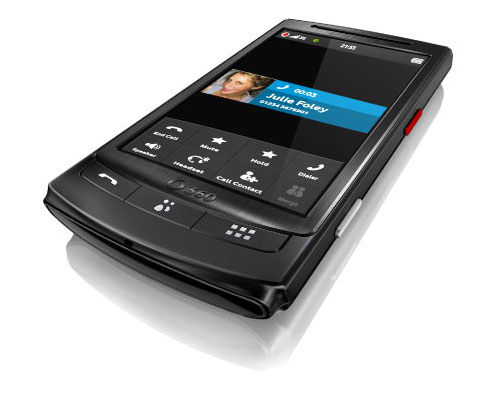
After much huffing and puffing, Vodafone unveiled yesterday what everyone had been waiting for for months and months: its new Vodafone 360 concept, which will replace Vodafone Live! It launches on – drumroll – LiMo-OS Linux phones from Samsung with touchscreen and GPS and, for the H1, AMOLED display (yum!), WiFi, HSDPA, etc, etc, etc. and also supports a fairly big range of Nokia (not on the N97 though!) and Sony Ericsson devices (although, judging by the screenshots, it doesn’t look as sexy on those).

The 360 thing is, according to the press release

a brand new set of internet services for the mobile and PC which gathers all of a customer’s friends, communities, entertainment and personal favourites (like music, games, photos and video) in one place.

It has an address book with nodes into Facebook, IM (Windows and Google) and will “soon” also cover Twitter, Hyves and StudiVZ (the German Facebook clone). Two tailor-made (!) handsets that use a proprietary (!) interface based on LiMo’s release 2 mobile Linux OS. Users can create groups across different networks (which is very neat!), an app store with 1,000 apps at launch (no word so far what this comprises) and syncing with your computer.

So is this the big thing then? Here’s the good, the bad and the ugly:

The Good

  • The service reaches out. It acknowledges (this is a big step for most carriers!) that users have a life outside their carrier. Facebook, Live Messenger and Google Talk are a bit thin, I’d say, but let’s cut them some slack; the others will follow.
  • It has a couple of neat twists built-in: I mentioned a few above but there is also a feature that uses some spooky thing called the “Vodafone’s proximity algorythm” and which basically automatically favourites your most-loved people: the most frequently contacted people (like your mom?) come closer to the front.
  • At least on the custom-built devices, it looks much better than previous attempts by carriers to make something look and feel a little more user-friendly.
  • I hear that the whole widget-thing should be really neat. Now, I haven’t seen any of it as yet but the concept sounds good.
  • It works across different operating systems (at least LiMo and Symbian).

As a funny side remark, the PR blurb points out that

The beauty of Vodafone 360 is that all the services work together and they are easy to use.

So they weren’t before, huh? 😉 — sorry, couldn’t resist…

The Bad

Some commentators mentioned that the cloud-hosted address book and generally aggregation of contacts, networks etc through a provider rather than through the handset would tie people to the provider more closely (which might not actually be anything Vodafone would object to). I am not sure how tough it would really be (as you have your computer back-up), so easy on that.

It is still very much a closed-circuit affair: It is Vodafone and no one else. It is proprietary, tailor-made and not open. This is not good (and, yes, I know that the oft-cited iPhone is proprietary and tailor-made, too). Alas, its applications are not – unless your name is Spotify; then it takes a little longer… 😉

The Ugly

The underlying proprietary thinking is nothing I can see working longer term. In a world that is (Vodafone press speak)

a substantiator of Vodafone’s new brand expression – ‘power to you’ – which is focused on putting the customer in control and enabling simple and easy to manage communications, both mobile and fixed

this is also a little bit of a contradiction.

But I will say that it seems to be the nicest operator-built environment I have seen so far. And for this to come from the world’s largest operator is no mean feat and might actually yield some results. Go on, guys, tweak it, improve it, show us!

App Bonanza or Analyst Bonanza?

In the last two days, two forecasts informed us about the value of the mobile app market in – convenient as ever – the distant future that is 2013. US analyst firm Yankee Group predicts the US app mobile market to be worth $4.2bn by then. Today, British analyst Wireless Expertise (run by former Netsize exec Anuj Kanna) topped this easily by predicting the (global) app market size to be $16.6bn by that time (free copy of the report here).

I can hear your moans…

However, let’s have a look at the numbers then, shall we? At the end of 2008, there were 4.1bn mobile phones in the market. Because apps tend to thrive most on smartphones (and the analysts seem to thrive on them, too), let’s have a look at that sub-sector. I would estimate the smartphone share to being somewhat under 10% (Symbian claims c. 250m devices in market, Apple has some 30-odd million, so RIM, Windows Mobile, Android, Palm, etc should probably be OK with the balance of some 100m). In Europe and the US, the share is much larger but in the big volume markets China and India it is bound to be much smaller, at least for the time being. Global smartphone shipments in 2008 were around 140m.

If we estimate a 20% growth year-on-year for smartphones (vs. 5% for the overall phone market, which seems to be loosely in line with the general dynamic), then we would end up with something like 900m smartphones by 2013. Yankee Group predicts that smartphones in the US will quadruple by then (from 40m to 160m) and does not seem to be very far off. Wireless Expertise thinks the global number will be 1.6bn, which again, might not be that far off.

The question is however if people will really download this much stuff: Yankee Group predicts that the actual value of the market will rise 10-fold and that the average price point of an app will be $2.37. Why that is so, you ask? Well, pay $495 and you will know; I don’t…

Now, the good folks of Wireless Expertise see the thing quadrupling until 2013. They do, however, count “ordinary” mobile games as they are being sold through carriers amongst the apps, which means that their starting point is higher, namely $4.6bn in 2009, so they’re looking at this quadrupling. They raise some smart points on app stores and how they (well, it) changed the way users access and consume content, how carriers will need to look for alternatives to increasingly commoditized voice and messaging propositions, etc. But why there should be a 400% rise in e.g. traditional J2ME mobile games remains – whilst it would be wonderful – pretty much in the dark.

Talking of J2ME and feature phones: I do not know how they are being woven into the equation but there would certainly be a wide field for any self-respecting crystal-ball-reader here: on the one hand, app consumption on such devices has traditionally been fairly shabby but, on the other hand, this could well change if connectivity, bandwidth, UI and the right price plans would come together to offer a compelling mobile web solution. So then apps would need to be translated into widgets or something like that. Would users then pay for them? Don’t know. Or would it be the “Freemium” model according to which “Free gets you to a place where you can ask to paid?”

The challenge of these reports is their “simplified” assumptions: if only one of them fails, you go “oops”, and your prediction is halved (or worse). On Wireless Expertise’s case, this is particularly clear: their assumption is that there will be a dual strategy of (presumably OEM-driven app stores) and mobile web-based widget stores. Now, they further assume that Ovi, Windows Market, etc will all be as successful as Apple’s App Store. By early (anecdotal) data, this could not be further from the truth (see here for what that may mean). Nokia in particular struggles to get its head around a viable and compelling media strategy (cf. here and here). And hence the beautiful hockey stick would actually fall flat on its face.

Now, I am not predicting total doom and gloom, in the contrary. I do think that Apple’s wake-up call has brought a much-needed new wave of innovation and I also believe that this will be successfully incorporated by some carriers and OEMs. But by all of them? Not very likely.

And so we see: the reports are a touch on the optimistic side when it comes to volumes and assumptions. But, hey, that’s their job, I guess, and after all they have at least dropped their masks now: Yankee Group call it fairly openly a “gold rush”. And what happens then we had been shown a long time ago: you end up eating your shoelaces. So maybe this is less of an app bonanza and more of an analyst bonanza then…


Page 12 of 21

Powered by WordPress & Theme by Anders Norén