
 Yesterday, I blogged about Motorola’s Motoblur UI, which adds an additional SDK for its specific APIs beyond the standard Android stacks. I reckoned that this might mean more fragmentation, which would push it a step closer to the nightmare that was/is J2ME.
I received two quick reactions to this: one reader commented that this was only bad if you wouldn’t have good tools and compilers. To him (@tederf), I would respond that, while it is certainly true that good tools reduce the friction, raise efficiencies and alleviate overall pain, the smallest common denominator is always just that. In my previous companies, we used to produce up to seven or eight different J2ME builds in order to maximise performance of our games on the huge spread of handsets. Could we have done with one build? Probably. Would the result have been great? Almost certainly not!
Anyway, the more interesting reaction came from the good folks at Motorola themselves. They reckoned (via Twitter; they are @motoblur) that:
with all due respect, I feel you’ve misunderstood motoblur, and android fragmentation concerns are a wee bit overblown.
Now, now. I offered them a guest post here in order to explain this further. I have unfortunately not yet had a response (which I take, applying Twitter attention spans, as lasting silence). But I still wanted to use the opportunity to elaborate a little more on this (and, no, I will not lament Moto’s lost opportunity to feature their wares on this humble site).
 To clarify a couple of things outright:
- I would be delighted would I be mistaken (and note that I am not a techie, so this is a distinct possibility!).
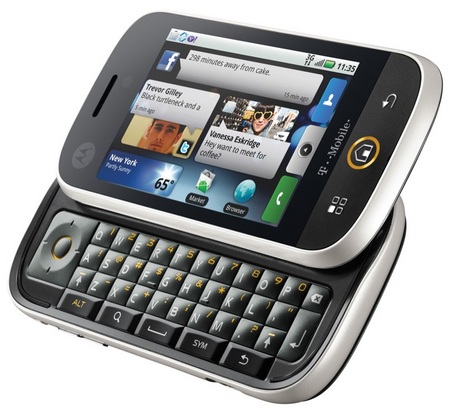
- I would be equally delighted would Motorola manage to regain some of its lost ground. The world clearly would be a better place with another strong manufacturer regaining old strengths (although maybe with better UI this time around – which Motoblur certainly seems to offer [see picture on the right of the Motorola CLIQ!).
But let’s go back to the general issue of Android fragmentation threats (the fact that I pointed this out – again – en cas de Moto is of course purely coincidental).
So let’s dive in: with open source software, there is always the intrinsic possibility that fragmentation will occur. Why do people customize it? Because they can! vendors, developers and operators that make up the Open Handset Alliance (which releases Android) can tweak is in whichever way they like (or “need” to) and for any number of reasons: to protect IP, to optimize performance on their network or for certain devices or simply because they feel they need some distinguishing factors, some degree of uniqueness. The result can be, however, as one analyst puts it that
there will be multiple flavors of Android, all of them incompatible with each other. That, in turn, necessitates different versions of each application or updates to accommodate the entire device ecosystem. On the whole, such activity negates the cost efficiencies inherent in the idea of a standard, open operating system, and potentially makes the Android Market a confusing place to shop for widgets.
And that’s what you call fragmentation. Interestingly, there were rumours that Google had made the Open Handset Alliance members sign “non-fragmentation agreements” but it seems that this is either not true or not enforceable.
Others point out that HTC, Samsung, Dell, Verizon, (may I add Motorola?) all have phones on the way that run on different software to the others. Reports of version conflicts, lack of backward compatibility, etc, etc. I mean, hell, there is even an “alternative” Android app store (with 223 apps as of tonight)… Sounds familiar?
Dear Motoblur, if it is different with your SDK, please enlighten us! I am sure I will not be the only one applauding!
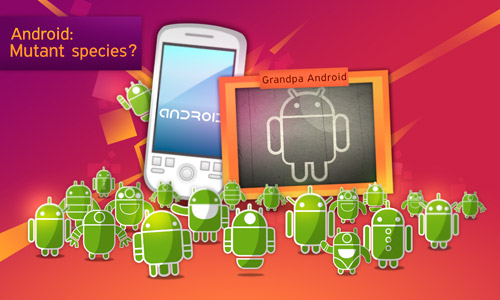
Image Credit: http://www.visionmobile.com
 A new round of fragmentation looms. It is something I have been fearing for a while now: that OEM (and carriers) would make use of the open source of the likes of Android and LiMo to produce their very own flavour of apps. So after
  Ouch. An additional SDK. Which is not yet there yet. Whilst the
  The United Nations’ agency for telecoms,
 From what I can
  With smart phones, app stores and the likes being all the hype, some of the commercially more successful mobile entertainment companies over the past several years tend to be, well, maybe not forgotten but dropping out of the limelight. I am talking about direct-to-consumer (D2C) providers.
 There are companies however that tower over much, much better known mobile entertainment companies but largely escape the hype, and one of them is SendMe Mobile. Their founder & CEO Russ Klein