
Tag: Apple Page 15 of 17

Et tu, Juniper?

It must be truly bleak: even the best friend of every young telecoms entrepreneur on the fundraising trail whose reports rarely failed to feature as a footnote in an investment memorandum for the next big digital thing now sounds a word of caution. Juniper (whose reports I still cannot afford) issued its latest report on mobile gaming and it actually reduces (for the first time, I’m sure, even if I haven’t checked) its prior predictions on the growth and size of the sector in the next, erm, 20 years…

They see growth stifled by the restrictive operator business models. Dare I say it? May they be right? They refer to Apple‘s AppStore, which is the anti-christ to every operator’s walled garden: free for all, free price-setting, Darwinian survival of the fittest (or least-charging), thousands of applications, games, etc, etc, and relatively generous revenue shares on top (although 80% of $0.00 is not very much at all).
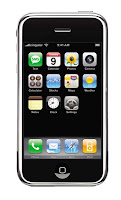
Juniper points however to 2 important and true factors: the tolls demanded by the operators to access their precious customer base are very high indeed considering that many do not provide a very compelling service in return. Secondly, marketing and marketing opportunities on-deck normally – well – suck. This was all well and good as long as their were no alternatives (other than the likes of Jamba, Thumbplay and few others). But with the ascent of the iPhone, everyone seems to erupt into a frenzy of trying to replicate the “beautifully simple and compelling UI” for which the purveyors of the Big Black Turtleneck are so famed for. This, Juniper fears, will lead to players exiting that business (I have heard unconfirmed rumours that SEGA decided to call it day on internal J2ME development following their huge success with Super Monkey Ball on the iPhone). 
Other than that though, not much new. And Juniper would not be Juniper if they would not predict “significant” growth in the next 5 years (conveniently long in order to be basically unpredictable): they see the market to roughly double in the next 5 years, which would be 20% growth per year (on today’s terms), which is not all that bad after all. 
Apple's App Store rockets through 100m

Following the iTunes success story, we could see it coming, I guess, and indeed after a mere 3 months of going live the mother of all black turtlenecks informs us that the Apple App Store rocketed past 100m downloads for iPhone and iPod. Impressive numbers! And another example how simplicity and a good eye for ease of use wins the day: put applications (games are apparently leading the pack, too, with no less than 700 of them [that’s nearly 25% of the total available]!) into one place where a) people can find them and b) it is easy to download, install and run them, and you are on to a winner (operators, listen to this!).

However (there had to be a but, huh?), what the master of PR did not tell us is how much money was actually made with this. We hear the following stats:
  • There are 3,000 apps on the App Store, 600 of which are for free. Now, for what percentage of downloads these 20% are responsible for, we are not being told though…
  • 90% of the apps are priced at less than $10 (this will include the 20% free ones, I guess). However nothing is said if it is $9.99 that is the prevalent price point or perhaps $0.99 a pop.

The App Store certainly is a success for Apple (in particular considering the relatively low number of devices that access the store, and this deserves our unreserved applause! The only thing is: it might just be that 90% of the downloads were of the unpaid kind and another 8% of the less-than-$3.00 kind, and that would mean that it is actually not such a great success for the developers hoping to make a buck from it (rather than only showing off the funky logo on investor presentations).

The Apple App Store provides a wonderful opportunity to test market prices and all that even though there are probably a lot of people who currently publish stuff there because of its “strategic” value, which will contribute to distortions of the true numbers in terms of values and price points. However, notwithstanding those distortions it would be great if they could share somewhat more meaningful numbers with us; just so we know how hard we should try to flog to those green Apple meadows.
Oh, and, yes, I write this on a MacBook… 🙂 

Mobile Games: Platform Standards!?

Mobile games blogger extraordinaire, Arjan Olsder, provided for a great guest post by Qualcomm games guru Mike Yuen, and it’s well worth a read! Mike addresses this most horrible of issues to mobile game developers that is called fragmentation or, in his words, “[t]he lack of platform and hardware standards continues to be a major inhibitor to mobile game growth in the United States [and elsewhere; ed.]. This diversity in development platforms (Android, BREW, Flash Lite, iPhone, Java, Linux, Symbian, WAP, Windows Mobile) and hardware configurations (display resolutions, RAM/heap memory size, processing and graphics power, audio formats, keypad and other input modes.”

Mike rightly points out that, “[i]n many cases, the costs associated with individualizing software builds to the particularities of each handset, operator and language account for more than half of the overall development budget for new game titles. It’s a simple, but important concept. If fewer resources were diverted to porting a title from handset to handset, operator to operator, more resources could be dedicated to advancing the development of new and innovative gaming concepts.”

He goes on to draw an interesting comparison to the Korean and Japanese markets where there are not as many handsets (and platforms) around and where consumers are more than twice as likely to download mobile games. He then goes on to look at market disruptors like Apple (iPhone anyone?) and others only to conclude, sadly, that “[m]obile gaming is in a state of flux – platform and hardware fragmentation has clouded the once blue sky of gaming’s future and positive disruptive products such as Apple’s iPhone have changed industry perception and consumer expectations about the future of the mobile gaming device. I’m not expecting us to reach consensus anytime soon. Fragmentation is an inherent element of the mobile industry and perhaps always will be.”

Now, is that really so? He is of course right in his analysis of the current environment. But does this really have to be like this? The mobile space suffers from too many very large companies with very large markets. And if this wasn’t enough, there’s two different groups of them, with diverging interests, namely operators (carriers) and handset manufacturers: the former want everyone to be on their network, the latter to be on their handsets. Both are more often than not big old molochs of companies with a lot of market power in their segments. However… the markets seem to gravitate (under consumer demand) towards a more open set-up: operators seem to be accepting the fact that they cannot reign their users into walled gardens forever (more and more resign to flat-rate data and open the mobile web to users) and OEMs seem to realize that they need awesome numbers of users to have a real impact and so most of them gravitate to more open platforms (or, in the case of Nokia, create them).

As most of the newer platforms appear to be based on C++ or siblings thereof (Symbian, UIQ, Linux, Android [yes, I know that they us a JVM], BREW, Win ME, etc), it would appear that a reduced complexity might be nigh. Not as easy as online, mind you, but light at the end of the tunnel nonetheless. And it makes sense as the current fragmentation isn’t really helping anyone: consumers grow frustrated with ever-changing platforms. They want cool content, not a proprietary operator-variant of cool content. Hope, my friends, there is hope!

iTunes the largest music retailer

Not really mobile but at least digital and interesting in any event: a news release has it that Apple‘s iTunes had overtaken mighty Wal-Mart as the US’ largest retailer of music. Best Buy was ranked third and Amazon.com and Target tied for the fourth spot in January and February, it is reported.

iTunes apparently sold more than 4 billion tracks since its launch in 2003. The survey counted every 12 digital downloads as one CD but excluded mobile music sales. Apple claims more than 50 million customers. This is a rather impressive development: They sold around 25m tracks in 2003, surpassed the 1bn mark only 3 years later and hit 3bn in July2007.

iPhone 2.0 – it is not only the Enterprise, baby, it's the mix!

I know, I know, I know: it is all a bit tiring and I just wrote about the iPhone vs Blackberry thingee a couple of weeks ago but there is a nice new piece by one of my favourite columnists on this, namely the NY Times’ David Pogue. He considers the software update (nick-named iPhone 2.0) as more significant as the phone itself as it opens the thing up into 2 dimensions:

1. An attack on the enterprise market with MS Exchange support, push-e-mail and everything else RIM‘s Blackberry, Palm‘s Treo and all the others already have (although Pogue also readily concedes that the absence of a QWERTY keyboard might mar its success a bit; see here for Apple’s intro on it)

2. the awakening of a mobile phone as a true multi-purpose entertainment device (through the introduction of the developer programme and release of the iPhone’s SDK – which, incidentally – also extends to the iPod Touch).

Now, I have covered the first point but the let the latter one on the wayside. And, one could say, rightly so: all existing phones, J2ME, BREW, i-mode and all, have had – more or less – readily available SDK’s for (wireless industry’s) eons. And did it make it a mass market tool? No, it did not. Also today with all the super-powerful phones around, only a (growing) fraction of users actually make use of these things. Why should this change with the iPhone? Well, possibly for the same reasons that made the iPod such a success – in conjunction with iTunes that was.

What Apple managed with the iPod was two things: it brought a device to the market that even my mum could use (and she is rather technophobic) and it provided a clear-cut, transparent, easy-to-use retail model for the contents to be meant to be stored and played on that thing, and that was iTunes.

Now, incidentally, these two challenges are indeed the very ones mobile content often faces today: intuitive UI on mobile phones is still only to be found rarely (“the application you are trying to download is untrusted. Do you want to continue?”) and the retail space is cluttered and dominated by companies who excelled in building highly evolved technical networks but have rarely sparkled with superior consumer understanding. Apple is good at both…

Number 3 would then be discovery and here Apple’s novel business model with tight integration and control may actually bear rich fruit: because of the huge amount of influence (and commercial participation) Apple apparently retains with its chosen carrier partners, it is much easier for it to guarantee the placement of the app store on its phones. Other OEMs have a much harder battle at hand there: carriers routinely request that any number of applications, games, etc are being removed for phones they order; because of the huge power the large carriers have (in most countries handsets are subsidised by the carrier), OEMs struggle to assert themselves (although Nokia seems to be making at least some headway with its Ovi portal; see e.g. here and here). For Apple this is a home-run though, which is a significant advantage.

The only relief would then be that Nokia would still appear to be selling the amount of handsets Apple sells in a year within one week or so. Still…

Is the iPhone the new Black(berry)?

Here’s an interesting one: we will soon all be Cupertino-loving black turle-neck fashionistas whilst going on about our cold-nosed business. This is at least what this article ponders (following Apple’s announcement to add “business features”; could it really get push-e-mail?) .

The article has some interesting facts to offer: user satisfaction for Apple‘s iPhone is dramatically better than for anyone else (a distant first at 59% “very satisfied” users). And, somewhat noteworthy, the Blackberry had a drop of 8% in “very satisfied” users (47%) according to a recent survey — the first decline in its history. Nokia follows with 40% with the others behind.

Apple has only 5% of the smartphone market but, given it is only out on one carrier per country and only launched some 9 months ago, that is rather honourable. And user satisfaction is absolute key to business phones though: price is, for corporate IT buyers, less an issue than for the consumer. And no IT manager thrives on the thought of a mad manager breathing down their necks over an IT or phone glitch. So user satisfaction might in fact be an important lever to push it higher in the business smartphone sector, which is a sweet one with very high ARPU. The article concludes that there is “anecdotal evidence that Apple’s market share is growing. FTN Midwest analyst Bill Fearnley Jr. said that according to his checks, iPhone sales were helped in February by the introduction of a corporate iPhone plan that allows AT&T to bill employers directly.”

So an interesting battle at hand. It is also interesting (and may send shivers down open-source spines) as the two leaders in user satisfaction both run on rather contained software ecosystems. But it does show that it helps when things indeed work (comparatively) seamlessly and painlessly on a device.

I am yearning to see Gordon Brown and Angela Merkel in black turtlenecks wielding an iPhone (Sarko and Obama [do I even need a link for him?] are a given of course). Oh brave new world…

EA, the iPhone and Mobile 2.0 in general…

EA‘s Travis Boatman, VP Worldwide Studios, recently commented about the adverse effects Apple’s iPhone would have on the sales of mobile games. He moaned that, whilst the device was good, “it’s a replacement for someone who had a Razr before. They still want their content but there’s no distribution platform in place so there’s a negative impact on the industry.”

Now, is that short-termism or the understandable fear of someone who oversees classic game development studios of being replaced by something else, namely online games. Because this is in fact what the iPhone is promising: a replication of the web on mobile. One could say, it’s the entry of mobile 2.0. Online games on desktops became prevalent with the ascent of broadband and data flatrates. This is exactly the environment quite a few people predict for mobile, too. And whilst it was “World of Warcraft” et al that gave the EA’s of this world the shivers on PCs, it is now the iPhone – but not because it’s the iPhone but because it is the first device that, due to its intrinsically different approach (OS, touchscreen), focuses solely and only on the web as the fulfillment medium of content dreams.

Someone then also smartly noted that “[t]he problem of transferring games to new phones has actually plagued the mobile gaming industry since its inception. When users upgrade to a new phone, they most often can’t bring a game that they bought for their old phone along with them.” And the market data seems to confirm the challenges the industry faces: the percentage of mobile phone users who have ever bought a mobile game increased from 10 percent in 2005 to just 12 percent in 2007; that’s not much…

Moving from downloadable games (or other content items) to ones that can be played (or consumed) online reduces the complexity to users enormously. Due to bandwidth challenges, there are some constraints as to what can be played with a certain level of satisfaction online and what can’t: as a rule, everything turn-based, casual puzzles, etc would appear to be adaptable, heavier, more action-related games can’t. However, is this any different on the desktop or, for that matter, the console? Has anyone ever heard of online versions of Call of Duty or EA FIFA? No, because they would not translate in such a constrained environment. Now, Tetris (published on Apple’s iPod by, guess what, EA), Zuma, Luxor, Bejewelled, Poker, on the other hand, provide a rather splendid user experience even when played online and, lo and behold, they are predominantly found as online games on the desktop, too.

The same applies to other content sectors, too: prior to YouTube, the consumption of video via desktop was niche. One might watch a DVD on a long-ish train ride but who in their right mind would download shorter clips to watch them later (well, maybe with the exception of certain post-watershed offerings)? YouTube came and made it easy to consume AND operated in an environment dominated by an economical usage ecosphere, i.e. data flat rates and sufficient bandwidth, and off it went.

For EA (and any other mobile games publisher) this may mean that, in the mid term (i.e. once now pertinent issues such as data charges, bandwidth constraints, etc have been tackled), users will go online on their mobiles, too, to play such casual titles. However, fans of more intense genres will continue to download. The challenge is therefore not so much someone like Apple and any of their products but the current distribution and commercial environment (namely regarding billing) that would appear to slow down take-up. So, yet again, the finger points to the operators who, from their position understandably (why would they be reduced to a bit pipe if they don’t have to?), are in the way of turning mobile into a media consumption channel like any other. The front is however getting diluted: more and more operators throw their data plans into the open and offer more generous plans to users (led by 3 who even offer dedicated Skype mobile phones with the respective data plan to come with it).

And what will EA do? Well, continue to publish games which only make sense when played on dedicated devices. Oh, and they will probably release the Sims as an online version… Not so bad then…

Page 15 of 17

Powered by WordPress & Theme by Anders Norén