Tag: Apple Page 14 of 17

iPod Touch mounts Handheld Gaming Challenge

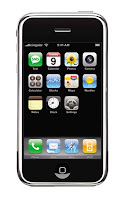
A recent article discussed the rise and rise of the iPod Touch (that’s the iPhone without the phone). It apparently surged to the top of Amazon‘s sales charts, and mobile ad firm AdMob reports that ads served to the device more than tripled between November and December to 292m. This growth is said to even shadow growth of iPhone ads served and is being called, well, unprecedented. People are said to shun the forced marriage with AT&T’s long-term phone plan that come with the iPhone. Makes you think (if you’re an operator).

That’s all fine and dandy but I thought this was probably a good time to look at the iPod’s role as a handheld gaming device again. This was sparked by a remark from one of the Kleiner Perkins‘ chiefs (they’re the ones who set up the iFund, which invests exclusively into companies active in the iPhone/iPod Touch ecosphere) noting that the iPod Touch was now asserting itself as a more versatile alternative to the Nintendo DS or Sony’s PSP. This has of course been discussed for a while. The sales figures of the iPod Touch now seem to back these early (and initially largely theoretical) thoughts. 
Nintendo has been keenly aware of this even before the recently published app download numbers were out. In the words of the CEO of Nintendo US (from the above WSJ article):

“Whether you chose to play on your DS or listen to music on your iPod, we’re already in the same competitive space for time.”

And whilst one could argue about the pound-for-pound comparison of pure touchscreen vs devices with gamepads for certain types of games, the huge upside Apple has created is the hassle-free and easy distribution model for games: a DS developer needs to buy the cartridges (and pay for them up-front), find retailers, and then sell. This means huge cash outlay and very significant commercial risk over and above the development cost, making for a much less risky business model. And as to the input: some of the accelerometer-powered racing games are significantly better to control than with any game pad.

The DS is and arguably will be for a while a formidable gaming platform (as the father of a 10-year-old girl I can certainly vouch for that) but the sheer number of games available on the AppStore is likely to create a space longer term that may well tilt the balance in favour of the latter: you’ve got a) the arguably best music player in the market, b) higher WiFi usability (the DS doesn’t really allow you to surf the web), c) e-mail, maps, and all those nice little (and often useless) apps, d) much, much more choice of games at lower cost (anywhere from $0.99 to $9.99 as opposed to $30 for, say, Cooking Mama 2) and – to top it all of – e) the coolness factor of the sleek Apple form factor. Tough competitor, that.
For mobile games developers and new iPhone game entrants this constitutes and exciting development as it opens the revenue potential further up, and all that at a comparatively efficient and high-margin market place.

Finally: a new Palm

After bloody ages (and 425m Elevation dollars later) Palm came out with a bang yesterday at CES by unveiling the Pre and its new WebOS. Palm’s shareholders will be chuffed as the stock surged in the hours afterwards. Now, what is it? And does it have legs? One of the first reports (even containing a minute-by-minute live-blog of the presentation) notes that

‘its form factor is a blend of the HTC Touch and the iPhone. The software looks an awful, awful lot like that of the iPhone — multitouch, gestures and so on. Many of the apps also have a very strong likeness to the iPhone […].”

That in itself is of course not a bad thing. And other reports confirm high hardware quality and nice UI. However… Aren’t they a bit late? And where will the content come from? Palm used to have a faithful following on his Tungsten and Treo product lines but this is a while ago now and there have been some awesome devices in the interim, some of which – most notably the iPhone and the G1 as well as RIM‘s Blackberries and the higher-end Nokia devices – have amalgamated a great device with a great UI and commercial environment into a huge following. Apple AppStore, Android Market, N-Gage and Ovi, Blackberry Application Center, etc, are all there or there about. And Palm will be up against that. The fact that it has – at least initially – tied itself to Sprint only will not be much help there.
WebOS is said to be easy to develop for. Allegedly HTML, CSS and some other stuff known from the web would be enough to develop for it. But will anyone do it unless there is a device base large enough to make it a compelling commercial case (which even seems to hit platforms like Nokia’s N-Gage; THQ has just apparently dropped its “Worms World Party” development for this).
It’s nice to see they’re back but I think that the jury is still out on the success of this.

Top US Handsets in Q3/2008

And it still goes on, it seems: Nielsen published its (digital) media top 10 lists for Q3/2008, and the once cool Motorola V3 still rules the United States – and by a HUGE margin. A whopping 9.3% of all phones in use are RAZR‘s, more than 7 points ahead of its sibling, the KRZR. Apple’s iPhone follows on #4 with 1.5% share. And Nokia‘s call to arms with a view to the US market has as yet to materialize: its best handset is the 6101 series with a meagre 1.1% (compared to a reported global market share of the Finnish giants of close to 40%). Sony Ericsson and Samsung are both notably absent from the list.

Here’s the top 10 table then:

1 Motorola RAZR V3 series (V3, V3c, V3m, V3i, V3i DG, V3) 9.3% 

2 Motorola MotoKRZR series (K1m, K1) 2.0% 

3 LG VX8300 series 1.6% 

4 Apple iPhone 1.5% 

5 LG VX8500 series (Chocolate, VX8500, VX8550) 1.2% 

5 RIM BlackBerry 8100 series (Pearl,8110, 8120, 8129) 1.2% 

7 Nokia 6101 series (6101, 6102, 6102i) 1.1% 

8 LG VX8350 1.0% 

9 Motorola V325 series (V325, V323, V325i, V323i) 0.9% 

9 Nokia 6010 series 0.9% 

Source: The Nielsen Company, Q3 2008 


Time for a lot of people to shake things up!

Silver Lining for Games…

… And a full-blown sunblast on Christmas Day, or so it would appear as per the latest PR from Try-and-Buy solution provider M-Biz Global. According to them, 2008 was a good year for mobile games (though I am not sure if the likes of MoConDi, Vivendi Mobile Games, Telcogames, Mighty Troglodytes, etc would agree). M-Biz’s numbers would rather suggest that the market may be shifting a little (or is re-focussing the better word?) towards pre-loaded trial versions of games. It is this segment that M-Biz is addressing, and it is therefore unsurprising that they saw downloads on Christmas Day soar to 6x (!) the average daily sales in the UK: a lot of people get new phones for Christmas and if something is on the handset already (a trial version), one is much more easily enticed into actually clicking that link.

All in all, M-Biz reports a 62% increase in revenue year-on-year, and a 21.29% and 50% increase in EMEA and the UK respectively in December 2008 compared to the average of the previous 11 months. All good! 

It tellies well with the findings open to see for everyone when looking at Apple’s AppStore: make the purchase process easy, make things transparent, and people will buy. The difference to both the AppStore and a pre-installed trial game is that it does not take the user 8+ clicks, a download, various cryptic messages (of the “this application is unsafe. Do you really want to install? Really, really, really?” ilk) to get gratification. I have mentioned on the Opinions on Mobile blog that I would expect this to be an area of focus for this year, and the numbers quoted by M-Biz would appear to being ample support of this.

RIM eats Chalk

Blackberry maker Research in Motion is acquiring mobile content deployment solutions provider (quite a mouthful!) Chalk Media for $18.7m in cash. Chalk to what they call “pushcasts”, which – if I understand it correctly – is basically pushing podcasts to smartphones. The Vancouver-based company is listed on the Toronto Stock Exchange, so it still requires shareholder approval, and the deal is therefore not closed yet.

The move is a neat one: podcasts are increasingly used in the corporate environment for staff communications of all sorts, and the enterprise being the stronghold for RIM, it makes a lot of sense to strengthen its service offering by adding such a tool.
RIM has of course got under fire by Apple‘s iPhone and this will presumably continue being the case also by the higher-end Android-based phones who have been nibbling away (see here and here) on the Blackberry’s pedestal as the businessman’s (and woman’s) favourite gadget. A lot to defend then, and the price would therefore not seem to be excessive at all… Stringent rationale, me thinks…

iPhone content is recession-proof, too!

Is it becoming boring or is it becoming more and more exciting? However you view Apple‘s forays into mobile, it is very, very remarkable (and I do indeed think exciting) indeed: in ads in the NY Times and the Washington Post (see here), the company reports 300,000,000 downloads in 5 months (I leave the zeros in for mere impact…). That’s 2.1m downloads per day – on a single handset model, which isn’t even the single best-selling one (well, it probably is of recent, but not historically) and is normally only available through one carrier per country (which means that it could also have been, say, 10m downloads per day if extrapolated to the total user base). Woah! Is anyone still skeptical about the equation pretty hardware + pretty UI + hassle-free shop-front + single platform + single distribution outlet = success for content?

The iPhone’s fashion factor does, I think, not matter when it comes to the download numbers: If the above chain would not work, people might smile slightly embarrassed and continue fiddling around with the pinch-z
oom of pictures, etc but they would not come back time and again to get more content for the thing; I mean: just running around with it and placing it onto bistro, bar, cafe and probably even Starbucks tables will be enough to prove your membership in the circle of the hip and trendy media crowd.
There’s only anecdotal reports (or rather rumours) about how much money is being made by developers on the platform (we still suspect a lot of it will be in the “free” category but one rather reputable games publisher apparently said that they’re making more money on the AppStore than through all of Vodafone Global) but these numbers are – in any event – huge!
And it does show that content works if you let it work, i.e. if you make it easy to publish on a platform and if you don’t try to be your customer’s nanny and determine what’s good for them. If people would realize this, and that would be the only lasting impact of the iPhone, that would surely be a lot! Thank you, Mr Jobs!

China Mobile puts on turtleneck

The theme starts becoming lame, I know (and I herewith promise to look for new semi-funny references to Steve Jobs). However: if the world’s largest operator by subscribers changes its dress culture, that is to say swaps from a tightly controlled walled garden to a free store concept, that surely merits this. So, without further ado: China Mobile plans to launch its very own AppStore. Its Chairman & CEO Wang Jianzhou (who was, I think, not sighted in Mr Job’s favourite garment) announced this at the GSMA Mobile Asia Congress in Macau. Now, with a whopping 436.1m subscribers, this opens fairly interesting vistas for mobile content – if, yes if, one can hit Chinese taste, that is. They specifically cite Apple’s success with its iPhone as a trigger for them to do it. Truly impressive that a company so big would move so quickly.

This will surely hit the news wires some more in the coming days but I will now retire and brush up on my Mandarin…

Page 14 of 17

Powered by WordPress & Theme by Anders Norén