
 Yesterday, Nokia announced the “Nokia 5330 Mobile TV Edition”,
“an entertainment hub that combines mobile broadcast TV (DVB-H), social networking, music and gaming in one compact 3G device.”
Let that sink in: it is – apparently – not a phone. Mentioned nowhere. Well, it is of course but one might ponder if that is the message you want to get across. Focus?
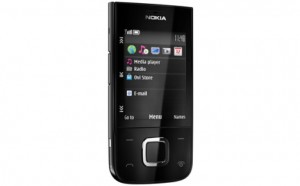 Be not mistaken though, it offers some rather incredible specs: a full six hours (!) of mobile TV broadcast without re-charge. That is 3 football (my US readers, scil. soccer) matches (although I am not sure where, when and why one would do that). Compare that to the iPhone where you could watch maybe 30 minutes of highlights IF you have downloaded the respective clips when you were in a WiFi zone last. The headset doubles as an antenna.
QVGA on a 2.4″ screen, 3.2 megapixel camera (presumably with the trusty Carl Zeiss lenses, LED flash, video, free music via the “Comes with Music” service. It also says (well in the punchy headline above anyway) that it will also have specific gaming capabilities.
Phone calls? That is so last year… It is not a phone, it is an entertainment hub, baby!
The device but even more so the press release exemplify the challenges Nokia faces. It is not the technology; the Fins are good at that. It is not distribution network; they have excellent carrier relationships the world over. But the package and its presentation makes it almost anti-climactic – and probably unfairly so because the thing does even look pretty neat!
Now, if one needs TV broadcast is a discussion all by itself (the fact that you can set reminders “to make sure key episodes aren’t missed” sounds almost quaint in the age of TiVo and the iPhone’s Sky+ app).
But even apart from this, it is an example that demonstrates the approach: Nokia tries to answer calls querying its continued leadership by building monolithic technology beacons. But that is not why users flog to the iPhone; they merely want something that looks good and works beautifully. Dear Nokia, IF you equip a phone (a phone, not a multimedia hub!) with every gadget under the sun, this is cool – it really is! But do not sell it on technology, sell on user experiences. Users do not generally care much for tech talk (well, maybe some boy racers and hardcore coders do), they care for ease. Give them ease!
Apple’s overriding design goal is (and has been for a while) to de-clutter the user environment and experience. Then they execute nicely on it. That is what makes them so superb. Try to emulate this. You have all the tools. Now get the pitch right, will you?
 There have been
  It also highlights the dominance Google has in the Open Handset Alliance which might, longer-term, lead to assertions that Google is in fact using the open source road as a cover to push what is effectively an OS largely driven by them. I am not implying that it is and a healthy ecosystem with multiple strong is important in particular for the launch of a new OS in a space so full of powerful multi-nationals but there is a fine line to walk in order to get it right.
 We live in a world where sharing has become an It-word. Contribution, engagement have all fast become pinnacles of every marketing expert’s arsenal.
 The network is a good (?) old-fashioned solid one, namely from O2. But that’s where it ends. Sales, marketing, customer service, brand development and the general business decisions will apparently all be made (or at least proposed or advised on) by giffgaff’s own users. I already found an entry in its forum calling for users calling for two rotating board-seats for users (though that will probably remain to be seen). giffgaff does have a gaffer (CEO in old-fashioned corporate speak) with a back-room (management team) overseeing the whole thing (and that team,
  Dell, after a lot of denials, finally
  In a move that was
 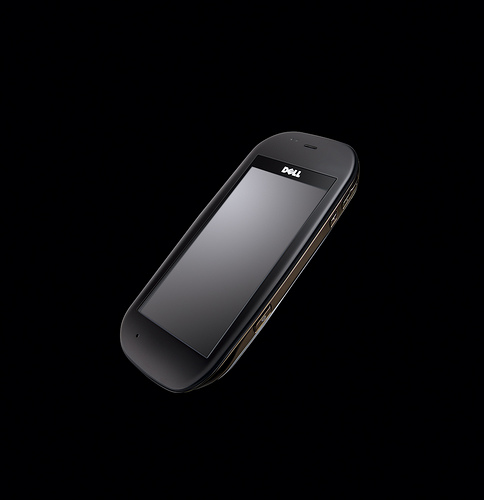 Now to the more critical points, and a small one at first: They could have done better on the marketing. Apple shows everyone how it’s done: come out with a bang and woe them. I do not think there is a need to outperform competitors on the technical side but a strong launch allows you to tell your story rather than leave it to a plethora of commentators to pave the way.
 In my last post, I hinted that the
  Why is this more significant? Because it is (like Google/AdMob) a cross-platform play that (unlike Google/AdMob) also expands the basis of business models deployed. Playfish derives the majority of its revenues from so-called virtual currencies, and in particular also from lead-generation deals (which recently have
  It was an eventful week but I shall pick
 From Google’s and Admob’s respective business perspectives, it appears to make eminent sense, too (and I am not privy to their numbers): Admob will be able to bulk up and cement its leadership position in the segment. Its inventory and back-end ad management will be able to dip into Google’s vast resources, which is great for them. Google probably realized that Admob’s strength meant that they would be difficult to beat. And who you can’t beat, you shall join (or, in Google’s case, buy) them. For Google, it is a smart move as it gives them critical mass in an ad format where they have not nearly been as dominant as for other formats and gives them access to a lot of eyeballs.