 Quick facts: I am an iPhone user. I wanted one, I am based in the UK. What to do? Switch to O2, which had the exclusivity for this. This post is not about bandwidth, 3G availability or anything like that – I have not (much) to complain about this actually. It is not about the iPhone either.
This post is about the simple mistakes network operators (plural; O2 is not alone here) make by not living up to their own messages. Listening to customers and identifying (and answering!) user needs.
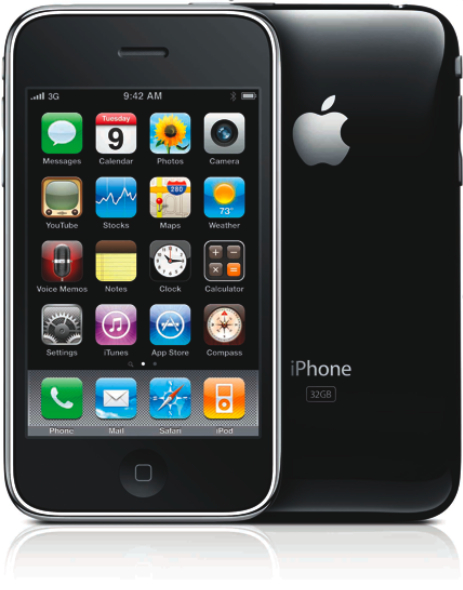 Back story: I have an iPhone 3G on a £45/month plan, which gives you countless voice minutes and lots of SMS and unlimited data – in the UK that is. In short, I do not normally have to pay anything for (UK) calls and texts, hence the tariff. Now, if you dare travel with your iPhone, you’re in for nasty surprises. The only thing O2 UK has to offer is slices of 10 or 50MB of data for some hefty sum.
One of the most insulting things about this is this: I used to have a Blackberry on O2 and, you see, you can purchase an international roaming plan that gives you blanket data coverage on your device when abroad for – if I remember correctly – £25/month extra. Would I take this? Any day. Does this exist for iPhone tariffs? No.
O2 UK would be able to easily deduce that I am traveling regularly. Great opportunity to hook me into an even dearer deal, you might think (ad slogans include “We’re better, Connected” and “O2 can do”). But wrong you are. Whenever I travel with O2 abroad (and this is on an O2 network), this is what I get:
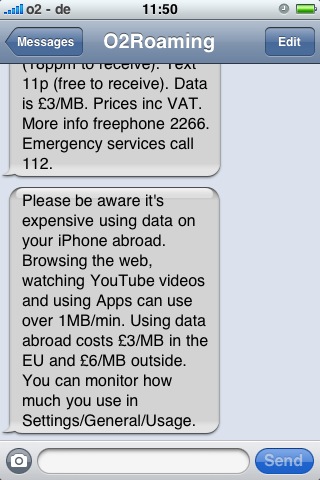
They actually send me at least 3-4 SMS with various warnings and alerts about how expensive and truly nasty it is to use my (O2-purchased) phone to its full potential and capacity whenever I dare leaving British soil. Connected? Can do? Not at all! Very inspiring. NOT!
Does it offer ANY solution to my apparent need? No. Does it try? No. What does this say about how important I am to them as a customer? A lot. And nothing good either.
It reveals a very “last century” way of looking at life: users are basically being perceived as revenue-generating units rather than someone the brand even attempts to communicate with. This is a very short-term view of the world, and one that is bound to fail quickly. Why? Because I am very likely to switch carriers (I have already unlocked my iPhone, which you can – incidentally – do here).
Now, O2, listen up: will I switch because there are so many other so much better offers out there? No. Will I do it because I fear the charges? No. I might end up paying the same as before. But that’s OK. I will do it because you, my dear carrier, showed me that you do not give a toss about me as your customer and you failed to deliver on your promise (“connected”, “can do”). I beg this will change about 2 weeks before my contract with you runs out: you will promise me everything under the sun to keep me but this is cheap, and I will not have it (as, I suspect, will apply to countless others).
Here’s the solution: Try and build some trust in your brand and your actions (Zappos anyone?). The reference to Zappos is not only a fashionable one (and, yes, I know it turns up in every man and his dog’s presentation these days; I used it myself a couple of weeks ago… But Zappos business is, get this, O2, to deliver happiness. You think that this is over the top? Think again: Tony Hsieh just sold his company for a very real-worldly price of $800 million to Amazon. His company is America’s biggest shoe retailer. Did I say shoes? Happiness!
Do you have to go that far? I would wish you would. But, dear O2, a little respect and care would already do it. Any of this? None I can see or hear, and your hotline will know I have tried! In modern “Tweetish”: #fail.
Listen and deliver. Then the rest will come. Until then, it’ll be Vodafone for me (who at least abolished roaming charges) or Orange (if they manage to learn from the above in time before my contract runs out).
Good bye!

 It was today, 30 years ago, that NTT (now NTT DoCoMo) launched the world’s first commercial mobile cellular telecoms network in Tokyo with 88 base stations and, boy, did we come a long way since. Take fees for a start: there was a $2,000 sign-up fee and then a monthly fee of $300. On top of that, you would be charged $1 per minute voice. A handset weighed in at a cool 10kg (more than some budget airlines allow you as hand luggage these days; but then you would probably only fly First if you had one of those…). Nokia was still into wellies at the time, I think… 😉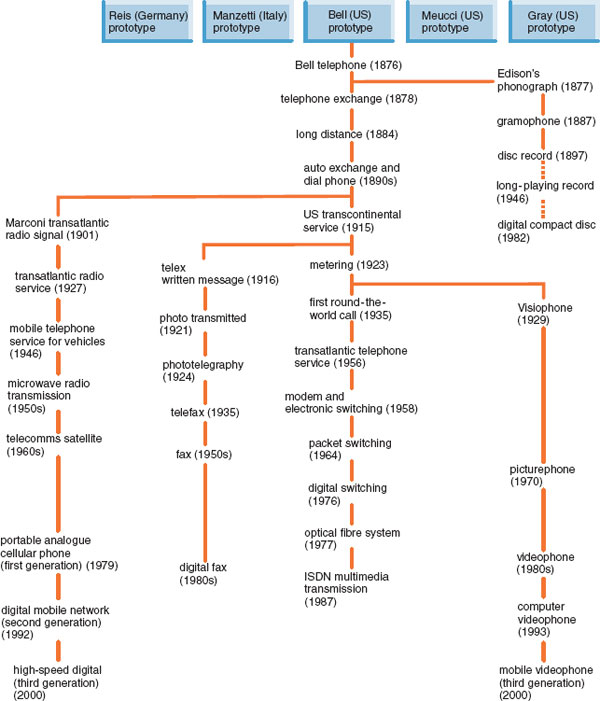
 It is conference season and one of the more exciting ones kicks off in Berlin this week: Mobile 2.0 opens its gates on Tuesday and boasts an exceptional line-up to look at the future of mobile.
 First, Samsung
  Symbian of course boasts a still very impressive number of legacy devices, and it will therefore be here for a while. However, what does the long-term outlook look like? Android, LiMo, etc all “boast” a nimbler, more agile set-up, allowing for faster development and, arguably, better user experience. This is not necessarily Symbian’s fault (it carries with it its legacy around) but it makes it that much harder for it to reinvent itself.