Category: OEM Page 7 of 15

iPhone Usage

Here’s a report about an interesting piece of research into the elusive animal that is the iPhone and Android user, or more precisely that animal’s usage of apps (“… there’s an app for that…”).

The researchers from Gravity Tank chose Android (well, the G1) next to the iPhone because Android Market and Apple’s App Store both allow “unlike older smartphones [sic!] easy access to a range of free or low-cost applications”. Now this is what the (mobile) world has become in the last 12 months…

Anyway, the survey finds that the average (!) user has 23.6 applications on his/her phone and uses 6.8 of them every day. 48 percent report shopping for apps more than once a week. About the same number (49 percent) report using apps on their phone for more than 30 minutes a day. Woah, nice!

But it goes on: 32% said they used portable gaming devices less because of their app-enabled phones. This reminds me of one of my predictions on how the iPhone would eat into the handheld gaming market (see here, here, here and here).

And it shows, more importantly maybe, that these owners of the “newer” smartphones use them as true multimedia devices rather than only phones: 31% read newspapers less, 28% use GPS devices less, 28% use MP3 players less (well, they have one of the better ones if they use an iPhone), and 24% are watching less TV. Media going mobile then, finally…
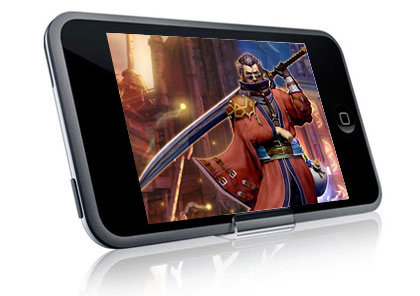
And then – another indication on how far we have gone – the NY Times starts to whine: it notes that “despite Apple’s relentless advertising of its App Store, it seems that the availability of applications is not the primary driver of phone-buying behavior.” Doh. Now, here’s a finding. 74% of the respondents said the device “allowed” them to check their e-mail and calendar, and it allowed them to consolidate multiple devices into a single device whereas “only” 67% cited the availability of new games and applications. Only 67%, huh? Brave new world!
App-sharing coming to iPhone and Android?

iphone-3-0The breath of fresh air that Apple has been bringing to the mobile content industry does not seem to end. However, this time, it is not so much fresh air by Apple but rather a borrowed deodorant from Microsoft (more specifically the iPod killer called Zune) and that is app-sharing. Whilst this might be largely superfluous for the Zune (how often will you find a group where more than one person has one? – as the good folks from the Apple Blog mention), it would be upping the usability game again and, for iPhone and iPod users as well as for the quickly growing Android device-base, it would arguably impact the market a little more. This also since the iPhone has become so much of the benchmark every OEM tries to emulate.

So what is it? According to Business Week who have been speaking to someone “familiar with the technology”, the iPhone 3.0 software kit provides for a functionality that could “if activated by Apple” allow users to share apps between them (note to self: ask my contacts familiar with the technology if they came across this, too).

Technically, it’s compelling and simple, well, the latter at least in Apple’s case: It was a nightmare for an engineer (as much as a dream for every “guerilla” marketeer) in the face of a gazillion different handsets with a gazillion different screen sizes, heap sizes, soft key allocations, etc, etc. In Apple’s case: 1 device, 1 screen size… off to the races…

Now, the same thing is supposed to happen with Android devices, too. And there, this might actually be a little harder to achieve; different devices, etc – well you get the gist.

From a user perspective it is of course fantastic: you can try things out before you have to commit to buy (rather than relying on the voluntary “lite” versions). So rather than buying an app that a friend likes (which increases the likelihood you might to but does not necessarily give you certainty to part with your precious cash). So: try it out. You like it, you buy it… It also (as mentioned above) is a big one on the marketing side: the strongest sales people will be happy users. So if a happy user recommends it to their peers, it is so much more likely that they will give it a go. All good stuff.

Would someone from Apple please confirm this? 😉

Sony Ericsson & GetJar: jump-starting an App Store

sony_ericsson_logo

Everyone is jumping on the app store bandwagon and, so far, Sony Ericsson had been a little behind. Some thought this might be related to its PlayNow Arena offering, which is already an app – or rather media – store of sorts. But it turns out that the handset maker was plotting a different strategy and one with an interesting result indeed.

It was reported today that Sony Ericsson will partner with GetJar on the creation of an app store. GetJar (the guys with the ugly logo) is a giant in the distribution of mobile content who had gone to clock up 200m downloads in only 2 years by last year (and now recording 6.5m+ downloads per week and more than 300m since launch)), which was, prior to the Apple App Store a very respectable number indeed. Now, GetJar has now something like 45,000 apps on their store. However, these are for free. The company appears to making their money with ad injection…

Sony Ericsson will apparently provide a mix of GetJar’s free applications and premium content. The solution will be using GetJar’s platform and will roll out in the 13 countries that currently support PlayNow Arena first. Compatibility is currently ensured with 38 of Sony Ericsson’s handsets but they intend to roll out to further markets and models over the year. It supports J2ME and Symbian on the outset but they plan to support other platforms in the course of the year. Android probably…

The deal allows Sony Ericsson to jump start its store though and that might be the most important piece of it: it can combine its own catalogue (through its current offerings) with GetJar’s huge catalogue of free apps, thus avoiding the fairly empty places that some of the other guys put together (Palm announced it will launch its Web Catalogue with “a dozen or so” apps, even Nokia’s Ovi Store had “only” 20,000 “items” in at start). GetJar’s platform is arguably fairly powerful since this is the only thing they do, so a quite smart move.

On GetJar’s side, I wonder if this is the one of the first steps into a new direction (Sony Ericsson was not the first app store deal they signed; 3 UK and Portuguese carrier Optimus apparently signed up with them, too, which I had overlooked; apologies). The company’s business model is/was based around ad infusion, it seems (see their CEO blog about it here). So this might be the next wave to monetizing platform and content on it…

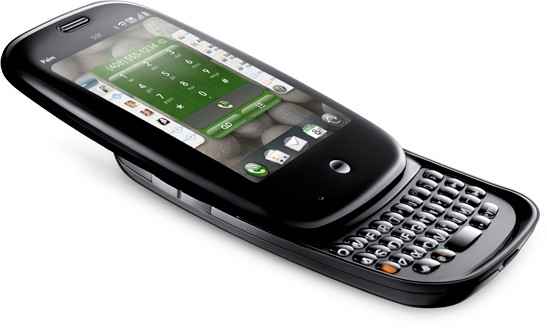
Palm Pre syncs with Apple, and more!

Palm came out with a bit of news that reiterates the old wisdom of joining who you cannot beat. The Pre will apparently be able to sync with Apple’s iTunes and iPhoto apps. Apparently, the Pre makes iTunes think it is an iPod or something. The whole thing apparently fails on the DRM side, so no “old” iTunes for the Pre then… What Apple will say to this? Well, that remains to be seen. They surely won’t be happy. But on the other hand, they will probably want to avoid any in-depth tussle over the question of their proprietary software, monopolization and all.

We also learned that, because Palm Executive Chairman Rubinstein is an old Apple hand, “the engineering culture at Palm bears some similarities to [Apple’s]”. There you have it.

But the Pre is doing even better on the music front: its MP3 player includes onboard support for Amazon’s MP3 Store. Files are downloaded directly over the air to the device. Now that’s pretty cool!
More coolness comes with search: the Pre searches, and then – if you want – it searches some more, in Google, in Twitter, … Neat, very neat!

Now, on to the app store. Oops, it is called “web catalogue” at Palm. How many apps at launch? Um, “a dozen or so”… Ah…

So will it succeed? Of course it will: according to Roger McNamee, managing partner of principal Palm investor Elevation Partners, all iPhone users with expiring contracts will switch to the Pre at 4.25pm. There you have it, again!

Android Wave rolls in

No, this post will not muse over Google’s new Wave announcement today. I rather wanted to give a brief update on the wave of Android devices that is promising to roll in over the course of this year. I had posted on this before (e.g. here and here), and Google, at its Google I/O developer conference gave a hint (yes, funny enough through Yahoo! News…) on the size of the deployments we can expect this year. And its not bad at all: 18-20 Android phones this year tells us Andy Rubin, Google’s Sr. Director for Mobile Platforms. The article then goes on to quote a number of analysts on earth-shattering insights but let’s leave these aside.

Android’s advantage was always going to be two-fold:

  1. As an open-source platform based on a Linux kernel it would be a) cheap and b) stable. This is invaluable for handset manufacturers as it reduces their development costs for new handsets significantly. I have no hard numbers but the rumoured ones are fairly high…
  2. Because it is a stand-alone OS rather than a combo of hardware and software (as the iPhone or – at least for the time being – Blackberry devices are), it will be used and deployed by a plethora of manufacturers rather than only one. And, well, this results in many more devices in the market (think MS DOS vs. Apple OS).

And this is now starting to show…

In terms of increase of “smart” phones (and these will, I would suggest, in the future include models we would today class as “feature” phones) this is seriously good news. How a slick and versatile operating system can spurn extended use of a mobile device beyond voice and SMS was impressively shown by the iPhone (8% smart phone market share equal 43% of web requests). Others are catching up (cf. here and here) and the more is the merrier when it comes to providing devices consumers actually can use. Avoid the term of “educating the consumer”; the consumer is quite educated but if people need a customer service helpline to even open the box (courtesy of a cider ad in the UK), one must not be surprised that people do not use it. Ease of use rules and well-made operating systems support that.

Palm Pre & iPhone: O2 wants it all

o2_logo_no-bubblesO2 has won the exclusive distribution rights for the Palm Pre in the UK it is reported. This is noteworthy as the carrier also is the exclusive distributor for the iPhone in the country, so putting the iPhone “killer” next to the ubiquitous uber-smartphone might be a bit of a daring move? Or is it? Let us bear in mind that there are a lot of voices that caution about the operators’ for the iPhone: huge average data consumption on flat rate plans is not likely to drive ARPU. Apple managed to break the old operator model by taking chunks of the revenues realized through its devices and it does not share in any content sales. Apple does not allow anyone to put their brand onto its device (I am struggling to find any O2-related information on my iPhone, and even I think they might have taken it a bit too far… So, the Palm Pre deal actually does a couple of things:

  1. It gives O2 a shot at what might (or might not) be the next big thing (although analysts expect that – at least initially – sales will be much lower than for the iPhone: “Its going to sell principally into the base, to existing Palm owners and existing Sprint subscribers”).
  2. It allows O2 to put a little more leverage in its relationship with Apple. Having a device on its roster that has a powerful specs, an appealing interface and something like a cult following (although the cult appears to being a smaller one than the one of the Apple fashionistas) would help O2 in future negotiations.
  3. If (or when?) the exclusivity period for the iPhone ends (which commentators expect to happen soon), O2 would have another uber-cool gadget exclusively (I for one swapped over to O2 to get my hands on an iPhone).

So whilst few people do not know much, the combination of the above provides any number of good reasons for O2 to go for the Pre (assuming the business model agreed with Palm is not too bruising; but one can expect Palm, which has to fight its way back into the market, to be slightly less demanding than Apple), which promises to being a fairly cool device indeed: besides having a lot of all the things the iPhone has (touchscreen, multi-touch, cult following) and some more (QWERTY-keyboard) it beats Apple on home court: take Apple’s aversion to cables, the Pre doesn’t have to be “plugged” into anything; you just place it next to its touchstone charger and it charges by magnetic induction. Steve Jobs will be fuming about this one… oh, and it runs 15-20 apps simultaneously. The one question might be: which apps? But, hey, let’s see where they’ll get to…

Qualcomm slowly admitting defeat?

I know this is a contentious headline but one could interpret the news that Qualcomm is opening its very own app store (which is probably the oldest one!) to any device on any platform on any carrier this way. The provider will open its Plaza service to non-BREW devices (BREW is proprietary to Qualcomm). This could be seen as an admission of defeat in the platform war, which it appears to be losing against GSM platforms.

However, I plead to see the bright side of this: it is a remarkable move to highlight and capitalize on a piece in its arsenal that has long been industry-leading: Qualcomm has long been offering merchandising solutions that do not have to shy away of the cutting-edge app stores of today. The new Plaza Retail will now bring to Java, BREW, Blackberry and Flash (Android , Windows Mobile, Palm, Symbian and Linux Mobile are apparently to follow) what BREW users have had for a while: a storefront, great device integration and flexible billing (micro-billing, subscriptions, etc). It also allows personalization and a recommendation engine (courtesy of last year’s acquisition of Xiam Technologies). And it is a very proven platform that has showed its worth on many a bill to developers (the content-lock is much better than Apples; which may anger some users but will be welcomed by developers) This is quite cool!

Page 7 of 15

Powered by WordPress & Theme by Anders Norén