Category: Apple Page 7 of 8

Top US Handsets in Q3/2008

And it still goes on, it seems: Nielsen published its (digital) media top 10 lists for Q3/2008, and the once cool Motorola V3 still rules the United States – and by a HUGE margin. A whopping 9.3% of all phones in use are RAZR‘s, more than 7 points ahead of its sibling, the KRZR. Apple’s iPhone follows on #4 with 1.5% share. And Nokia‘s call to arms with a view to the US market has as yet to materialize: its best handset is the 6101 series with a meagre 1.1% (compared to a reported global market share of the Finnish giants of close to 40%). Sony Ericsson and Samsung are both notably absent from the list.

Here’s the top 10 table then:

1 Motorola RAZR V3 series (V3, V3c, V3m, V3i, V3i DG, V3) 9.3% 

2 Motorola MotoKRZR series (K1m, K1) 2.0% 

3 LG VX8300 series 1.6% 

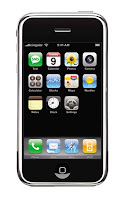
4 Apple iPhone 1.5% 

5 LG VX8500 series (Chocolate, VX8500, VX8550) 1.2% 

5 RIM BlackBerry 8100 series (Pearl,8110, 8120, 8129) 1.2% 

7 Nokia 6101 series (6101, 6102, 6102i) 1.1% 

8 LG VX8350 1.0% 

9 Motorola V325 series (V325, V323, V325i, V323i) 0.9% 

9 Nokia 6010 series 0.9% 

Source: The Nielsen Company, Q3 2008 


Time for a lot of people to shake things up!

iPhone content is recession-proof, too!

Is it becoming boring or is it becoming more and more exciting? However you view Apple‘s forays into mobile, it is very, very remarkable (and I do indeed think exciting) indeed: in ads in the NY Times and the Washington Post (see here), the company reports 300,000,000 downloads in 5 months (I leave the zeros in for mere impact…). That’s 2.1m downloads per day – on a single handset model, which isn’t even the single best-selling one (well, it probably is of recent, but not historically) and is normally only available through one carrier per country (which means that it could also have been, say, 10m downloads per day if extrapolated to the total user base). Woah! Is anyone still skeptical about the equation pretty hardware + pretty UI + hassle-free shop-front + single platform + single distribution outlet = success for content?

The iPhone’s fashion factor does, I think, not matter when it comes to the download numbers: If the above chain would not work, people might smile slightly embarrassed and continue fiddling around with the pinch-z
oom of pictures, etc but they would not come back time and again to get more content for the thing; I mean: just running around with it and placing it onto bistro, bar, cafe and probably even Starbucks tables will be enough to prove your membership in the circle of the hip and trendy media crowd.
There’s only anecdotal reports (or rather rumours) about how much money is being made by developers on the platform (we still suspect a lot of it will be in the “free” category but one rather reputable games publisher apparently said that they’re making more money on the AppStore than through all of Vodafone Global) but these numbers are – in any event – huge!
And it does show that content works if you let it work, i.e. if you make it easy to publish on a platform and if you don’t try to be your customer’s nanny and determine what’s good for them. If people would realize this, and that would be the only lasting impact of the iPhone, that would surely be a lot! Thank you, Mr Jobs!

Juniper to the Rescue…

We can depend on the researchers from Juniper after all (or maybe they simply felt bad after reading my post on their last report). Whichever the reason, apparently the mobile content industry could be worth a hefty $167bn (!) if – yes, if – the operators would resolve to allowing a workable commercial environment, namely by limiting themselves to lower revenue shares. Whatever the caveats (which are, as usual, hidden in the expensive main report) this number is topping even the loftiest predictions to date; right on in times of the doom and gloom. The key apparently lies in whether operators would act as dumb pipes (no richness for anyone) or a smart pipe (lots of play money for all players on the value chain). In their own words:

“If MNOs are to benefit financially, they need to move away from their Dumb Pipe roots to the Smart Pipe model, though they will clash with the content providers which already dominate the Smart Pipe. A compromise needs to be found.”

A smart pipe is understood as one where operators would offer flexible, application-centric value configurations, allowing lean, efficient content offerings from third parties. A dumb pipe is one where content (and value) would merely rush through the pipe without any value being added by the operator. The prevailing model in the mobile games world, namely the on-portal approach where operators implement comprehensive vertically-integrated models (“walled gardens”) is suggested to be somewhat doomed as content providers would gain bargaining power (presumably through consolidation of the supply side plus entry of meatier traditional media players in music, video and TV).

This is all pretty speculative though, and without some background it is quite frankly impossible to analyse the numbers some more. Mobile content appears to include (as per their report from March) games, music, video, TV, social networking, adult content, gambling and so on, and so forth. However, the exact calculatory basis is again hidden in the depths of the report, so I don’t know (do they e.g. take the gross gambling revenue or on;y the rake, which is only a few percentage points of the former). Anyhow, due to these foggy conditions, commentators seem to either merely re-print the PR blurb or mock it (Stuart Dredge thinks that “only gas could do that kind of money”), which is a shame really; just think what you could with this much money…

What's a Smartphone?

Application vendor Handango published its 2008 Yardstick report, which one might slag off as some (rather shameless) PR on content consumption on “smartphones”. According to this, 

[t]he Games category leaped from fourth place at year-end 2007 into the second spot behind the Entertainment category.

It also reports that

‘Ringtones’ was the most searched term in the first half of 2008, and ‘games’ was a near second, up from number three in the second half of 2007. ‘Themes,’ ‘GPS,’ ‘weather,’ and ‘music’ also make the list of the top 10 searches.”

Surprisingly then, in none of the measured platforms (RIM, Palm, WinME, Symbian) does a single game make it into the top 10… Now, does that mean that places 11-98 were all games? Hmm…

 I then asked myself what the heck is a smartphone? Mobile advertising guys Admob note that

[t]here is no standard industry definition of a smartphone. We [Admob] automatically classify a device as a smartphone when it has an identifiable operating systen and continually update our list as new phones with advanced functionality enter the market.

Globally, Nokia rules the pack: the top 4 smartphones are all from the Finnish giant (Admob numbers), and all N-Series devices, namely the N70, N95, N73 and N80. In the US however, there is not a single Nokia phone (or rather, as they would put it, “multimedia device”) amongst the top 20 smartphones. According to Handango, 2 Blackberry devices (8830 and Curve) were the top 2 devices, according to Admob (not representative), it was the Blackberry 8100, the Palm Centro and the Blackberry 8300). Globally, these don’t really feature: Nokia has a market share of a whopping 62.4%!  

The more interesting facts are unfortunately from confidential information from the likes of M:Metrics. Without giving too much away, the top devices for games consumption (downloaded) are the iPhone and Nokia’s N95, both with quite some margin ahead of everyone else (and the iPhone with quite some margin ahead of Nokia’s performance monster). This does indeed show that a powerful handset (or at least one with powerful UI) promotes content consumption, which is, I’m afraid to say, old news indeed.

So, no news then?

Apple's App Store rockets through 100m

Following the iTunes success story, we could see it coming, I guess, and indeed after a mere 3 months of going live the mother of all black turtlenecks informs us that the Apple App Store rocketed past 100m downloads for iPhone and iPod. Impressive numbers! And another example how simplicity and a good eye for ease of use wins the day: put applications (games are apparently leading the pack, too, with no less than 700 of them [that’s nearly 25% of the total available]!) into one place where a) people can find them and b) it is easy to download, install and run them, and you are on to a winner (operators, listen to this!).

However (there had to be a but, huh?), what the master of PR did not tell us is how much money was actually made with this. We hear the following stats:
  • There are 3,000 apps on the App Store, 600 of which are for free. Now, for what percentage of downloads these 20% are responsible for, we are not being told though…
  • 90% of the apps are priced at less than $10 (this will include the 20% free ones, I guess). However nothing is said if it is $9.99 that is the prevalent price point or perhaps $0.99 a pop.

The App Store certainly is a success for Apple (in particular considering the relatively low number of devices that access the store, and this deserves our unreserved applause! The only thing is: it might just be that 90% of the downloads were of the unpaid kind and another 8% of the less-than-$3.00 kind, and that would mean that it is actually not such a great success for the developers hoping to make a buck from it (rather than only showing off the funky logo on investor presentations).

The Apple App Store provides a wonderful opportunity to test market prices and all that even though there are probably a lot of people who currently publish stuff there because of its “strategic” value, which will contribute to distortions of the true numbers in terms of values and price points. However, notwithstanding those distortions it would be great if they could share somewhat more meaningful numbers with us; just so we know how hard we should try to flog to those green Apple meadows.
Oh, and, yes, I write this on a MacBook… 🙂 

iTunes the largest music retailer

Not really mobile but at least digital and interesting in any event: a news release has it that Apple‘s iTunes had overtaken mighty Wal-Mart as the US’ largest retailer of music. Best Buy was ranked third and Amazon.com and Target tied for the fourth spot in January and February, it is reported.

iTunes apparently sold more than 4 billion tracks since its launch in 2003. The survey counted every 12 digital downloads as one CD but excluded mobile music sales. Apple claims more than 50 million customers. This is a rather impressive development: They sold around 25m tracks in 2003, surpassed the 1bn mark only 3 years later and hit 3bn in July2007.

iPhone 2.0 – it is not only the Enterprise, baby, it's the mix!

I know, I know, I know: it is all a bit tiring and I just wrote about the iPhone vs Blackberry thingee a couple of weeks ago but there is a nice new piece by one of my favourite columnists on this, namely the NY Times’ David Pogue. He considers the software update (nick-named iPhone 2.0) as more significant as the phone itself as it opens the thing up into 2 dimensions:

1. An attack on the enterprise market with MS Exchange support, push-e-mail and everything else RIM‘s Blackberry, Palm‘s Treo and all the others already have (although Pogue also readily concedes that the absence of a QWERTY keyboard might mar its success a bit; see here for Apple’s intro on it)

2. the awakening of a mobile phone as a true multi-purpose entertainment device (through the introduction of the developer programme and release of the iPhone’s SDK – which, incidentally – also extends to the iPod Touch).

Now, I have covered the first point but the let the latter one on the wayside. And, one could say, rightly so: all existing phones, J2ME, BREW, i-mode and all, have had – more or less – readily available SDK’s for (wireless industry’s) eons. And did it make it a mass market tool? No, it did not. Also today with all the super-powerful phones around, only a (growing) fraction of users actually make use of these things. Why should this change with the iPhone? Well, possibly for the same reasons that made the iPod such a success – in conjunction with iTunes that was.

What Apple managed with the iPod was two things: it brought a device to the market that even my mum could use (and she is rather technophobic) and it provided a clear-cut, transparent, easy-to-use retail model for the contents to be meant to be stored and played on that thing, and that was iTunes.

Now, incidentally, these two challenges are indeed the very ones mobile content often faces today: intuitive UI on mobile phones is still only to be found rarely (“the application you are trying to download is untrusted. Do you want to continue?”) and the retail space is cluttered and dominated by companies who excelled in building highly evolved technical networks but have rarely sparkled with superior consumer understanding. Apple is good at both…

Number 3 would then be discovery and here Apple’s novel business model with tight integration and control may actually bear rich fruit: because of the huge amount of influence (and commercial participation) Apple apparently retains with its chosen carrier partners, it is much easier for it to guarantee the placement of the app store on its phones. Other OEMs have a much harder battle at hand there: carriers routinely request that any number of applications, games, etc are being removed for phones they order; because of the huge power the large carriers have (in most countries handsets are subsidised by the carrier), OEMs struggle to assert themselves (although Nokia seems to be making at least some headway with its Ovi portal; see e.g. here and here). For Apple this is a home-run though, which is a significant advantage.

The only relief would then be that Nokia would still appear to be selling the amount of handsets Apple sells in a year within one week or so. Still…

Page 7 of 8

Powered by WordPress & Theme by Anders Norén