
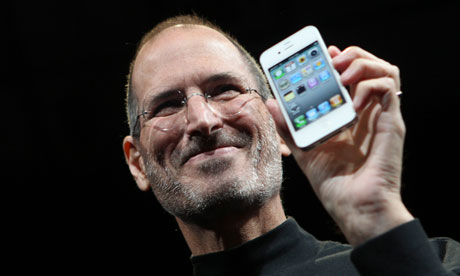
 Apple’s iPhone is only a marketing fad for vain urbanites. True purists go for Android. Those who see the light in volume go for Nokia or Samsung.
All this are points often heard when one dives into the deeper echolons of most mobile tech blog or forum. Engineers throw up their hands because those “American-centric media types” “don’t get it” and only wave their flag for whatever Steve Jobs, turtle neck and all may put up onto the big screens of his church.
I am not American and I am not a media type. And I don’t wear turtle necks (well, not since c. 1989 at least). And yet, I do prefer my iPhone (3G) over my Nexus One. And this despite obvious advantages of the Nexus: better screen, quicker, haptic feedback (yes, Mr Jobs, I do like that), the concept of open source, etc, etc. So why do I stick to the iPhone? Fanboy? Marketing fad? Vain urbanite?
Here’s why: I have been trying to set up my Nexus so it will do what my iPhone does, and I am not talking of playing a fancy game or running some other app that is not (yet) available on Android. I am talking about the two key things I need a phone for (41-year-old non-techie I am), and that is phone calls and e-mail; calendar (with sync) is important, too. For the former I need my address book, and I need it to sync properly. For the latter, I need my (admittedly too many) e-mail accounts set up on my device and syncing properly. As to calendar, wait for it below. Alas, two very different experiences:
- On the iPhone, you do the following: 1) plug the phone into your computer, 2) answer “yes, please” when iTunes asks you if it should sync contacts and e-mail addresses, 3) get yourself a cup of coffee, 4) walk off.
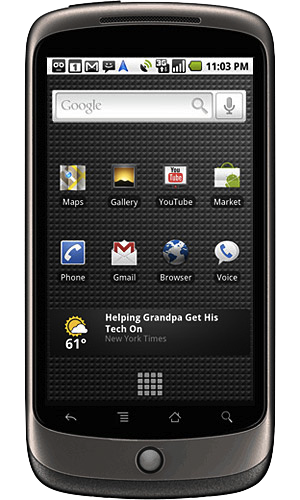 On the Nexus, you’re OK (-ish) if your life evolves around Google. With a Gmail account and associated contacts (and/or calendars), you’re sort of OK. It does all that. Now – shock, horror – I do not actually send all my mail from Gmail and my contacts are mainly dealt with in my address book (take Outlook or whatever you want if you’re a Windows user). And I use iCal and not Google Calendar. And so it starts: there is no desktop application that would help me do this. On a Mac, the phone is not even recognised when you plug it in (and that is a rare thing on a Mac; is this another piece of Apple vs. Google? I don’t know but I doubt it). So you are finding yourself setting everything up by hand! Entering the POP3 and SMTP (or IMAP) server addresses, user names, passwords, etc, etc for seven e-mail accounts is no fun. And (remember I am not a techie) invariably leads to some box checked wrongly here or a typo in a password there and, kawoom, nothing works. I can set up a Google Calendar/iCal sync BUT that will only sync the specific Google Calendar bit between the two, and not any of my other (work, home) calendars. I can sync my address book with Google, so that works. The whole procedure took me the better part of 45 minutes, including lots of corrections and swearing and led to me abandoning a half-configured beauty of an Android phone. Great result.
So why is that?
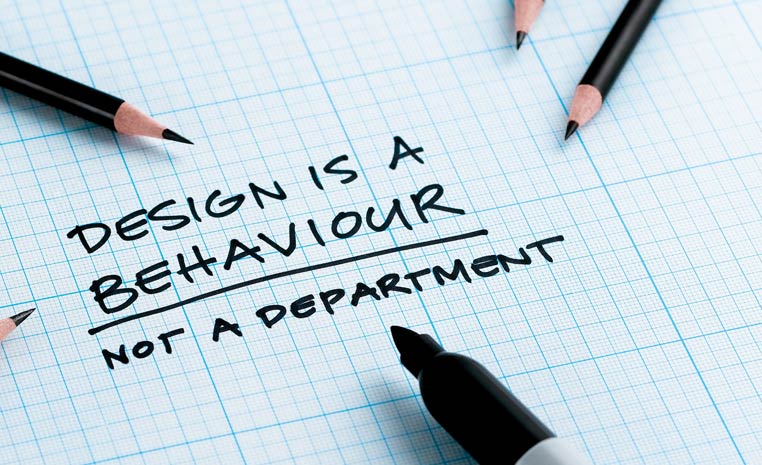 My answer is: because they design it with engineer-centric design. And that is wrong! Why? Well, because most people are not engineers! An engineer thinks something along the following: I am Google and we love the cloud. Therefore, I will design everything so that it will adhere to that principle and will – in a purist kind of way – design everything in a way that you can beautifully and seamlessly set everything up – if and as long as you use all the wonderful Google services we have. And if you don’t get that, you’re not worthy.
The same works with Nokia: we’re Nokia and we have the best hardware, the best distribution and an incredibly good and powerful plethora of services around it (we did spend time, resource and money after all to become mighty competitors in maps [Navteq], music [Comes with Music], apps [Ovi – and the many iterations before it], etc). I will therefore design everything in a way that I can let this hardware shine as best I can; I mean: we had video calls since 2005, for elk’s sake! And if you are too dumb to configure everything in a proper way and cannot find the destination to where your downloads were stored, you’re not worthy.
 Apple looks at things a little differently (and it is not only for the better although, for most people, it is): they provide a tool that brings everything I need over to my phone just like that. Job done. Easy! They will look at whatever tools they need for this. And if it means extending iTunes (which, yes, I know, they had already) to accommodate syncing data other than music and video to something other than a computer, than so be it. In that, they follow their own philosophy as slavishly as the other guys do but they do design it from a people-centric rather than an engineer-centric point of view. And that is why it works so well for people that are not (also) engineers.
They key point is this: Apple does not try (or at least not in your face) to change what people do. If I want to run my e-mail off 5 different domains, then so be it. If I prefer my contacts to sit on my disk rather than in the cloud, that’s fine. They’ll give me tools to facilitate doing what I do already and don’t lecture me on what I have to do to make it work. That this brings about subtle changes in user behaviour is fine: if you convince me gradually that things work better one way rather than another, I might be converted. But to tell me “my way or the highway” does not work! Ever!
The downside is Apple’s control mania, which blocks things (sometimes fairly questionably) because they are (or only might) be out of their control. And this is where Google, Nokia and all the others could score: try to combine things! If you would look at how Apple does things, and then – at the very end – you provide a door (doesn’t have to be a trap door, can be a flashy entry portal) to the innards and machine room of your device, so you can show off whatever you want and open the marvels of technology to those who can and want to handle it – so they can turn their super-smartphone into an uber-super-smartphone. But do leave normal people alone.
In the post-iPhone era, things have changed already (a little): you now get hidden installers (that do not ask you 100 questions on where you want to do what and where and under what penalties and with which risks), you get better interfaces, etc. BUT the default is still engineer-centric and not people-centric. Improve this, and the iPhone killer can be yours!
Image credit: http://www.ntamco.com/main/images/stories/design-is-a-behaviour.jpg
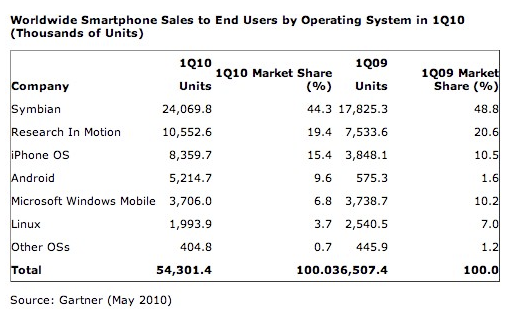
 According to a recent
  So what about it? Let us not forget how young Android is – even compared to the adolescent iPhone. The
  Also, do not forget the big brands: they do not necessarily care for a small share of the audience only. Whilst Android was fledgling and just starting up, they may have held back but, ultimately, they are about reach, and Android is certainly bound to deliver that. I would therefore suggest that we will be seeing an influx of large brands (gaming and otherwise) onto the Android platform very soon, and this will also help user orientation as to what to go for and what not.
 The billing side of things is bound to improve, too. With carrier-billing around the corner (cf. supra), this will get easier and better. And also easier and better than it is on the iPhone: charges will simply appear on your carrier bill (smart pipe anyone?). Besides that, the business models for games are undergoing significant changes anyhow: Freemium takes centre-stage, and so it should: the model allows people to try a game out and be charged for it only when they know that a) they like it, b) what they are being charged for (e.g. that coveted sword, a couple of precious lives, or that cool background theme).
 Apple has released an
  It also highlights the increasing shift towards social discovery, and Facebook is – in my opinion (but then, and this is a disclaimer, given the work I do with
 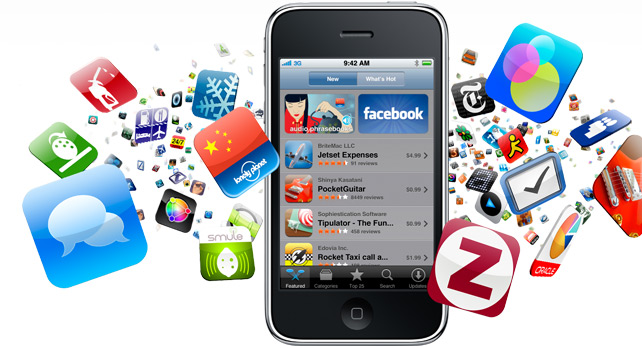 Back in summer last year (when there was a whole lot less rain), I looked at
 Now, distinct to what old lore may have, users do not tend to care for technology much. They care for what technology allows them to do (or not to do). I therefore think the first question to be asked is: can the web do things better than an app (or, indeed, vice versa)? When you then start looking at what is being done (and what users may want to do if and when technology allows them to in a convenient and accessible way), you will come to a couple of easy conclusions.
 Prior to Google, people search through catalogues, and they thought that this was an awesome improvement over having to run to libraries and stuff in order to find things. Along come the Google fairies that deliver the same more easily and quickly, and everyone now feels that catalogues are a little quirky and very old-fashioned indeed.
 It is a question of packaging and approach that will determine how well (or poorly) access and usage of content on any device works. If you call it an app or a widget or whatever else does not matter. Most people just do not care. They look at how easy it is to retrieve the latest weather forecast. If an app does that more quickly and comfortably, they’ll use that. If a widget does the same thing, they’ll choose what they like more. And if you can deliver the same thing as easily, as comfortably, as quickly and as discoverable on the web, they might just do that.
 The equation works around the other way, too. There are things I will normally access through a browser, simply because it would be too onerous to have a single app for all web pages I access. Moreover, there are indeed web pages (this blog included) that use nifty code (don’t ask me; it’s run through WP plug-ins) to render content in a more useful way for smaller devices. Would you care much for a “Volker on Mobile app”? Probably not. Because I only update this blog a couple of times a week, and it probably does not generate enough value-add to merit the (presumably) superior functionality you could deliver with an app.
 Currently, a device running constantly on a high-speed data connection sucks battery life. With an iPhone already running on something like 30 minutes when in full use (OK, I exaggerate, and, yes, I do know that Nokias do better – but then, they are not as usable [anymore]), this is a non-starter. People will not do it. Once this is solved (and this is a question of when, not of if), this goes away, and that will be a huge constraint removed.
 Touch control is very much on the fore. And it makes perfect sense: that stylus just seems to dangle on the end of one (OK, normally two) of your limbs, it’s always on, it’s always with you (quite literally at arm’s reach) and you learn how to control it from pretty early on in life. Heck, it’s even been used to get us onto this earth in the first place (or so some people believe).