
Two months ago, I mused over handsets, packages, and the like. The reason was – if I may briefly recall – that my contract ran out. I reported on a number of options but never told what happened. Here’s what:
The Carrier
I hinted as much before: it is Vodafone who have me in their grip now. The data roaming rates did it (although they have fairly decent international rates, too, specifically with Vodafone Passport, which must be one of the first programmes where a large multi-national carrier leverages its geographical spread; T-Mobile, take note!).
The Handset
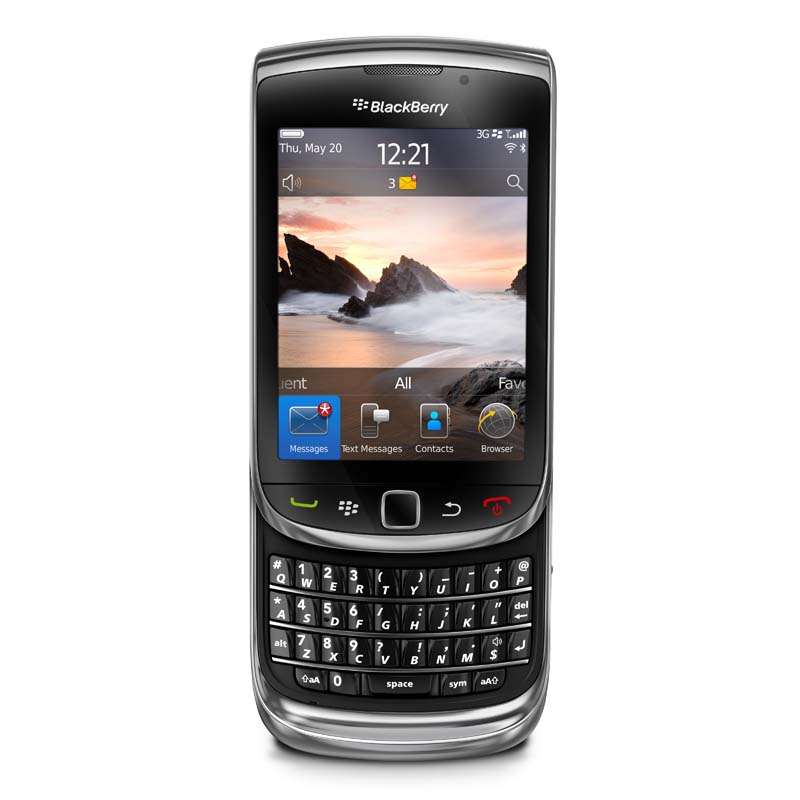
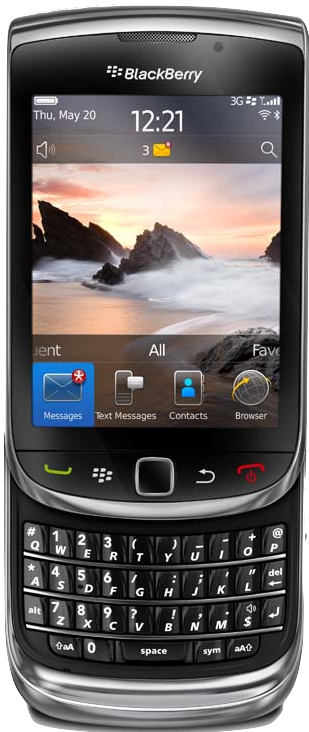 Quick recap: I was looking at device options (the contracts I tend to be on are unhealthily big, which normally gives you a free device on top of it, and why the heck not). Since I already have an iPhone (3 and 4), a Google Nexus and various Nokias, I thought what next? Do I try out another Android device? Do I give Windows Phone 7 a go? Or do I return to my old love, Blackberry. And the last one won me over. So I fell for it, and went with the brand-new Blackberry 9800 Torch. Touch screen plus QUERTY plus Blackberry e-mail. You should think that that’s pretty need and, really, all you could wish for (sorry, Microsoft, I didn’t dare – yet).
Trials and Tribulations
But, alas, it was not so. It turned out that two-odd years in the claws of the iPhone and Android had seriously spoilt me, also – and this was concerning – with respect to e-mail. I first learned that I could actually type pretty damn quickly on a touch keyboard now (better on the iPhone, less so on the Nexus), so the keyboard did not really do it. But that was not really it. The little things did it:
- Checking multiple e-mails at once so you can delete or file them all in one go? I’m sure there was one rather ingenious shortcut to do this but it was not very obvious and I had forgotten how it worked. Do I look it up on the web? Nah, it should really just work, shouldn’t it? It just felt clunky.
- Maps: a nightmare! It put me regularly miles away from where I was (and I was actually on home turf, so – thankfully – was able to survive without accurate directions.
- Browser: unusable (and, yes, I know it already is a little better than the old one).
- App World: slow and not very well stocked, is it? And, mind you, I was not looking for a gazillion funny novelty apps like light sabers and such. But even some fairly standard ones were not available.
- Speed: the handset does not run on the quickest of processors, and you could feel it. Some latency in certain processes, no really smooth pinch-zooms, etc, etc.
- Camera: OK but not more.
- Even the beautiful Blackberry Messenger (or BBM as it is also affectionately known) managed to confuse me a little: where on earth can I find that 3D barcode that allows me to add a contact on BBM? I still haven’t found it. Once up and running, it is a beauty as it always was. However, there are now many IM apps that are similarly good, and with most smartphone users on data plans, the fact that BBM is free might no longer matter as much.
On the good side? There is of course Brickbreaker (new high-score: 28,350 (!!!)) but, aside from that, the fairly solid feel of the handset, the nice rubbery back (really nice in fact) and the somewhat quaint but familiar design lines plus decent touch was all very good. I really liked the handset as such. But what was in it, not so much.
The New Kid
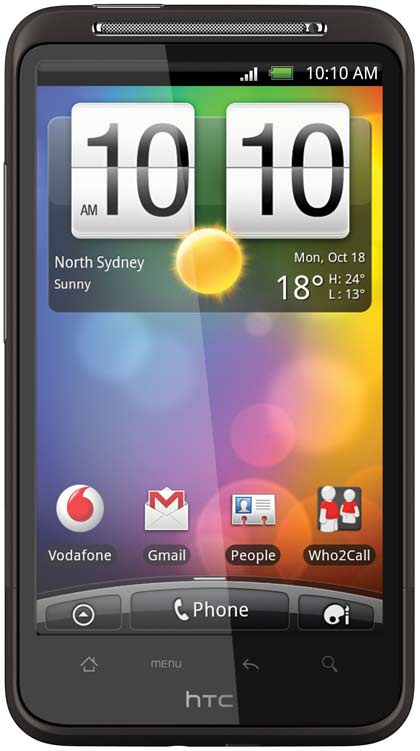 So – you probably guessed it – I gave it back and exchanged it for an HTC Desire HD. Only a couple of years ago, this would have been unthinkable. Not only was I a fairly die-hard Blackberry fan but to replace a Blackberry with a Taiwanese newcomer handset? Voluntarily? Noooo! However, it is gorgeous (besides being a bit of the big – no, really big – side). It does all the things that so frustrated me on the Blackberry so much better. Well, slicker at least. E-mail set-up is a breeze for Gmail but only a little less onerous than on the Blackberry for others (and, yes, the QUERTY does help for weird password combinations), but, once done, it works really well. And then, there’s of course the little things: 8 mega-pixel camera with stunning quality (although the lens sticks out a little at the back, which might be not so good), comparatively wholesome goodness when it comes to apps (in spite of the shortfalls of Android Market), heck, it synced all my apps from my Nexus automatically. And, Apple get this, it adds little raindrops (and a windscreen wiper) in one quick animation should it rain where ever you are (which, in England’s North-West, it does quite a lot, I’m afraid). Sweet! Browser works beautifully, maps come with proper satellite navigation on par with dedicated devices, and so on, and so forth.
Mind you, I am not yet sure if I may not change back to my iPhone 4 (which is, let’s face it, damn slick!). But I will give the Desire its run, and it does pretty well so far.
Blackberry Needs to Up the Ante!
But let’s look at my old friend Blackberry. Read through the last two paragraphs, and you know where Blackberry needs to up the ante. The Torch – its newest handset with its newest OS – feels slow, sluggish, dated, laboured.
But not all might be lost: last week, at CES, I could catch a glimpse of the future: RIM’s Blackberry PlayBook, which runs on QNX, rumoured to be the foundation for the next generation of “proper” Blackberries, too. And a beauty it is: much more hardware power (dual-core processor, namely a 1 GHz Texas Instruments OMAP 4430), swish graphics (1080p video inclusive), really impressive multi-tasking (HD video + game + websites + whatever open in parallel and seamless change from one to the other in an easy and casual swipe with no lag in any of it), and it will apparently be available on Sprint’s 4G network. Check here for the full specs.
It did however lack e-mail! Yes, you read that correctly: you can apparently not get RIM’s mother of all killer apps on the PlayBook – unless you also happen to have a “normal” Blackberry (or something to that end; the folks at the Blackberry booth were a little shy about this). What were they thinking???
But let’s take stock. What does RIM have? A – so far – healthy balance sheet, good hardware, still great e-mail service infrastructure (albeit not as unassailable as it used to be), in BBM a hit in the youth market and – arguably – a bit more of a runway than most because of the – again arguably – longer times it will take enterprise IT departments to swap systems (or something along these lines; Dell is probably an exception so far). In QNX, it also seems to have a really powerful OS at its disposal (just add e-mail, please). And, finally, it has a proud history of very good handsets (the Bold must have been one of the best ever) as well as demonstrated expertise to break into new verticals (as the Pearl had shown).
So, my dear friends from Waterloo, Ontario: do it. I think you can, just show us, will you? 🙂
 Every now and again, war breaks out on the web. Or, rather, a full-on discourse of learned scholars on the world at large or, in our case, mobile in particular. This week saw one such blog fights and, no, I am not talking about Wikileaks. The formidable Robert Scoble (he of recent
  Scoble first, he, never shy for words, delivered a swift and damning verdict on Nokia: Illustrated ventured Eastwards again to LeWeb last week and took stock of Europe’s smartphone pulse.he reckons that Nokia is dead because none of his friends has one or, if they do, they don’t like it. People pile up in Apple stores and wax lyrical about the apps they find on the iPhone and iPod Touch. Nokia is arrogant rather than cognisant of its shortfalls and he has not recently heard of a strategy. The people (and/or Scoble’s friends) love iPhone. Case closed.
 It’s always a little more difficult to summarise Tomi’s posts as he doesn’t do quick ones. Who knows him is aware that he is a big fan of numbers, of big numbers, in fact. And this is why he hangs on to Nokia: because, you know, their numbers are big! His original post goes – very, very simplified – like this: he sets off to compare Apple with Porsche (as opposed to, say VW). He didn’t reference
  And here’s why (hint: Tomi did get it right but then got carried away on the Finnish ticket): Tomi nailed it in his first post when he compared Apple to Porsche. Apple is not (or not yet?) competing with the Volkswagens and Toyotas of the mobile world. Now: in the automotive world, Porsche failed with the big coup (but, let’s remember, only just!). Apple might yet pull it off. The starting point is not dissimilar: super-high margins, a very comfortable lead in the luxury segment and loads of cash. Porsche over-reached (driven by a perhaps over-zealous ruler). Apple might, well…
 You hear it often (most recently by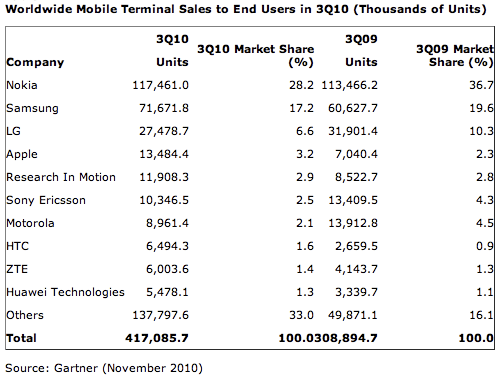
 I have been dealing with movie and TV licenses for longer than I care to remember, and the pattern (with few exceptions) always was the same: the licensor comes to you saying that, because they are offering you (the publisher) a well-known movie/TV/entertainment property that everyone and their dog are fans of, you should pay them a healthy amount of money (either up-front or as a minimum guarantee against revenues) for them to grant you that license. This means that the publisher starts at a point of significant loss: a six-figure guarantee (and I’ve seen larger ones, too), six-figure production costs and little mitigating the risk that the title might totally tank.
 Step 2: tariffs. With an unhealthy amount of traveling abroad to do, my main cost item on phone bills regularly is data roaming, so this is where my sensitivity lies (because of the eye-watering bills I regularly get, I am not bothered about 600 or 900 UK any-network minutes costing £5 more or less), and it became clear quickly: Orange, T-Mobile and 3 are out of the race (their charges are even higher than O2’s). Vodafone looks good (about 1/3 of O2’s rates) but O2 claims to still have their Blackberry tariff for international data roaming (although I struggled to find it on their website). Now, THAT would bring my bill down by a cool £150-200 a month or so. Enter Blackberry. The
 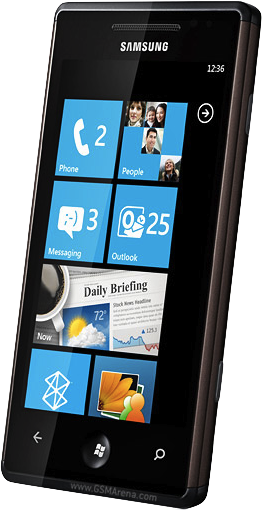 And then I started to compromise: anything exclusive to Orange, T-Mobile or 3 was out of the question (because data roaming is pretty much a killer for me), which boils it down to Blackberry and O2 or any of the others on Vodafone (which would mean that I couldn’t get what started being my favourite, the Samsung Omnia 7). Hang on: I compromise over some shoddy pounds? Is the handset then not so all important as one might have believed when reading all those blogs, news blitzes and tech publications over the last months?
 Sluggishly reacting applications, latency in almost everything you do, crashes, blank screens, long lag to pick up networks, buggy settings. Do you remember any of this? Sounds like some old-fashioned feature phone that was somewhat overloaded by its ambitious maker, doesn’t it? But, alas, no, it is not. This is the user experience with a one-year-old iPhone 3G, 16GB since 24 June 2010. Do you recognise the date? Then luck will have it that you have experienced the same: the grandly titled “iOS4” update that was being pushed down your throat (or rather iTunes) to your iPhone 3G.
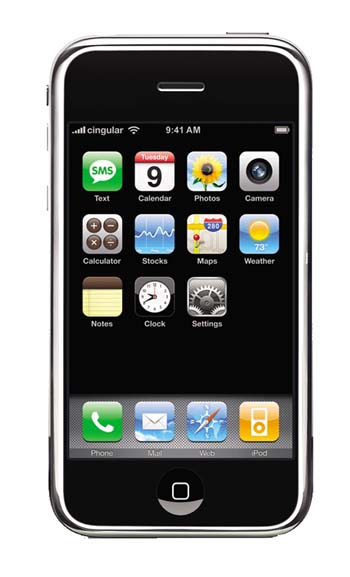 And then it came back to bite them! I am not a techie but iOS4 on the iPhone 3G feels like someone put a little too much luggage onto too frail a porter: the things creaks and aches at every corner. Gone are the days where one could switch from one app to another in seconds, where the iPhone – in good Apple style – did what you wanted it to do without much ado but breathtaking efficiency and speed. Now, it is clunky and, well, very old-fashioned. It could of course all have been avoided: just don’t push iOS4 to the iPhone 3G (or older models). No one would have cried, you should think: if the hardware cannot handle it, it cannot handle it. Users understand such things one should think. Keep iOS4 to the iPhone 4 (even the numbers match, doh!).
 However, I think that is not it. My suspicion is rather more frightening. It very much feels like Apple starting to overextend itself and learn how complex and fragile it is to deal in the mobile space. Pushing iOS4 to devices that obviously (not only under some special and hard to find circumstances) cannot cope with it is just shoddy. Every game or app developer in the market for more than 2 years would have caught this in QA. Does Apple not have QA? Or not anymore? Or at least not enough? It might happen to you when you try too much too quickly. Apple’s passion (or paranoia?) that drives it to try and do everything itself appears to haunt it now: I mean, QA is really simple. You don’t need cohorts of phDs in elementary physics to do this. It doesn’t take you 3 years to build it up. And – last but not least – Apple appeared to being very much on top of this in the past. So what happened?