Mashable founder & CEO Peter Cashmore (who I hugely respect) declared in his recent CNN column the death of privacy and has also found the culprit, i.e he spotted
social media hold the smoking gun.
With all due respect, this could not be further from the truth (although, to be fair to him, he really only used it as an opener).
The term “social media” is self-referential and, hence, pretty meaningless.
The term “social”
refers to the interaction of organisms with other organisms and to their collective co-existence.
Media is the plural of medium, which means
something intermediate in nature or degree.
Therefore, media in the context of communication is – by definition – a tool (sic!), which connects one (human) being (also kown as the publisher) with another (also known as the user, recipient, reader, consumer, …). When “media happens”, one therefore looks at (at least) two (human) organisms interacting, which is – again by definition – social behaviour. QED.
Thou shalst not blame a tool.
To “blame” social media is akin to blaming a shotgun for dead people (and a regular reply to the latter argument would bear “interesting” implications on the former indeed, namely result in advocacy for censorship!).
When Peter Cashmore claims that social media was to blame for the loss of privacy, what he really means is that the (relatively) new tools interactive media provides users with and – maybe even more importantly – the cost of these tools (or rather the lack thereof) has led to an explosion of “publishing” activity by every man (and – PC calling – woman) and his/her dog. The published opinions of all these men and their dogs lead to the creation of something like a “meta-opinion” (which need not always be true of course: cf. the example of billions of flies eating excrements).
The core of it then is people (and lots of them) grouping their proverbial voices to create a storm. This has often been seen and some stories like the one of the Stolen Sidekick have made history. Was Sasha’s (the girl who stole the Sidekick) reputation killed by Evan’s (the guy who published the story) website? What did it then? The server? A script? Some lines of HTML code? Hardly. What it did was the overwhelming response of the public (all those men and their dogs) reacting to something Sasha (the person) had done (stole the Sidekick). And – just as a reminder – stealing something is bad!
The Tube to The Power of Mobile or: the Rise and Fall of Ian
A more recent example concerned a (now unemployed) fellow named Ian. He is a guy who appears to have a problem with anger management. Unfortunately, he worked in a customer-facing job, namely on the tube platforms in London. He lost it and had a “little” rant at a passenger (“I’ll sling you under a train”). Happens every day. BUT: it should NOT happen. Not every day, not any day!
This time, something was different, namely there was a guy standing next to him who filmed it on his mobile. He then posted this to YouTube, blogged it, twittered about it and, soon after, it was on the front pages of newspapers, online and on TV. Ian never saw it coming. Admittedly, he was particularly unfortunate that the guy filming happened to be Jonathan MacDonald, one of the more prolific and knowledgeable “social media” gurus. Suffice to say that Jonathan has a good handle on how to get word out.
Reactions to this (as well as to the Sidekick story before) were wild and (sometimes) violent, in all directions. One common outcry was the one of “trial by social media“. Hang on. What did Jonathan do? He used YouTube (which is open to everyone, including Ian), he used a blog (dito), he twittered (dito). Via Google (or any number of other tools), everyone can get the Twitter handles of newspaper editors, TV news anchors and everyone else in the “professional” media in minutes (Ian, too). A trial is one where one side (the prosecutor) prosecutes and the other side (the defendant) defends. The person that decides, however, is the judge (and/or the jury depending in which country you live).
Therefore, even if one would slap the nasty tag of “prosecutor” on Jonathan, he still was only a little piece of this. And he was NOT the judge! If there was a “trial” by any media, one could/might/wish to look at the “professional” media who picked it up although I understand that they actually have been speaking to Jonathan but also tried to get word from TfL (the tube operator) and Ian. No reply, it seems. Which is whose fault precisely?
He could have responded. TfL could actually have used this publicity to turn it around: Ian has apologised (now), TfL could have shown that they do not tolerate this AND that they are constructively tackling issues when they know of them. Jonathan even offered his collaboration in that. Alas, all London mayor Boris Johnson had to say was that he was “apalled by the video”. He did it on Twitter, mind you. How very 21st century. The tool maybe, the reaction not.
Don’t Be Evil
Google’s famous motto “Don’t Be Evil” was first smiled at as being “quaint”, then hailed as revolutionary and then queried in the face of the company “balancing” acts e.g. with a view to their self-censorship in China).
As a general motto, however, this is what is at the very heart of society. It is the motto we are all (hopefully) being brought up with. Don’t do wrong. It is, I would pose, a fairly broadly supported smallest common denominator of society.
Back in the olden days, a true gentleman would be good for his word. He would stand up in the face of evil and would defend the poor and defenceless. Honourable. And men had to be responsible for their own actions and inactions. At its core, it is all about this:
Self-responsibility is the ability to respond yourself.
Then it all went South (or so said my late grandma).
Empowered Media
Grandma would be delighted though: for we are now in a position again where the straight-forward “man and his word” (and indeed woman, too) can be re-ignited. And the driver (or, in Peter Cashmore’s words, smoking gun) is a variety of newly empowered media.
Empowered media describes the causes and effects of what we are witnessing much better than “social”: digital media become empowered by the tools (devices, software, etc.) that can be deployed to help communication – of fact and opinion – from people to people. Period.
Distinct to the ancient past of newspapers, the number of people able to “publish” has vastly increased because the costs of doing so has decreased to virtually zero. The same is true for the receiving end (which can instantly also turn into a publishing side itself). Very powerful. Also a little intimidating maybe. Well, at least if you have a problem with anger management or need otherwise a broad shoulder to hide behind.
That broad shoulder, the “excuse” by reference to some foggy higher-ups, gods in the clouds, “superiors”, etc is being removed by the ability to record and report fairly accurate accounts of actions and inactions of basically everyone. It empowers everyone (including Ian) to respond: we just re-gained the ability to respond ourselves.
Mobile is the Most Empowered
Mobile is the most powerful tool in the armoury of digital media: it is with you at all times. It is switched on at all times. It is connected at all times (well, the new generation is anyway). It can record audio and video. It can transmit audio, video and text. And it’s yours, and yours alone. And whilst it is so personal, it opens a gateway to potentially 6bn people. That’s a lot of power.
And it’s in your hand!
 Nokia struck again,
  But! On the maps side, Nokia competes against
  But even aside from this, when it comes to “being found”, all my friends (real and virtual) knew through my blog, through Twitter and Facebook that I was going to
  On top of that, it is – arguably – much easier to integrate a location-based function into a network that already has hundreds of millions of users (and I am not talking of hundreds of millions phone users because they only are potential users of any service that might come with the phone) than to build one. Nokia does certainly have a great starting point (it sells more devices per year than Facebook and Twitter users combined; see – old –
  It seems to be music week this week: Apple running its somewhat
  Forrester was kind enough to let me have a glance at the report, so let me dive into its revelations and the underlying rationales, which starts off with looking at the broken model of the industry: in (latter part of) the 20th century, the music industry was mainly fueled by record sales (first vinyl, then CD). With the introduction of digital media and, in particular, ubiquitous broadband connectivity in many parts of the world, it shifted to digital downloads. Unfortunately, it mainly shifted for downloads that people did not pay for. iTunes has only taken a piece of the action. And iTunes’ ¢99 per song model has then contributed to people no longer buying whole albums but only the songs they like most, which somewhat squashes profitability.
 Nothing wrong, you say? No, it is not. However, “deploying functionality” is way short of what is needed to build social value. What makes a community? Emphatic engagement with fans, not a set of tools that sits somewhere on the various sites and offerings being operated by some far-away call center. Whilst the principle is right, the suggested execution remains a little shallow. Forums & networks is all they have to offer. Hm. Everyone has them already, so will this work?
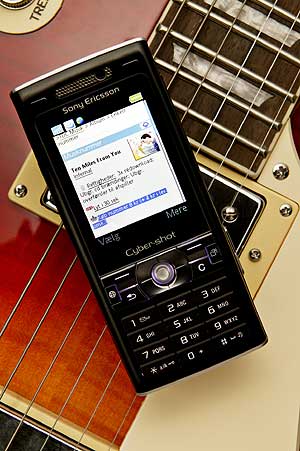 Mobile is in the premium tier (with very few others): Forrester believes that carriers’ and OEM’s efforts, investment and – last but certainly not least – billing relationships merit this. I would suggest that the eye-opener ringtone where one could charge huge premiums for monophonic (!) 20-second-loops would contribute to this conviction, too.
 That sounds awesome but how do you create it? The starting point needs to be the relationship between artist and fan. I have long held that this bond is more than actual musical tastes; it is a lifestyle decision, which is why fans crave to belong to “their” artists’ circles. As early as 2002, a
  Palm came out with a bit of
 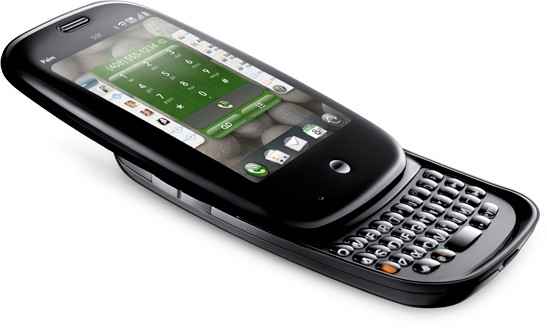 But the Pre is doing even better on the music front: its MP3 player includes onboard support for Amazon’s MP3 Store. Files are downloaded directly over the air to the device. Now that’s pretty cool!