
 First, Samsung announced it would drop Symbian from its smartphones in 2010 in favour of its new, home-brew bada OS. Then Nokia said it would drop Symbian (albeit not immediately) from its flagship N-series devices replacing it with Maemo, the OS that premiered on a Nokia device on the recently released geek dream, the N900.
It is said that there are
no current plans for Maemo devices in the […] X-Series range or the popular [?] E-Series enterprise range
but the word “current” suggests that this might well change soon, too.
This would leave Symbian without its two largest OEM supporters. Will there still be a future for it?
 Symbian of course boasts a still very impressive number of legacy devices, and it will therefore be here for a while. However, what does the long-term outlook look like? Android, LiMo, etc all “boast” a nimbler, more agile set-up, allowing for faster development and, arguably, better user experience. This is not necessarily Symbian’s fault (it carries with it its legacy around) but it makes it that much harder for it to reinvent itself.
I am not sure if there is place (and – timewise – the runway) to reinvent itself without the backing of big OEMs. I would be surprised if carriers would use it; they – even more than OEM – require adaptability and customization, which the newer platforms seem better suited to serve. Vodafone’s choice of LiMo for their first two Vodafone 360 devices is testament to that.
The ever-bright Tomi Ahonen suggested a comparison with DOS/Windows and MacOS: he compares Symbian to DOS, Maemo to Windows and iPhone to MacOS: MacOS led in UI and leads to this day. DOS outsold MacOS in spite of its dramatic inferiority because of the legacy instal base. Windows then overlaid DOS and rolled out on all the legacy devices with MacOS, as a result, always playing second fiddle despite its superiority.
The market place in mobile looks different though: DOS was nigh dominant (outside the mainframe and large enterprise side of things) whereas Symbian “only” covers about 5% of the current market. It is big but probably not big enough to bridge the DOS/Windows migration gap. With Android, Blackberry, Windows Mobile, LiMo, JavaFX (if that ever takes of properly), etc all on the map, too, the situation is very different to the DOS/Windows/MacOS world. Would Nokia be quicker in execution, I might still look at it differently but, unfortunately, it doesn’t seem to be that way.
So is it good bye, Symbian, then?
 The conference formerly known as Symbian Smartphone Show (or something along those lines) is back this year as the Symbian Exchange & Exhibition (or SEE09). It kicks off this Tuesday in London’s Earl’s Court Exhibition Grounds and boasts a rather impressive line-up:
 After much huffing and puffing, Vodafone
 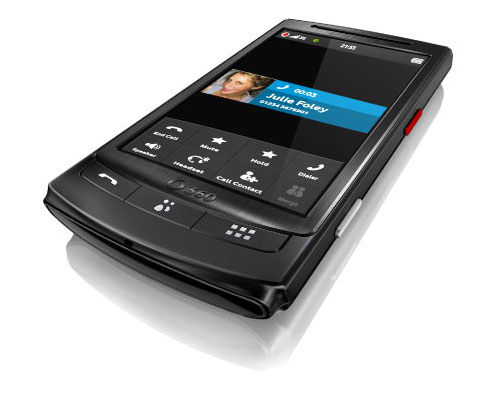 It has an address book with nodes into Facebook, IM (Windows and Google) and will “soon” also cover Twitter, Hyves and StudiVZ (the German Facebook clone). Two tailor-made (!) handsets that use a proprietary (!) interface based on LiMo’s release 2 mobile Linux OS. Users can create groups across different networks (which is very neat!), an app store with 1,000 apps at launch (no word so far what this comprises) and syncing with your computer.
 In the last two days, two forecasts informed us about the value of the mobile app market in – convenient as ever – the distant future that is 2013. US analyst firm
 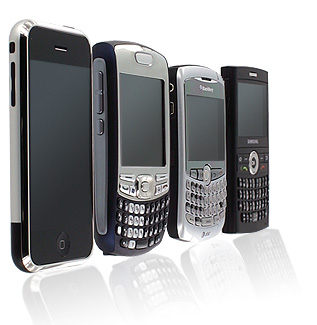 If we estimate a 20% growth year-on-year for smartphones (vs. 5% for the overall phone market, which seems to be loosely in line with the general dynamic), then we would end up with something like 900m smartphones by 2013. Yankee Group predicts that smartphones in the US will quadruple by then (from 40m to 160m) and does not seem to be very far off. Wireless Expertise thinks the global number will be 1.6bn, which again, might not be that far off.
 Now, I am not predicting total doom and gloom, in the contrary. I do think that Apple’s wake-up call has brought a much-needed new wave of innovation and I also believe that this will be successfully incorporated by some carriers and OEMs. But by all of them? Not very likely.
 The labels are fairly happy,
 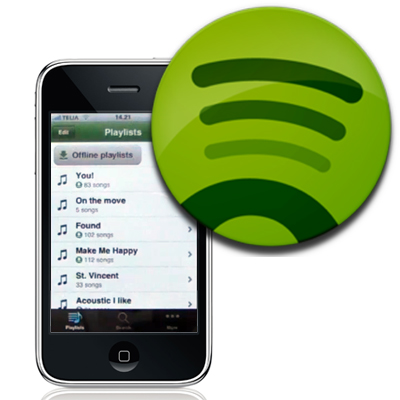 The much-discussed freemium model it is then: get them hooked on the free desktop app and convert them to paying users on mobile. It has long been known that users are more likely to pay if stuff is portable (I can still recall the disbelief of music executives when they realized that people would pay more for a monophonic ringtone than for a full-blown music track). And whilst now the link between (free) basic service on the desktop and (premium) mobile service is new, the principle is old and proven: and it is simply added value (plus the little things like being used to paying on mobile and having convenient existing billing models in place). If the user perception is that they are getting value for money, they are willing to pay. And if it is for such a fairly special thing such as music (don’t we all love and nurture our very own musical mix tastes?), the step is even easier to make.
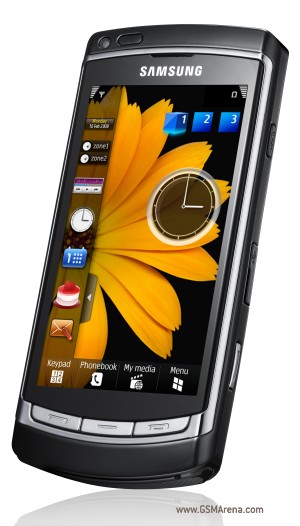 Samsung’s new app store (no one can do without one these days!) will be operated by Handmark and is set to go live on 14 September (2009, that is),