Here is the deck to the talk I gave at the Social Media World Forum (or rather its mobile track, which was called Mobile Social Media Europe) in London this week.
Mobile+social: the case for games
View more presentations from Volker Hirsch.

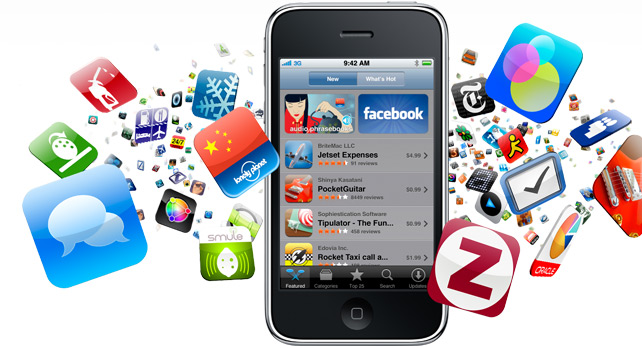 Back in summer last year (when there was a whole lot less rain), I looked at comparing the mobile web to mobile apps. There is quite a discussion raging on which it will be. The Church of Jobs raving on about their uncountable number of app downloads on the one hand, and the brave warriors of ubiquity on a technical level on the other.
Asking the right Questions
I would posit that there are three distinct issues to be discussed:
1. What is the web?
2. What is the mobile web and is it distinct to the web?
3. What about the content and its context (irrespective of platform)?
Every attempt to an answer should really start from the point of the user (who, I am aware of that, more and more becomes a creator at the same time) because, without them, there is not much of a (commercial) point to it.
 Now, distinct to what old lore may have, users do not tend to care for technology much. They care for what technology allows them to do (or not to do). I therefore think the first question to be asked is: can the web do things better than an app (or, indeed, vice versa)? When you then start looking at what is being done (and what users may want to do if and when technology allows them to in a convenient and accessible way), you will come to a couple of easy conclusions.
The web in itself is just one huge content repository,
… which is – currently – being accessed predominantly by browsers. Some questions on this:
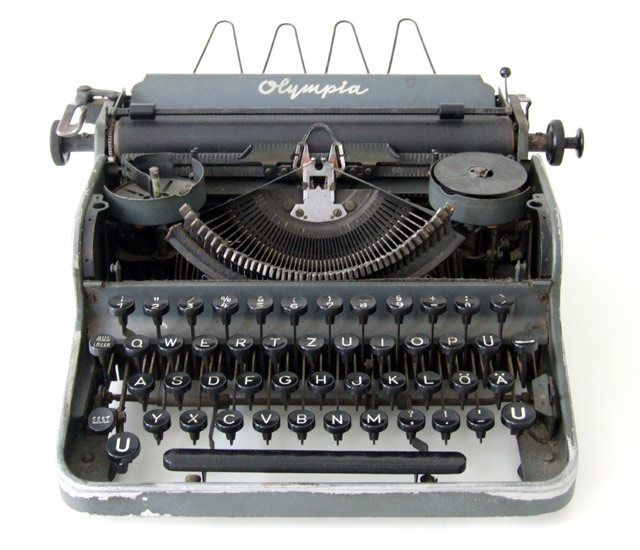 Prior to Google, people search through catalogues, and they thought that this was an awesome improvement over having to run to libraries and stuff in order to find things. Along come the Google fairies that deliver the same more easily and quickly, and everyone now feels that catalogues are a little quirky and very old-fashioned indeed.
This is to illustrate that the packaging and connection into discovery mechanisms are more important to the usability of the content than its actual delivery. Ease of access matters as, otherwise, there is, well, none.
The mobile web is the web, the web and nothing but the web.
It only so happens it is being accessed from a device with a smaller form factor (that is, until H&M starts shipping those iPad anoraks with monstrously big pockets next autumn). Increasingly, browsers available for mobile devices render web content originally formatted (not created!) for larger devices for the smaller screens. This does not, however, mean that they are the best way to deliver content to a small device.
One big thing speaking in favour of a unified web platform (including on mobile devices) to deploy content is, of course, volume and unit costs: all other things equal, the cost of deploying via a unified web platform is significantly lower than on others (no need to build custom solutions for every man and his dog and unit costs drop to virtually zero very quickly. This is arguably the key argument in favour of the web but I would suggest that it will only work if you can deliver at least as well as other routes of deploying that content offer to.
The usefulness of content is, per se, independent from the device.
In other words, device constraints have, per se, nothing to do with content being accessed, used, consumed, processed. By way of example, who would have thought that people would read a book on the go in the early 90s? Doesn’t seem to be a big thing anymore today, does it? And why not? Because we got used to solutions that make this convenient.
 It is a question of packaging and approach that will determine how well (or poorly) access and usage of content on any device works. If you call it an app or a widget or whatever else does not matter. Most people just do not care. They look at how easy it is to retrieve the latest weather forecast. If an app does that more quickly and comfortably, they’ll use that. If a widget does the same thing, they’ll choose what they like more. And if you can deliver the same thing as easily, as comfortably, as quickly and as discoverable on the web, they might just do that.
Not everything is delivered best on the web
Now, the web is big, it is very big indeed but it is unlikely – despite of what Apple tells us – that there will be an app for every web page. Then again, does there need to be? No. Why not? Because not every web page will be accessed from mobile devices or, rather, will not need to be accessed from mobile devices in numbers large enough to be of commercial relevance.
Hah, I hear you say, he is taking a short cut here: the above implies that, if there is a need to access content from a web page, an app is the better solution. And, yes, you are right. But I will come to this later.
Sometimes, the web does not even work well through a browser. Google Earth is one of these: it is a desktop application because of functionality constraints over the web. It is connected, mind you.
Not everything is best delivered through an app
 The equation works around the other way, too. There are things I will normally access through a browser, simply because it would be too onerous to have a single app for all web pages I access. Moreover, there are indeed web pages (this blog included) that use nifty code (don’t ask me; it’s run through WP plug-ins) to render content in a more useful way for smaller devices. Would you care much for a “Volker on Mobile app”? Probably not. Because I only update this blog a couple of times a week, and it probably does not generate enough value-add to merit the (presumably) superior functionality you could deliver with an app.
Some things don’t work on Mobile, or do they?
Did you ever use Google Earth via its iPhone app? If not, let me tell you that is a pretty poor experience compared to the wow-feeling all of us will have felt the first time we played around with it on their desktop app. Why? Because it just doesn’t translate properly. Imagine watching Independence Day on the iPod Touch: you’d get cute little spaceships but not really the awe-inspiring size Emmerich had in mind when shooting it.
Both of these lack of one thing mobile can never deliver, namely the big screen. They are, in their current packaging, unsuitable. This may not however apply to subsets of the content and/or information embedded in them. Google Earth may provide useful data that, if re-packaged, delivers a powerful and good user experience on a mobile device, too.
Functionality and Usability are King and Queen
Almost all considerations result from and in questions of functionality and usability. On devices with larger form factors and constant high-bandwidth connections, a lot of rich content can be appropriately delivered via a web browser. The same cannot (yet) be said of mobile devices. Even with 3G, performance of rich media can often be shoddy. Poor user experience = frustration = low or no usage.
With 4G on its way, this may change considerably. With down-speeds North of 10 Mbps to your mobile device, there is a lot of rich content that you can get to your device in no time (or, rather, real time). That would be functionality solved then.
In the short and medium term, I see, however, two other constraints, and these are a) usability from a device perspective and b) usability from a user perspective.
 Currently, a device running constantly on a high-speed data connection sucks battery life. With an iPhone already running on something like 30 minutes when in full use (OK, I exaggerate, and, yes, I do know that Nokias do better – but then, they are not as usable [anymore]), this is a non-starter. People will not do it. Once this is solved (and this is a question of when, not of if), this goes away, and that will be a huge constraint removed.
The other obstacle is usability from a user perspective. What does an app actually do? It pre-packages content. And because it (or some of it) is already in there, you don’t have to download it again. It also allows you to build in specific input mechanisms that optimise use for the mobile device (and how this impacts uptake, the iPhone has shown!).
Touch as a game changer?
 Touch control is very much on the fore. And it makes perfect sense: that stylus just seems to dangle on the end of one (OK, normally two) of your limbs, it’s always on, it’s always with you (quite literally at arm’s reach) and you learn how to control it from pretty early on in life. Heck, it’s even been used to get us onto this earth in the first place (or so some people believe).
Touch control then also does away with a few constraints in particular on mobile screens (where mouse control, touchpads, etc are not normally readily available nor as useful as they are on a desktop). So once HTML5 is widely deployed (which – I am told – makes the UI life within web pages a whole lot easier), the usability thing might just go the way of the mobile web.
Touch control (and other nifty things; check here for another Apple patent on finger-based input using the camera) then propels the usability forward (or back? the first maps were arguably drawn with fingers in the sand…), and this will be quite helpful – in particular also on the smaller device.
Until then, build apps that incorporate controls that make the user’s life easy (or at least easier). If you call them apps, widgets or whatever else you can come up with, doesn’t really matter…
 Nokia recently shook the world by starting to provide its Ovi Maps app including turn-by-turn navigation for free. And only just under 2 weeks later, it announced that users have downloaded the app more than 1.4m times. Good stuff.
The numbers led some people (Nokia’s Vanjoki as well as various industry pundits) to claim the dawn of Ovi downloads had arrived. I beg to differ, and here’s why:
1. A mapping application with turn-by-turn navigation cost, until very recently, anywhere between $30-80 a pop. And all of a sudden it is free. It is a little akin selling a Porsche Cayman for the price of a VW Polo: people will jump through any number of hoops for that. This is not proof that the download boom has finally also arrived with proud owners of Nokia phones; it merely shows that this is too good an offer to decline.
2. 1.4m downloads across the Symbian install base of c. 300m is not actually that impressive a number. To put it into context: a simple ad-funded game, Waterslide Extreme by German high-end development house Fishlabs, which is also a free download, clocked on the iPhone more than 10m downloads. As far as I am aware, the developer still sees around 40,000 downloads per day. And this is a long time after its release and for an app that fills significantly less of a need than satellite navigation. But even if one leaves aside this last bit (which is taking a very favourable view – no ceteris paribus here), Ovi Maps would need to hit roughly 100m downloads before it could say it was, pound for pound, as successful as Waterslide Extreme (NB: this is not exactly true because Nokia only supports some 20m devices to date).
3. It is not actually proof that the Ovi Store works as users can also download the app via the Nokia Website or via the “SW Update” application on the phone. At a time when the store still needs 90 seconds (measured on an N97 running on a Vodafone UK 3G network) and more to even load the opening screen, I struggle to believe that the store will see an uptake across the band.
4. It is likely being a bit of a one-off: Nokia also announced that, from March, every Nokia will come pre-loaded with the app.
Now, to clarify things: it is great news for boosting awareness of mobile phones as location-aware devices, and the pre-install on future phones will help that. It is likely that this will contribute to the fall of the dedicated satnav sector in much the same way Nokia’s landmark deal with Carl Zeiss lenses (and the resulting higher image quality of photos taken with your phone’s camera) was a doomsday scenario for the lower end of the digital camera market.
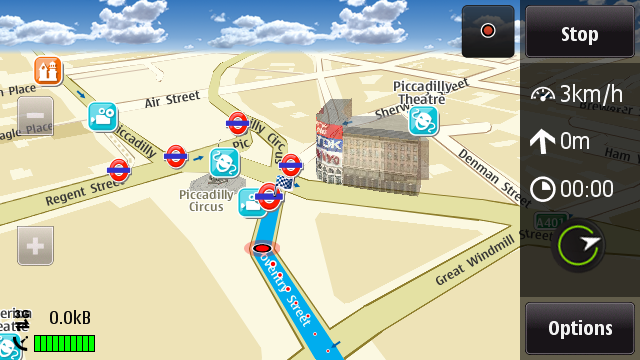 Also: Ovi Maps looks like a VERY good app: it covers more than 180 countries (car & pedestrian navigation: 74; traffic: 10), it is available in a whopping 46 (!) languages. It includes 3D landmarks for 200 cities around the world and incorporates Lonely Planet and Guide Michelin city guides. It is good, no doubt!
Finally, Nokia started early with the mantra of location-awareness. It was just that it had not executed particularly well to date. I know there is probably much more in the works than is visible to the untrained eye (or any other eye not from within the company) but the company does need to ramp up here since its hard-earned (and well-deserved) fame is/was beginning to fade quickly.
It would be fantastic if the world market leader would see uptake of applications rise sharply. I would very much like to ask them though not to fool themselves into believing that the store is not so bad after all only because of one successful application on it. There is a lot of work to do. The Ovi Maps case simply shows that one does not have to be a crazy Apple fan boy to be craving cool and useful apps. So, dear Nokia, continue to study the app store and try solve the shortfalls of the Ovi Store. It’ll be good for everyone!
The Swedish maker of accessories for mobile phones, Krusell, has been silent since August or so but they now came back with a bang and published the numbers of the top 10 selling phones derived from their accessory sales for both October and November 2009 in quick succession.
I am only giving you the November positions (hint: the October ones are in brackets). It goes like this:
1.(1) Apple iPhone 3G
2.(-) Nokia 3720 Classic
3.(8) Nokia 6303 Classic
4.(-) Nokia E52
5.(2) Nokia 5800 XpressMusic
6.(-) HTC HD2
7.(-) Nokia E71
8.(-) Sony Ericsson Naite
9.(6) Samsung B2100
10.(5) Nokia 6700 Classic
() = Last month’s position.
The iPhone seems to be the darling of Krusell-accessory-buying customers (which may or may not be a matter of concern – depending on your taste. Nokia’s performance is fairly noteworthy though. A little reminder that the Finnish giant is anything but dead. And don’t be fooled: Krusell has stores all over the world, including in the US, which makes the overall top 10 performance of Nokia phones all the more impressive.
As to how meaningful these stats are, I refer you to earlier thoughts (see also here).
 Today seems to be the day of “the others”, huh? 😉 First Android, now Symbian. But the news are too significant to ignore:
Nokia’s app store Ovi is now clocking 1m downloads a day. Make that 300m p.a. Compare this to Apple’s, what, 5.7m per day. That was c. 1 year ago though, so let’s double that, shall we? So, 1/10 then shall we say?
However, Nokia and its much maligned Ovi Store shows that it can actually starts flexing its muscle (what the law of numbers can mean, I showed on the example of Vodafone: its app store is bound to deliver – even on the abysmal uptake of legacy J2ME devices – some 200,000 downloads a day).
Nokia says it is growing 100% month-on-month, and with this pace would overtake Apple in the near future. Doable? Almost certainly! Why? Because of the law of big numbers. Nokia has about 5x as many smartphones out there as there are Apple iPhone and iPod Touch devices combined, which of course means that Nokia would overtake Apple in terms of total app downloads when each Nokia smartphone user would only download 1/5 of what iPhone/iPod Touch users download. Same fun? Arguable… 😉
I do not know how many devices come preloaded with the Ovi Store but this has always been a huge driver: embed and prosper. Nokia confirmed as much, too. But let’s only assume that it is a tiny fraction (none of the legacy devices out there had it embedded, that’s for sure). And it shows you the potential: Nokia has a whopping 1.3bn phones out there (yes, you heard correctly), and let only a fraction of these use the Ovi Store, you are looking at a massive number, outstripping Apple immediately. Now, I doubt that they will outstrip the App Store in terms of apps per user but there is no team that plays football as well as FC Barcelona, and the others don’t give up either…
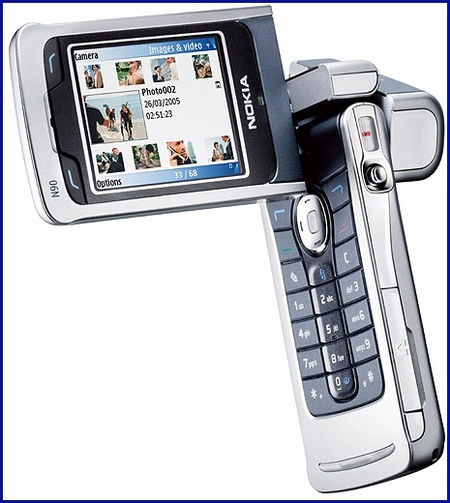 Nokia has made a lot of mistakes recently, with its stores, and others: to come out with something that was thought to be “good enough” is bad: strive to be the best at least, will you? Incidentally, it might have avoided the scrambling it finds itself in since the Apple app store launched. Hah, who would have thought? But let’s be fair: Nokia went about its business better in the past, it has unprecedented scale. Examples? What is the best-selling consumer electronics device of all time? The Nokia 1100 with more than 200m sold devices). Does anyone remember sub-10 Megapixel digital cameras? Well, there are few left, you see. Nokia killed that market by putting out camera phones with Carl Zeiss lenses: good, good stuff. I was in the room of the hotel in Zell am See when they laid the growth curve of camera phones over the shrinking sales curve of digital cameras. Impressive! Stand-alone PDAs? Gone. GPS devices? Hardly existing outside phones anymore (even Tom Tom satnav devices are offered with 50% discounts this Christmas).
It’s not over yet, it is only the beginning! Oh, and then there will be the mobile web to come, huh? Just wait for it!!! It’s bigger than the “other” Internet already (warning: this is one of Tomi’s monster posts… ;-)!
 A couple of weeks ago, I gave a keynote at Droidcon, the (so far) largest Android conference, in Berlin. I spoke about why brands should look at it (I posted it here). Brands care for volume. They’re not necessarily interested in small segments of the market.
The iPhone is not an exception, it is rather a powerful reinforcement of that idea: in spite of its niche, it provides ROI (and warm, fluffy PR as well as content execs) when you compare the cost of the activity (creating an app) with its effects. The conclusion is however not that the iPhone is such a big driver in itself but that EVEN the iPhone (with its very limited scale) generates positive ROI.
The mobile phone market (and its associated content offerings) is extremely fragmented. A plethora of platforms (J2ME, BREW, Symbian, Blackberry, Windows Mobile, iPhone, Android, a couple of proprietary ones, some with middleware, now Bada and Maemo; wonderful…) and distribution channels (traditionally carriers, and lots of them, plus D2C distributors like Thumbplay, Jamba, Zed, Buongiorno, etc and now, increasingly, app stores: everything from the App Store to Android Market, Ovi, Blackberry App World and countless others). Tough for brands: they do not really care for a subset of users consisting of owners of J2ME devices on, say, Orange UK (no offence, Orange).
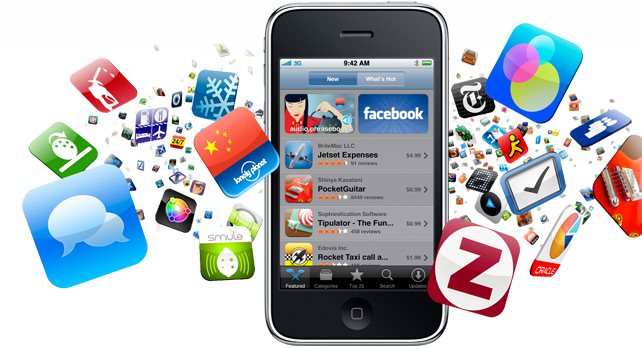 The ecosystem is tough to address as every mobile game developer will tell you. Which is why the iPhone was such a huge game changer: one device on one platform with one distribution channel globally. And all presented well, easy to use, great UI and users get to content with very few clicks and without unnecessary warnings). It is also always connected (rather than only connected in theory) and hence opens the doors to a new way of consuming, promoting and using content, specifically interactive one such as games and apps. Everyone else scrambles to follow but they struggle because it is such a different way to look at the world (well, different when you are a network operator or handset OEM). And because of this, competition on this platform is now fierce, very fierce.
But now then, why would one support Android? I mean, Gameloft just said it sucks (well, commercially at least). Why do I think it will be (is?) big? And why do I think one should look at it now rather than, well, later?
For starters: it took Gameloft a full 3 days or so to realize the mess it made with its announcement to cut back Android; and swiftly issuing a statement that said pretty much the contrary… But, heck, we’re not running everywhere where Gameloft runs, do we?
Android’s potential is enormous! Not because Eric Schmitt, Google’s CEO said so. But because it is O.P.E.N. This gives it a potential that is beyond all others: it enjoys wide support from vendors (HTC, Dell, LG, Samsung, Sony Ericsson, Huawei, Motorola, Acer, Creative and countless more), carriers (it’s a little like the who’s who: China Mobile, China Unicom, NTT DoCoMo, Sprint, KDDI, Softbank, T-Mobile, TIM, Telefonica, Vodafone) and has a very powerful sponsor indeed in Google. The result is a huge number of devices (cf. Wikipedia page here), and they will grow. They will grow faster than Apple can because of the law of big numbers. Even if Apple may retain an edge on running the overall sexiest package but it will not withstand the overall numbers. Incidentally, the afore distinguishes Android – for the time being – from Symbian (which is now also open source): it lacks a convinced sponsor at the moment (Nokia seems to be wavering in its support) and also seems a little clunky (no open can be so strong so as to support a weak or rather outdated proposition). However, with its massive install base of 280m+ devices it could rebound if they fix this.
Android stretches further though: it is not limited to mobile devices, it goes across to eBook readers, set-top boxes, netbooks, you name it. Users increasingly swap between screens. As a content and/or service provider, you want to be with them, be of service to them, wherever they are. They should not have to worry, you should! Android makes this relatively easy for you.
The Power of Open is tremendous. It provides for (theoretically) infinite growth. And you want to be there. And you want to be there now: They say, a tidal wave of apps is coming. You won’t catch the train once you can see it… 😉
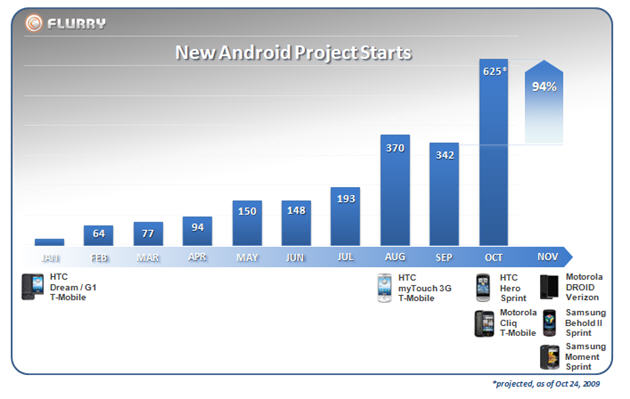 Do not forget: people (and brands) want to reach people. Full stop. They do not necessarily want to reach people who happen to have an XYZ device running the ABC OS on the carrier X in country Y! Apple is wonderful (I am an avid iPhone user and do not plan to change – well, yet) but it is a niche. And if you have business to do, you may want to look beyond that niche.
Here’s this week’s Carnival of the Mobilists (its 201st iteration in fact). This week, the Carnival is hosted over at Phil Barrett’s Burning the Bacon blog, and he has lots of goodies to share, including my own post showing an example of why Nokia struggles. Besides this, you will find posts on:
Go now and give it a good read. You’ll find the carnival here.
Powered by WordPress & Theme by Anders Norén