
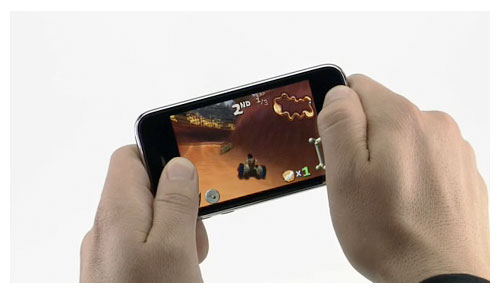
 We said it before: mobile is the biggest mass medium on the planet, and now game developers (and not only the sometime masochists that have been there for years) flog to it. According to a fairly large survey by GDR (which can be yours for too many dollars to count and has been reported about here) among 800 developers, a quarter of them are now making games for mobile phones with most of them (namely 75%) – surprise, surprise – choosing the iPhone as their platform of launch. This is doubling last year’s figures (apparently).
The iPhone and its non-phone sibling, iPod Touch (and you have been reading that a year ago here, here and here) are proving a more attractive launchpad onto portable gaming platforms than dedicated gaming systems like the Nintendo DS and Sony PSP.
The reasons will be the same as they were a year ago: a platform that is relatively easy to work to and a simple distribution model. With the number of downloads Apple continues to pile up, it is no wonder that developers from “traditional” platforms (PC downloadable, online, etc) are attracted to that. They will also be less scared of the marketing challenges since they had had to market their games in the whole wide oceans of the Internet previously (i.e. there were no carrier safe havens with feature slots). Whilst this does not mean that every traditional developer’s games will be successful on the app store, the threshold to enter is lower.
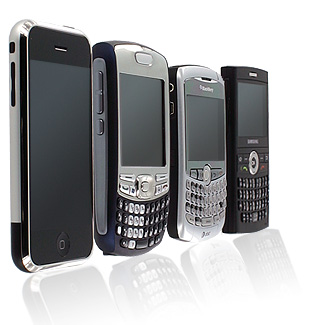 It will be interesting to see if the wave will roll further into other “smarter” platforms, including Android, Windows Mobile (see the latest rumours for WinME 7, including full Xbox Live gaming implementation here), Symbian Maemo and Blackberry. With the device numbers clearly speaking in favour of that, platforms becoming more accessible and, last but not least, with easier paths to the users via OEM app stores, this is to be expected. Good times for mobile gamers!
 On 15 February, one of the most exciting showcases of mobile innovation of the year will be on display in Barcelona: the
  A fresh new year with the conference and rumour seasons already in full swing, 2010 promises to becoming an exciting one for all things mobile. So let’s be kicking off another Carnival of the Mobilists (it is carnival season, too, after all). What do we have this week?
 The biggest event in 2010 is, distinct to certain fanboys opinion, the launch of the iSlate or new iPhone or iAnything nor, as Canadians will have us think, the Olympic Winter Games in Vancouver, but the Football World Cup this summer (and, no, my dear American readers, this is not the Super Bowl). And whereas one could already see mobile rearing its beautiful head at the last World Cup 2006 in Germany, many people think that South Africa 2010 will provide a breakthrough in mobile service provision around this.
 and many, many more including yours truly (and as a licensee, I will be cheering the reigning World Champions, Italy, on this time, believe it or not!). Besides all that, the venue is the best: Arsenal’s home ground, the Emirates.
 Gemalto, SIM card maker turned “world leader in digital security” (I wonder how many companies claim that title; it’s like boxing, it seems)
  Besides these points, cross-selling opportunities would appear to be fairly obvious, too. The only mismatch could be that Gemalto focuses on digital security (they list mobile connectivity, identity and data protection, credit card safety, health and transportation, e-government and national security). Alas, no messaging and entertainment here, the two main areas of Netsize’s business.
 It is this time of the year where people start looking forward (and back) and come up with clever analyses of things we have always known and those that we haven’t. And because Europe has always (?) been the thoughtful and fashionably skeptic part of the world, it is that one of the leading newspapers, the Guardian,
  Social media (Twitter included) is nothing in itself, it merely defines a group of tools. Therefore, it is not the emperor’s new clothes, it is – if anything – the emperor’s new herald: if the emperor has nothing new, interesting, noteworthy to tell, it will remain as dull and meaningless as before but social tools actually allow you to filter, to focus, to spread noteworthy, sensible and truly good stuff to a group of people that is much larger than you could have reached before at a cost that is (per capita and in toto) much lower than before. And that means it is one cool tool!
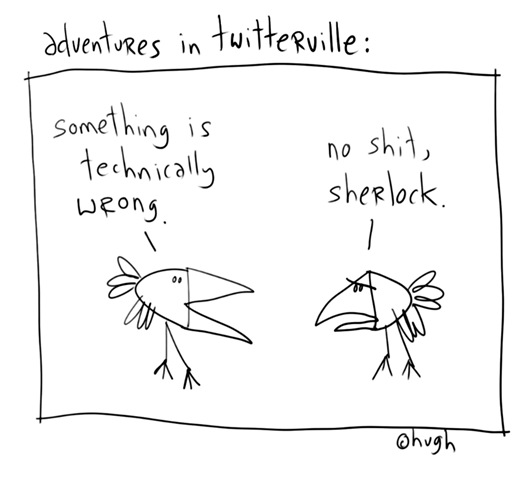 As with every tool (say, a hammer), social tools are more useful, the easier and intuitive they are to use. If it is self-explanatory on how to extract something positive (e.g. to get that bloody nail into that bloody board), the better (and if you can do it without walking away with a bloody thumb, even better). At the moment, many people walk away from Twitter because of a bloody thumb. But would you dismiss a hammer only because you hit yourself? Probably not. Unless you find a better hammer of course…