Tag: iphone Page 14 of 16

iPhone content is recession-proof, too!

Is it becoming boring or is it becoming more and more exciting? However you view Apple‘s forays into mobile, it is very, very remarkable (and I do indeed think exciting) indeed: in ads in the NY Times and the Washington Post (see here), the company reports 300,000,000 downloads in 5 months (I leave the zeros in for mere impact…). That’s 2.1m downloads per day – on a single handset model, which isn’t even the single best-selling one (well, it probably is of recent, but not historically) and is normally only available through one carrier per country (which means that it could also have been, say, 10m downloads per day if extrapolated to the total user base). Woah! Is anyone still skeptical about the equation pretty hardware + pretty UI + hassle-free shop-front + single platform + single distribution outlet = success for content?

The iPhone’s fashion factor does, I think, not matter when it comes to the download numbers: If the above chain would not work, people might smile slightly embarrassed and continue fiddling around with the pinch-z
oom of pictures, etc but they would not come back time and again to get more content for the thing; I mean: just running around with it and placing it onto bistro, bar, cafe and probably even Starbucks tables will be enough to prove your membership in the circle of the hip and trendy media crowd.
There’s only anecdotal reports (or rather rumours) about how much money is being made by developers on the platform (we still suspect a lot of it will be in the “free” category but one rather reputable games publisher apparently said that they’re making more money on the AppStore than through all of Vodafone Global) but these numbers are – in any event – huge!
And it does show that content works if you let it work, i.e. if you make it easy to publish on a platform and if you don’t try to be your customer’s nanny and determine what’s good for them. If people would realize this, and that would be the only lasting impact of the iPhone, that would surely be a lot! Thank you, Mr Jobs!

China Mobile puts on turtleneck

The theme starts becoming lame, I know (and I herewith promise to look for new semi-funny references to Steve Jobs). However: if the world’s largest operator by subscribers changes its dress culture, that is to say swaps from a tightly controlled walled garden to a free store concept, that surely merits this. So, without further ado: China Mobile plans to launch its very own AppStore. Its Chairman & CEO Wang Jianzhou (who was, I think, not sighted in Mr Job’s favourite garment) announced this at the GSMA Mobile Asia Congress in Macau. Now, with a whopping 436.1m subscribers, this opens fairly interesting vistas for mobile content – if, yes if, one can hit Chinese taste, that is. They specifically cite Apple’s success with its iPhone as a trigger for them to do it. Truly impressive that a company so big would move so quickly.

This will surely hit the news wires some more in the coming days but I will now retire and brush up on my Mandarin…

Et tu, Juniper?

It must be truly bleak: even the best friend of every young telecoms entrepreneur on the fundraising trail whose reports rarely failed to feature as a footnote in an investment memorandum for the next big digital thing now sounds a word of caution. Juniper (whose reports I still cannot afford) issued its latest report on mobile gaming and it actually reduces (for the first time, I’m sure, even if I haven’t checked) its prior predictions on the growth and size of the sector in the next, erm, 20 years…

They see growth stifled by the restrictive operator business models. Dare I say it? May they be right? They refer to Apple‘s AppStore, which is the anti-christ to every operator’s walled garden: free for all, free price-setting, Darwinian survival of the fittest (or least-charging), thousands of applications, games, etc, etc, and relatively generous revenue shares on top (although 80% of $0.00 is not very much at all).

Juniper points however to 2 important and true factors: the tolls demanded by the operators to access their precious customer base are very high indeed considering that many do not provide a very compelling service in return. Secondly, marketing and marketing opportunities on-deck normally – well – suck. This was all well and good as long as their were no alternatives (other than the likes of Jamba, Thumbplay and few others). But with the ascent of the iPhone, everyone seems to erupt into a frenzy of trying to replicate the “beautifully simple and compelling UI” for which the purveyors of the Big Black Turtleneck are so famed for. This, Juniper fears, will lead to players exiting that business (I have heard unconfirmed rumours that SEGA decided to call it day on internal J2ME development following their huge success with Super Monkey Ball on the iPhone). 
Other than that though, not much new. And Juniper would not be Juniper if they would not predict “significant” growth in the next 5 years (conveniently long in order to be basically unpredictable): they see the market to roughly double in the next 5 years, which would be 20% growth per year (on today’s terms), which is not all that bad after all. 

What's a Smartphone?

Application vendor Handango published its 2008 Yardstick report, which one might slag off as some (rather shameless) PR on content consumption on “smartphones”. According to this, 

[t]he Games category leaped from fourth place at year-end 2007 into the second spot behind the Entertainment category.

It also reports that

‘Ringtones’ was the most searched term in the first half of 2008, and ‘games’ was a near second, up from number three in the second half of 2007. ‘Themes,’ ‘GPS,’ ‘weather,’ and ‘music’ also make the list of the top 10 searches.”

Surprisingly then, in none of the measured platforms (RIM, Palm, WinME, Symbian) does a single game make it into the top 10… Now, does that mean that places 11-98 were all games? Hmm…

 I then asked myself what the heck is a smartphone? Mobile advertising guys Admob note that

[t]here is no standard industry definition of a smartphone. We [Admob] automatically classify a device as a smartphone when it has an identifiable operating systen and continually update our list as new phones with advanced functionality enter the market.

Globally, Nokia rules the pack: the top 4 smartphones are all from the Finnish giant (Admob numbers), and all N-Series devices, namely the N70, N95, N73 and N80. In the US however, there is not a single Nokia phone (or rather, as they would put it, “multimedia device”) amongst the top 20 smartphones. According to Handango, 2 Blackberry devices (8830 and Curve) were the top 2 devices, according to Admob (not representative), it was the Blackberry 8100, the Palm Centro and the Blackberry 8300). Globally, these don’t really feature: Nokia has a market share of a whopping 62.4%!  

The more interesting facts are unfortunately from confidential information from the likes of M:Metrics. Without giving too much away, the top devices for games consumption (downloaded) are the iPhone and Nokia’s N95, both with quite some margin ahead of everyone else (and the iPhone with quite some margin ahead of Nokia’s performance monster). This does indeed show that a powerful handset (or at least one with powerful UI) promotes content consumption, which is, I’m afraid to say, old news indeed.

So, no news then?

Fragmented?

Funny. Sometimes a theme somewhat haunts you… After I have posted about the demise of Tira Wireless (and added some alternative views on the labyrinth that is platforms and handset fragmentation; also go and revisit my posts on the same topic here and here), today we can read that it will all get worse (or maybe not). I bet they read my recent post on the issue… 😉

The article only mentions somewhat curtly two new platforms, namely iPhone and Android (both of which I have covered before, namely here, here and here – amongst others), and then goes on to report on a panel at CTIA where a panel sponsored by the “Symbian stakeholders” apparently dismissed the whole notion, stating that the market would solve it. Now, it will have to, I guess. However, it is not all that bleak: Symbian, UIQ, Linux, BREW, Win ME and ultimately the iPhone OS are all C-based. Most of them (with the notable exception of the iPhone) also run Java Virtual Machines (JVM), so you can either code in J2ME (which is arguably the most widely supported language) or go native and code native in C+/C++ with then much easier ports to the varying iterations.
The challenge naturally remains (and, yes, I have voiced this previously) with a view to supporting all those odd handsets here and there and everywhere but, let’s face it, a lot of them are being imposed on publishers by the carriers who want to make sure that even that last customer that hangs on to his SE T-610 will be served with content (even though he won’t ever download a piece). Wouldn’t it be so much better marketing if they would simply return a message telling that poor customer:

“Hey, we noticed you tried downloading content to your T-610. You may not have realized that this phone is utterly outdated and will give you no joy when playing games. We would like to offer you a discounted upgrade to the brand-spanking new N76/ W880i/ Pearl/ iPhone/ Viewty/… and your life would be so much cooler. We are confident that you would then also have more luck with the girls/boys… Best. Your carrier”

What I am trying to say is that a lot of the fragmentation issues are (nowadays) artificially imposed, not technologically warranted. Any carriers reading this? Think about it, folks. It won’t harm you, I bet!

Apple's App Store rockets through 100m

Following the iTunes success story, we could see it coming, I guess, and indeed after a mere 3 months of going live the mother of all black turtlenecks informs us that the Apple App Store rocketed past 100m downloads for iPhone and iPod. Impressive numbers! And another example how simplicity and a good eye for ease of use wins the day: put applications (games are apparently leading the pack, too, with no less than 700 of them [that’s nearly 25% of the total available]!) into one place where a) people can find them and b) it is easy to download, install and run them, and you are on to a winner (operators, listen to this!).

However (there had to be a but, huh?), what the master of PR did not tell us is how much money was actually made with this. We hear the following stats:
  • There are 3,000 apps on the App Store, 600 of which are for free. Now, for what percentage of downloads these 20% are responsible for, we are not being told though…
  • 90% of the apps are priced at less than $10 (this will include the 20% free ones, I guess). However nothing is said if it is $9.99 that is the prevalent price point or perhaps $0.99 a pop.

The App Store certainly is a success for Apple (in particular considering the relatively low number of devices that access the store, and this deserves our unreserved applause! The only thing is: it might just be that 90% of the downloads were of the unpaid kind and another 8% of the less-than-$3.00 kind, and that would mean that it is actually not such a great success for the developers hoping to make a buck from it (rather than only showing off the funky logo on investor presentations).

The Apple App Store provides a wonderful opportunity to test market prices and all that even though there are probably a lot of people who currently publish stuff there because of its “strategic” value, which will contribute to distortions of the true numbers in terms of values and price points. However, notwithstanding those distortions it would be great if they could share somewhat more meaningful numbers with us; just so we know how hard we should try to flog to those green Apple meadows.
Oh, and, yes, I write this on a MacBook… 🙂 

Mobile Games: Platform Standards!?

Mobile games blogger extraordinaire, Arjan Olsder, provided for a great guest post by Qualcomm games guru Mike Yuen, and it’s well worth a read! Mike addresses this most horrible of issues to mobile game developers that is called fragmentation or, in his words, “[t]he lack of platform and hardware standards continues to be a major inhibitor to mobile game growth in the United States [and elsewhere; ed.]. This diversity in development platforms (Android, BREW, Flash Lite, iPhone, Java, Linux, Symbian, WAP, Windows Mobile) and hardware configurations (display resolutions, RAM/heap memory size, processing and graphics power, audio formats, keypad and other input modes.”

Mike rightly points out that, “[i]n many cases, the costs associated with individualizing software builds to the particularities of each handset, operator and language account for more than half of the overall development budget for new game titles. It’s a simple, but important concept. If fewer resources were diverted to porting a title from handset to handset, operator to operator, more resources could be dedicated to advancing the development of new and innovative gaming concepts.”

He goes on to draw an interesting comparison to the Korean and Japanese markets where there are not as many handsets (and platforms) around and where consumers are more than twice as likely to download mobile games. He then goes on to look at market disruptors like Apple (iPhone anyone?) and others only to conclude, sadly, that “[m]obile gaming is in a state of flux – platform and hardware fragmentation has clouded the once blue sky of gaming’s future and positive disruptive products such as Apple’s iPhone have changed industry perception and consumer expectations about the future of the mobile gaming device. I’m not expecting us to reach consensus anytime soon. Fragmentation is an inherent element of the mobile industry and perhaps always will be.”

Now, is that really so? He is of course right in his analysis of the current environment. But does this really have to be like this? The mobile space suffers from too many very large companies with very large markets. And if this wasn’t enough, there’s two different groups of them, with diverging interests, namely operators (carriers) and handset manufacturers: the former want everyone to be on their network, the latter to be on their handsets. Both are more often than not big old molochs of companies with a lot of market power in their segments. However… the markets seem to gravitate (under consumer demand) towards a more open set-up: operators seem to be accepting the fact that they cannot reign their users into walled gardens forever (more and more resign to flat-rate data and open the mobile web to users) and OEMs seem to realize that they need awesome numbers of users to have a real impact and so most of them gravitate to more open platforms (or, in the case of Nokia, create them).
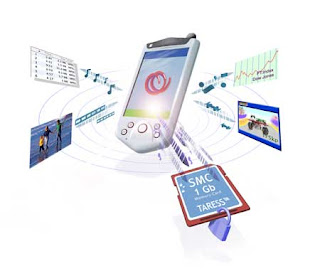
As most of the newer platforms appear to be based on C++ or siblings thereof (Symbian, UIQ, Linux, Android [yes, I know that they us a JVM], BREW, Win ME, etc), it would appear that a reduced complexity might be nigh. Not as easy as online, mind you, but light at the end of the tunnel nonetheless. And it makes sense as the current fragmentation isn’t really helping anyone: consumers grow frustrated with ever-changing platforms. They want cool content, not a proprietary operator-variant of cool content. Hope, my friends, there is hope!

Page 14 of 16

Powered by WordPress & Theme by Anders Norén