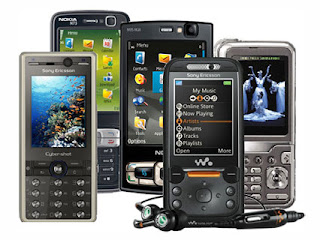
 GDC Mobile co-founder and, I am honoured to say, my good friend Robert Tercek, came out with all guns blazing against the carriers’ demand for maximum handset coverage for mobile games that they allow to publish through their deck. Tercek called it a “lie” that operators basically insinuate that a game will run equally well on every handset, and he called mobile games publishers hypocrites as they moaned and whined about it but still play ball… Well, what else are they to do? Stop publishing games?
Since I still work in this industry, I would not perhaps put it that harshly as Rob did but the question is indeed if the network operators’ rationale (“we need to provide for the best possible user experience for every one of our users”) stands true when it comes to this. After all: if you offer a full music track for download, your phone needs to be able to support MP3; an old battered brick that only plays monophonic ringtones won’t do. To put it into slightly starker contrast still: it would be like an ISP would prevent a web publisher from putting a site live only because there are a lot of PCs out there that do not have the right software support. Or if the Germans would not allow any car to be imported into Germany unless its engine software was geared to allowing a top speed of min 200 mph because otherwise the user could be disappointed with the driving experience on the Autobahn.
Is the assumption that someone who has an old T610 would actually expect to be able to play a modern-day 3D racing game on his battered old handset really correct? If I drive a 10-year-old little Twingo, I know that I will not go 200 mph, Autobahn or not. And I will certainly not blame it on the operator of those roads.
If I want Vista Premium or Leopard, I need the machine to support it. And that is an informed decision I need to make. The operators’ approach may have been understandable a few years ago: mobile was a very, very new platform and people had not actually got round to the idea that one could actually do more with one’s mobile phone than making phone calls when away from a fixed-line phone. However, this has changed very quickly very much: even my 80-year-old neighbours now communicate via SMS with their kin. I believe it is safe to assume that the consumers of the year 2008 can very well distinguish between a low-end and a high-end phone and will actually appreciate the difference in performance without blaming their operator for a sub-par one when their phone happens to be a sub-par one. Time for change then, folks!
 The constraints of having to support hundreds of handsets impacts the mobile games sector manifold: it makes it prohibitively expensive to develop and publish games with porting costs often being equal or even higher than the actual development. The effect is less innovation (how can you dare trying something new if you have to expend so much money before you even get it in front of a consumer?) but also less usage: it is often more of the same as developers try to minimize their cost by re-using engines (Gameloft has used the same basic side-scrolling engine for at least 20 games to date; highly polished and constantly evolving though, to be perfectly fair to them) and running risk-averse design philosophies where they try to stay as close to a proven hit as possible. This will however not drive consumers to get back for more.
I am however doubtful if operators will come to terms with this in the near term, and, let’s face it, they are not the originators of this platform mess: isn’t it more often the handset manufacturers that fiddle around with screen sizes that differ for more or less every device, that take great pride in running a gazillion different operating systems only to be slightly different to the other guy, that allocate soft keys rather randomly and occasionally swap the green and red call/end call keys from one side of the keypad to the other? Just imagine this last bit on a computer keyboard: is now on your left… try get going with that… Add to that the – yes, they’re here still – operators and their specific demands for this, that and the other, and the fragmentation does indeed create an economic landscape that is very hard to navigate.
This is one to the OEMs and the operators alike: get down to business, compete on the strengths of your devices and services and not on some OS and other software tweaks where the upside to the consumer is, if distinguishable at all, minimal.
In the interim, it would indeed be upon the operators to start trusting the good judgment of their customers in the hardware they hold in their hands better and start dropping those old devices from their requirements that will manage to screw up even the best game.
The prosecution rests… 😉

 There is this Swedish maker of phone pouches and accessories, Krusell, and they deduce from the number of model-specific pouches (or cases) ordered from them the top-selling handsets each year. And the winner is the iPhone. Or is it only that iPhone users buy more pouches than others in order to protect their shiny toy? We don’t know.


