Tag: Facebook Page 5 of 7

Vodafone 360: the Good, the Bad and the Ugly

After much huffing and puffing, Vodafone unveiled yesterday what everyone had been waiting for for months and months: its new Vodafone 360 concept, which will replace Vodafone Live! It launches on – drumroll – LiMo-OS Linux phones from Samsung with touchscreen and GPS and, for the H1, AMOLED display (yum!), WiFi, HSDPA, etc, etc, etc. and also supports a fairly big range of Nokia (not on the N97 though!) and Sony Ericsson devices (although, judging by the screenshots, it doesn’t look as sexy on those).

The 360 thing is, according to the press release

a brand new set of internet services for the mobile and PC which gathers all of a customer’s friends, communities, entertainment and personal favourites (like music, games, photos and video) in one place.
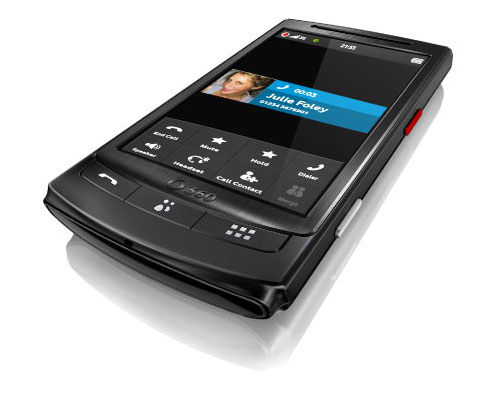
It has an address book with nodes into Facebook, IM (Windows and Google) and will “soon” also cover Twitter, Hyves and StudiVZ (the German Facebook clone). Two tailor-made (!) handsets that use a proprietary (!) interface based on LiMo’s release 2 mobile Linux OS. Users can create groups across different networks (which is very neat!), an app store with 1,000 apps at launch (no word so far what this comprises) and syncing with your computer.

So is this the big thing then? Here’s the good, the bad and the ugly:

The Good

  • The service reaches out. It acknowledges (this is a big step for most carriers!) that users have a life outside their carrier. Facebook, Live Messenger and Google Talk are a bit thin, I’d say, but let’s cut them some slack; the others will follow.
  • It has a couple of neat twists built-in: I mentioned a few above but there is also a feature that uses some spooky thing called the “Vodafone’s proximity algorythm” and which basically automatically favourites your most-loved people: the most frequently contacted people (like your mom?) come closer to the front.
  • At least on the custom-built devices, it looks much better than previous attempts by carriers to make something look and feel a little more user-friendly.
  • I hear that the whole widget-thing should be really neat. Now, I haven’t seen any of it as yet but the concept sounds good.
  • It works across different operating systems (at least LiMo and Symbian).

As a funny side remark, the PR blurb points out that

The beauty of Vodafone 360 is that all the services work together and they are easy to use.

So they weren’t before, huh? 😉 — sorry, couldn’t resist…

The Bad

Some commentators mentioned that the cloud-hosted address book and generally aggregation of contacts, networks etc through a provider rather than through the handset would tie people to the provider more closely (which might not actually be anything Vodafone would object to). I am not sure how tough it would really be (as you have your computer back-up), so easy on that.

It is still very much a closed-circuit affair: It is Vodafone and no one else. It is proprietary, tailor-made and not open. This is not good (and, yes, I know that the oft-cited iPhone is proprietary and tailor-made, too). Alas, its applications are not – unless your name is Spotify; then it takes a little longer… 😉

The Ugly

The underlying proprietary thinking is nothing I can see working longer term. In a world that is (Vodafone press speak)

a substantiator of Vodafone’s new brand expression – ‘power to you’ – which is focused on putting the customer in control and enabling simple and easy to manage communications, both mobile and fixed

this is also a little bit of a contradiction.

But I will say that it seems to be the nicest operator-built environment I have seen so far. And for this to come from the world’s largest operator is no mean feat and might actually yield some results. Go on, guys, tweak it, improve it, show us!

Oh Nokia, where art thou?

Nokia struck again, it seems. This time? No, not another multi-billion dollar acquisition such as Navteq but another tiny start-up, namely the “boutique” travel social network Dopplr, which the Finnish telecoms giant allegedly gobbled up for anywhere between €10-15m. Hm. Hm Hm…

Dopplr’s Business Case

Let’s see what Dopplr does (besides its co-founder [and angel investor] being an old Nokia hand): the idea is to share trips with friends so that a) people coincidentally going to the same place at the same time (“what??? you will be in Barcelona in the second week of February, too???”) will find each other and b) they can share cool and “unique” tips from other travelers. It is (was?) one of the group of location-aware social networks that have been and are still waiting to come out of cover.

Nokia’s Master Plan

The deal is great for the Dopplr guys who seem to have made a nice return and the pieces of the jigsaw on a very, very, very high level seem to make sense: Nokia is assembling a location-based empire. They acquired Navteq in what was Finland’s largest acquisition ever, they bought German location social network Plazes, and now Dopplr. And it now all comes together at Ovi Maps (which looks quite good!). Makes all sense, huh? The rationale was – arguably – to do to sat-nav systems what they did to (small) digital cameras: kill them and incorporate it into their phones (or multimedia devices). When Nokia moved to Carl-Zeiss lenses, mobile phone camera were basically on par with low- and mid-tier digital cameras. Why carry 2 devices if 1 will do the same job. Easy! And boy did it work!

So, let’s do the same with maps. And, more importantly perhaps, do not maps (and location-awareness in general) find a completely new way of justification in mobile phones, i.e. in devices that are, well, intrinsically mobile? Yes, it does. When Steve Jobs premiered the original iPhone, he famously ordered coffee from the nearest Starbucks, using a maps application. Simple, right? Wooing the masses but nothing much in it, right?

But! On the maps side, Nokia competes against Google Maps (this is what Jobs was using), which is free (if one leaves aside the probably not insignificant investment that will have gone into this service with its various extensions such as Streetview et al). It also has an open API and many, many people use this. It is embedded on the iPhone (Jobs again) and most people I know use it on their Blackberry because it is better than RIM’s own offering. A free download to most phones, Nokias included.

The Impact of (Fairly) Open Networks

Now, I never got these highly specialized things anyway. I find them way to complex to handle: when I am going on a business trip, I am normally much too busy to feed data in some travel network or other. And when I am going on a personal vacation, I am a) even busier and b) want to be left alone (normally). Oh, and did you see that Twitter plans something like this, too?

But even aside from this, when it comes to “being found”, all my friends (real and virtual) knew through my blog, through Twitter and Facebook that I was going to France this summer. Do I really need another, specialized service for this, over and above the ones that can provide that information and also everything else? In other words: does it make sense to try and hone a super-focused service when similar (if not identical) results can – and already are being – achieved through smart filters on networks that have somewhat of a head-start when it comes to active users? I mean, Facebook has more than 300m users, MySpace – even if it seems to be struggling a little lately – will have more than 150m. And then you have Twitter, Bebo, Hi5, Orkut, StudyVZ, etc, etc, etc. – that is more than Nokia sells all year.
Now, the existing players are adding geographical awareness as an additional feature to their services. I mean, even YouTube is doing it!

But the real point is: whoever uses one of these (say, when you are in Brazil, you use Orkut), there is a certain likelihood that your friends will, too. Otherwise, you would not be on it. Need more? I doubt it.

On top of that, it is – arguably – much easier to integrate a location-based function into a network that already has hundreds of millions of users (and I am not talking of hundreds of millions phone users because they only are potential users of any service that might come with the phone) than to build one. Nokia does certainly have a great starting point (it sells more devices per year than Facebook and Twitter users combined; see – old – numbers here) but they are not with Nokia because it provides such a great network but because their phones are good.

When it comes to services, it has become an issue of today’s mash-up world where access and resulting services go across a variety of – more often than not – open offerings rather than tight proprietary ones, and Nokia seems to be struggling of getting to grips with this. Some commentators compared it with Yahoo!‘s M&A swoop in order to try and grab back the love it lost to Google and others. Even if one isn’t so harsh, it seems obvious that the thought pattern behind Nokia’s thinking might be a little outdated. I stand to be corrected (and would love to be since Nokia has brought a lot of really great stuff to the world) but that is what is worrying me. So congratulations again to the Dopplr team again but, dear Nokia, for the time being I remain skeptical as to the commercial sense of it (and, yes, I appreciate that €10-15m is but a fly speck on your balance sheet if it fails…).

Orange UK: Mobile Broadband Roars!

Orange UK, one of the large carriers in the country with 15.8m mobile subscribers, has released its “Fifth Digital Media Index”, containing a set of interesting numbers on the data uptake on their network, and it makes for intriguing reading!

The carrier recorded a whopping 4,125% (!) increase in data use over dongles using their mobile network in the last 12 months with dongle subscriptions growing by 504%. Data use from handset increased by 108% and that, I might add, without the help of the iPhone (which is exclusive to O2 in the UK). The increase from dongles will be connected to a big push this offering has seen in the UK (as in other countries) over the past period. Carriers have been and are promoting these aggressively, helping uptake of mobile broadband significantly.
Here are some highlights from the report:

  • Music and video downloads increased both by 38%.
  • Games only grew by 8% (but at least they grew; anecdotally, some other carriers recorded sometimes dramatic drops in take-up) to a total of 770,000 downloaded games, which equates to a market share of 23% of all UK games downloads (the total UK games market would hence be 3.35m downloads for the year with Orange claiming top spot). From the top 10 downloaded games in 2008, 8 were part of the carrier’s embed programme, which shows – again – that users appear more comfortable if they can try it out before (embedded games normally are trial versions).
  • Social network use over mobile increased by 129% in page impressions per month and 48% in unique users. The monthly average number of pages per user was 397. In terms of popularity of social networks, Orange’s Mark Watt-Jones (@MWJ) fed us additional bits via the Twittersphere: Facebook dominates, Bebo is significant, MySpace less so and Twitter grows very quickly (what was the Oprah moment in the UK?)
  • An average of 386,000 GB of data have been transferred via dongles and handsets per month.
  • Mobile search grew by 120% with 45% of the results being “off-portal”, i.e. outside Orange’s domains.
  • Good old SMS still looking good, too: 19% growth with 1.7bn sent every month.
Another key point Mark brought us via Twitter: 99% of access to social network sites came from non-smartphones. This is quite noteworthy indeed as it arguably shows that mobile data usage now transcends beyond the power users on sophisticated handsets and also that content leads the uptake: give people compelling content, and they’ll use it. Mobile data for the masses seems to have arrived!

Why an iPhone Deal with Verizon Wireless would be Cool

Today, interesting reports surfaced (or re-surfaced?) according to which Verizon Wireless and Apple are in discussions about bringing the iPhone to the former. However, because Verizon runs on a CDMA network and Apple has only ever supported GSM, commentators reckoned that this deal might be for Verizon’s next-generation LTE network. And this is when one can start dreaming…

To recap: Verizon will be amongst the (if not The) first tier-1 network operators rolling out the next generation of wireless networks under the LTE standard (see here for more on this). Under LTE, unprecedented wireless bandwidth will be available, comparable (or exceeding) what households in Western and Far-Eastern countries have in their homes today. But then you would have it of course wherever you are (well, if the respective technology is installed).
Due to the immense speeds, a lot of people think that the first big change will be on the (computer) broadband side of things: no need for wireline access if the speeds are the same and you can actually wander around and through town and always be with your provider. Simplicity, ease of use, bliss of connected life.

When it comes to mobile handsets (previously known as phones), the iPhone is of course (and despite the heckling by its many critics) arguably the most successful multimedia device known to man (so far). To marry this with these speeds? Ah, what would await us (see here for earlier thoughts). The iPhone (if they can fix the battery life) would be perfectly suited to bring the new lush wireless life to the masses (albeit first to the more affluent ones): rich graphics, innovative inputs and the fairly unique form factor would show the opportunities off rather beautifully and could hence aid to avoid the post-3G hangover where people asked themselves why on earth they should get 3G phones: there was nothing much to do with them (other than being able to make “faster” phone calls…).
The most common uses would arguably be music and apps with the latter being even more successful than the former: it is estimated that iTunes took 6 years to record 6.8 bn downloads; the App Store did 1 bn in only 9 months (or 1.3bn p.a.), which would equal 7.8 bn in 6 years if no further growth would occur. Anyway, with 1.1 bn downloads p.a. not being too shabby either, let’s take both, so what do we get?
On the music side, it would either mean quick and high-quality downloads or, more likely (?), streamed music. The same applies to the VOD and movie segments.
On the apps side, LTE would arguably push the envelope into two directions: (1) high-end, graphically rich games, and (2) ultra-connected social games that seamlessly bridge media platforms. Now: both types had their advent on the iPhone. Speak to any number of high-end games makers, and they will tell you that their life became much easier since the iPhone was there. Look at products like EA’s Scrabble (with full Facebook integration), Playfish‘s games (coming from the other end, i.e. from Facebook to iPhone), etc and you have the foundations laid here, too. With LTE, all this becomes mass-marketable to a much higher extent. And this would be real fun!

RIM's 50m & Symbian's riposte

Blackberry maker RIM announced it had raced through the “epic” 50m device barrier. An honourable feat indeed! Symbian fired of a riposte (or was it Symbian-fan-boy-bloggers that did? I don’t know) that it had sold just under 80m devices in 2007 alone (with a total install base of 250m), and the Blackberry story therefore was to be considered as “how very quaint”.

Now: isn’t this comparing apples and pairs? Every Blackberry is (and has been for, like, ever) the benchmark device for e-mail on the go. I still remember sitting in Moscow pulling down my e-mail on a Nokia 9300, and, in the time it took me to download the header of the e-mails when my dear US colleague had browsed through his e-mail and replied to 5. So: Symbian is not to be equated with Blackberry; it’s an entirely different thing: Symbian was all about creating a more powerful OS that could do a lot of things, and it does them fairly well. But we shouldn’t forget that most of them a N-Series devices without a QWERTY keyboard that do different things than a Blackberry does. It is probably possible (now, not 3 years ago) to create a similar experience on a Symbian-powered phone than it is on a Blackberry but I have still to find an e-mail client on a phone as pain-free, reliable and quick as the Blackberry’s.
I do believe that it is less about the theoretical power of an operating system but about the end-to-end experience (iPhone anyone? I commented on this a long time ago). And – across the board – a Blackberry beats most of its rivals hands down on that; still. So this comparison limps heavily. It is probably also to blame on this odd way to define “what is a smartphone“? The mere fact that it has a “an identifiable operating system” surely is not that smart (although Admob classifies it as such). 
I applaud RIM to their feat of selling 50m devices (or “i-banker phone” as they were called in their early years) and remain a fan.
On a sideline, RIM also mentioned that there have been 7m downloads of the Facebook client for the Blackberry so far. This would mean that a fairly respectable 15% of all Blackberries that have EVER been sold have the client, and this means that this is probably a rather high number of the ones currently in use. Who would have thought that? I-banker phone goes social networking. Ts ts ts…

Twitter on the Money Trail again…

Twitter is this phenomenon of which some people say it is the business that never was. Not that Twitter never was but that it never was a business… which is why they apparently need fresh money, or more specifically $20m, or so it is said (see also here) The valuation? A cool $250m. A lot, you say? Well, they allegedly recently turned down a $500m acquisition offer from Facebook, so it’s a bargain!

Now, one of the issues they are facing is (never mind the unresolved business model) that a) they need to bulk up on infrastructure to cater for the 750%+ growth in 2008 and b) (OK, there are probably more reasons) they are trying to bring back SMS notifications to the UK (which it stopped last summer claiming it cost them up to $1,000 per user p.a.). And on the latter I wonder why: does anyone still uses this? I am using Twitterberry, cooler users use any one of a plethora of iPhone clients, and there are enough clients for “other” phones out there, too. It is more convenient, more powerful, a better interface and – for Twitter – much, much cheaper. If they are not satisfied with it, shouldn’t they perhaps invest some $100k to build a Twitter client for all phones? I mean, it’s not THAT complex…
As to business model, I am fairly confident that they will be able to translate this staggering amount of traffic into $$$. Their recent acquisition of Summize, which provides a newly introduced search option for Twitter, is one step. My hunch would be that they will utilize some of the momentum their growth afforded them will allow them to acquire some of the value-adding services (GigaOM names Twitpic and Stockwits) as well as ad-funded clients (e.g. Twitterific serves you – on the free version – an ad per hour of use).
Oh, and yes, I am a fan and Twitterer. Follow me here (vhirsch). And, no, if you’re an investor, Stephen Fry‘s account on why this is so great will not necessarily convince you it makes sense (although he is VERY enthusiastic about it) 😉

Mobile Social Gaming?!

I’ll be giving a presentation at Casual Connect Europe in a few weeks and have hence been looking a little at the concept of social gaming. In particular with the iPhone success story, this concept has received its fare share of the limelight recently – and rightly so: the unique distinguishing factor of a mobile phone is that it is always with its owner and that it’s always on, making it the perfect tool for connecting with people (well, this is what they were invented for in the first place), and the iPhone does that well not only with voice or SMS…

The “social” aspect of mobile gaming has mostly focussed on this connectivity and this is also what has been haunting it, at least in most parts of the world because of the horrendous fragmentation on the carrier and handset side. To make a fully integrated connected mobile game, one needs to integrate with a vast number of carriers (in the US, the situation is a little different – integration in only the 3 or 4 biggest carriers – Verizon Wireless, AT&T, Sprint/Nextel and maybe T-Mobile, and you’re in business big time; there is e.g. WPT Texas Hold’Em that scored tremendous commercial success, including full web-to-mobile-to-web play), and they cannot seem to resolve on a common standard; nearly every carrier runs its own little system…

However, do games really have to be fully connected multi-player with in-game chat, buddy lists, alerts, etc, etc, in order to be “social” games? I do not think so. They “merely” have to become a social object, and set in an environment to leverage the social aspect of this (there’s more from Jyri Engestrom on object-centered sociality). This does not work for every game in every case but there are plenty of examples out there both in mobile and online: Playfish (founded by mobile games veteran Kristian Segerstrale) runs a number of games on Facebook that are stand-alone single-player games but integrated into Facebook in a way that pushed them all the way up the rankings. Digital Chocolate runs a very successful franchise with TowerBloxx on mobile and online – again a single-player game with hooks into existing social networks (the latter providing the environment that facilitates them becoming a social object). Orange Israel recently created a raft of online destinations around Totomi: a micro-site, a Facebook Group is all you need to create a community around a game.
So whilst I am and will remain a big fan of connected games (phones are to connect with people!), some simple data streams out (high-scores, etc) AND links into existing social networks are actually likely to activate a lot of the potential in there. 
I will be continuing to ponder this, and I would be most grateful for any input!

Page 5 of 7

Powered by WordPress & Theme by Anders Norén