 Today seems to be the day of “the others”, huh? 😉 First Android, now Symbian. But the news are too significant to ignore:
Nokia’s app store Ovi is now clocking 1m downloads a day. Make that 300m p.a. Compare this to Apple’s, what, 5.7m per day. That was c. 1 year ago though, so let’s double that, shall we? So, 1/10 then shall we say?
However, Nokia and its much maligned Ovi Store shows that it can actually starts flexing its muscle (what the law of numbers can mean, I showed on the example of Vodafone: its app store is bound to deliver – even on the abysmal uptake of legacy J2ME devices – some 200,000 downloads a day).
Nokia says it is growing 100% month-on-month, and with this pace would overtake Apple in the near future. Doable? Almost certainly! Why? Because of the law of big numbers. Nokia has about 5x as many smartphones out there as there are Apple iPhone and iPod Touch devices combined, which of course means that Nokia would overtake Apple in terms of total app downloads when each Nokia smartphone user would only download 1/5 of what iPhone/iPod Touch users download. Same fun? Arguable… 😉
I do not know how many devices come preloaded with the Ovi Store but this has always been a huge driver: embed and prosper. Nokia confirmed as much, too. But let’s only assume that it is a tiny fraction (none of the legacy devices out there had it embedded, that’s for sure). And it shows you the potential: Nokia has a whopping 1.3bn phones out there (yes, you heard correctly), and let only a fraction of these use the Ovi Store, you are looking at a massive number, outstripping Apple immediately. Now, I doubt that they will outstrip the App Store in terms of apps per user but there is no team that plays football as well as FC Barcelona, and the others don’t give up either…
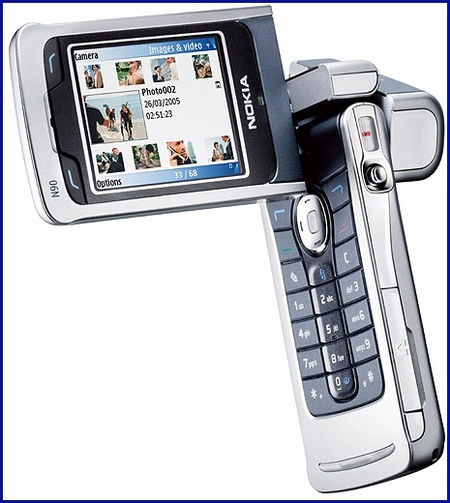 Nokia has made a lot of mistakes recently, with its stores, and others: to come out with something that was thought to be “good enough” is bad: strive to be the best at least, will you? Incidentally, it might have avoided the scrambling it finds itself in since the Apple app store launched. Hah, who would have thought? But let’s be fair: Nokia went about its business better in the past, it has unprecedented scale. Examples? What is the best-selling consumer electronics device of all time? The Nokia 1100 with more than 200m sold devices). Does anyone remember sub-10 Megapixel digital cameras? Well, there are few left, you see. Nokia killed that market by putting out camera phones with Carl Zeiss lenses: good, good stuff. I was in the room of the hotel in Zell am See when they laid the growth curve of camera phones over the shrinking sales curve of digital cameras. Impressive! Stand-alone PDAs? Gone. GPS devices? Hardly existing outside phones anymore (even Tom Tom satnav devices are offered with 50% discounts this Christmas).
It’s not over yet, it is only the beginning! Oh, and then there will be the mobile web to come, huh? Just wait for it!!! It’s bigger than the “other” Internet already (warning: this is one of Tomi’s monster posts… ;-)!
 A couple of weeks ago, I gave a keynote at
 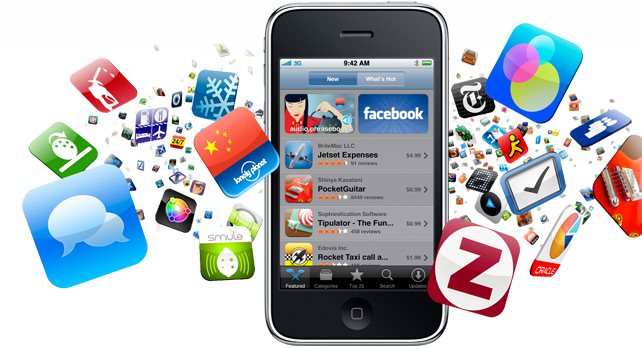 The ecosystem is tough to address as every mobile game developer will tell you. Which is why the iPhone was such a huge game changer: one device on one platform with one distribution channel globally. And all presented well, easy to use, great UI and users get to content with very few clicks and without unnecessary warnings). It is also always connected (rather than only connected in theory) and hence opens the doors to a new way of consuming, promoting and using content, specifically interactive one such as games and apps. Everyone else scrambles to follow but they struggle because it is such a different way to look at the world (well, different when you are a network operator or handset OEM). And because of this, competition on this platform is now fierce, very fierce.
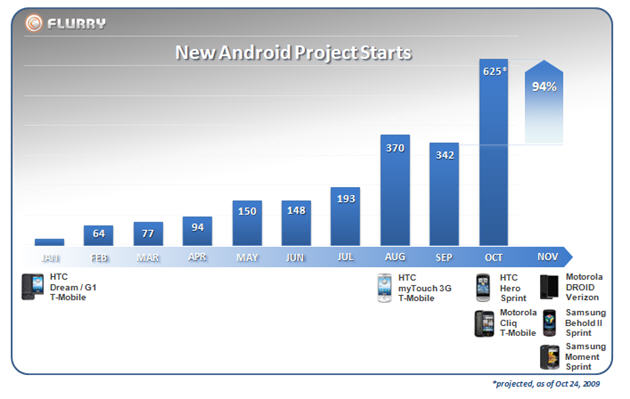 Do not forget: people (and brands) want to reach people. Full stop. They do not necessarily want to reach people who happen to have an XYZ device running the ABC OS on the carrier X in country Y! Apple is wonderful (I am an avid iPhone user and do not plan to change – well, yet) but it is a niche. And if you have business to do, you may want to look beyond that niche.
 It is conference season and one of the more exciting ones kicks off in Berlin this week: Mobile 2.0 opens its gates on Tuesday and boasts an exceptional line-up to look at the future of mobile.
 There have been
  It also highlights the dominance Google has in the Open Handset Alliance which might, longer-term, lead to assertions that Google is in fact using the open source road as a cover to push what is effectively an OS largely driven by them. I am not implying that it is and a healthy ecosystem with multiple strong is important in particular for the launch of a new OS in a space so full of powerful multi-nationals but there is a fine line to walk in order to get it right.