
 First, Samsung announced it would drop Symbian from its smartphones in 2010 in favour of its new, home-brew bada OS. Then Nokia said it would drop Symbian (albeit not immediately) from its flagship N-series devices replacing it with Maemo, the OS that premiered on a Nokia device on the recently released geek dream, the N900.
It is said that there are
no current plans for Maemo devices in the […] X-Series range or the popular [?] E-Series enterprise range
but the word “current” suggests that this might well change soon, too.
This would leave Symbian without its two largest OEM supporters. Will there still be a future for it?
 Symbian of course boasts a still very impressive number of legacy devices, and it will therefore be here for a while. However, what does the long-term outlook look like? Android, LiMo, etc all “boast” a nimbler, more agile set-up, allowing for faster development and, arguably, better user experience. This is not necessarily Symbian’s fault (it carries with it its legacy around) but it makes it that much harder for it to reinvent itself.
I am not sure if there is place (and – timewise – the runway) to reinvent itself without the backing of big OEMs. I would be surprised if carriers would use it; they – even more than OEM – require adaptability and customization, which the newer platforms seem better suited to serve. Vodafone’s choice of LiMo for their first two Vodafone 360 devices is testament to that.
The ever-bright Tomi Ahonen suggested a comparison with DOS/Windows and MacOS: he compares Symbian to DOS, Maemo to Windows and iPhone to MacOS: MacOS led in UI and leads to this day. DOS outsold MacOS in spite of its dramatic inferiority because of the legacy instal base. Windows then overlaid DOS and rolled out on all the legacy devices with MacOS, as a result, always playing second fiddle despite its superiority.
The market place in mobile looks different though: DOS was nigh dominant (outside the mainframe and large enterprise side of things) whereas Symbian “only” covers about 5% of the current market. It is big but probably not big enough to bridge the DOS/Windows migration gap. With Android, Blackberry, Windows Mobile, LiMo, JavaFX (if that ever takes of properly), etc all on the map, too, the situation is very different to the DOS/Windows/MacOS world. Would Nokia be quicker in execution, I might still look at it differently but, unfortunately, it doesn’t seem to be that way.
So is it good bye, Symbian, then?
 There have been
  It also highlights the dominance Google has in the Open Handset Alliance which might, longer-term, lead to assertions that Google is in fact using the open source road as a cover to push what is effectively an OS largely driven by them. I am not implying that it is and a healthy ecosystem with multiple strong is important in particular for the launch of a new OS in a space so full of powerful multi-nationals but there is a fine line to walk in order to get it right.
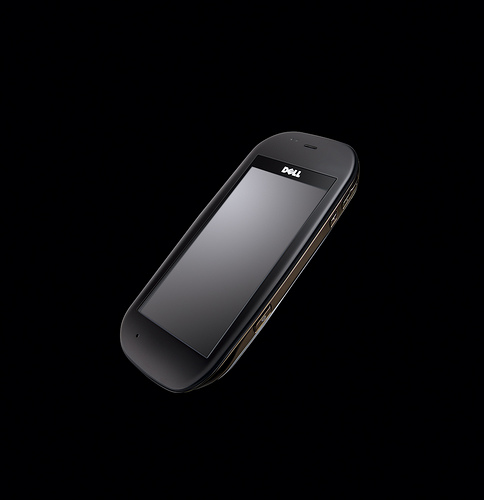
 Dell, after a lot of denials, finally
  In a move that was
  Now to the more critical points, and a small one at first: They could have done better on the marketing. Apple shows everyone how it’s done: come out with a bang and woe them. I do not think there is a need to outperform competitors on the technical side but a strong launch allows you to tell your story rather than leave it to a plethora of commentators to pave the way.
 Nokia’s
  The iPhone then was arguably the final punch. In spite of developer frustrations growing over discoverability within this pile of 100,000+ apps, the platform has spurned exceptional games galore, and not only casual ones either. Real Racing is as punchy a racing title as one will ever get one on a handheld. And with people flogging to the app store in drones (rather than visiting it once to rarely if ever return), it appeared a less risky (and certainly more fashionable) move to leave it at that. Notably, Apple got the positioning piece (see above) right: even though it is a powerful gaming platform in its own right (anecdotally, the good folks at Firemint managed to string Real Racing to up to an impressive 82 fps), it never looked at this as a sole or even the main focus of the platform. There is a good reason why their already famous moniker says
 Well then. It at least gives Nokia the opportunity to focus solely on building out the Ovi platform and fix the bugs it has been plagued with at the start. Nokia clearly feels the pains of the rapidly changing market place and it struggles to adapt swiftly (which is – and one should appreciate this – much harder when you are running a product portfolio that has a market share of well double your nearest competitor and stretches all the way from the most basic feature phones to the most advanced smart phones) but it has people that should be capable to turn it around. Not easy, mind you but they’re a mighty player that has shown its ability to innovate numerous times, never forget that.