
Every year at Web 2.0, Morgan Stanley analyst Mary Meeker unveils her Internet Trends. I will not rattle down the entire list (the briefest of brief summaries over here at TechCrunch) but one thing that is really noteworthy as compared to last year’s edition (which I briefly covered here) is that mobile takes centre stage: in 2009, she started covering mobile in earnest on pages 28 et seq. This year, it is topic # 2 (but even topic #1 [Globality] has more than 50% mobile in it).
Now, the learned readers of this blog have (I suspect) known this all along but it is good to see that one of the more influential analysts of the web at large “decrees” this on the Web 2.0 (sic!) stage, too.
And it is of course blindingly obvious: large parts of the world leapfrog the desktop Internet simply because they do not have access to desktops. The access instrument of choice is mobile. And these parts of the world just happen to be the ones where most of the growth occurs.
Incidentally, Meeker’s third point was social ecosystems. And there as well, we are seeing the huge impact of mobile. If you take Tencent, China’s IM/Social Networking solution of choice with a whopping 637m active IM users, and compare that with the Chinese Internet users (384m), we have a delta of 250m people who are accessing this via mobile. Just like that… Again, it is not that surprising: after all, mobile is – by design – the most personal digital medium we have ever had and when this coincides (as it does) with it being the prime access for digital content bar none, you create a very powerful mix indeed. And this will not be constrained to the somewhat crude experiences of feature phone WAP browsers either: in 2011, we will see smartphone penetration breezing past the PC size (desktop and laptops alike). It is mobile, mobile, mobile!
If you want to have a read through the presentation, you find it here.
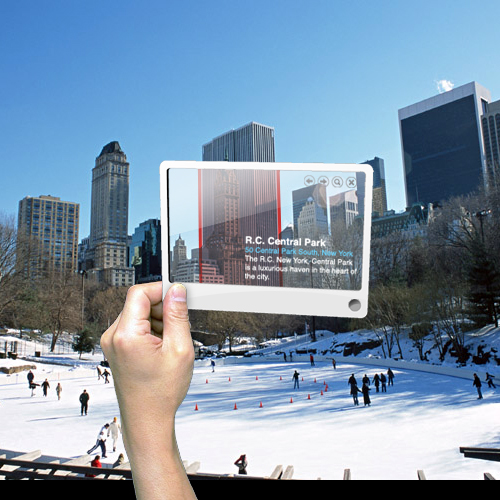 Juniper Research, makers of research and publishers of mindblowingly big 5-year-predictions recently released a
  Mash-ups can already be seen between different kind of applications the report mentions (and, most notably, with some it didn’t mention at all): E.g. FourSquare or Gowalla are service that utilise presence (allowing your friends to see where you are). You can also share it via social networks and contact these friends (perhaps to ask them if they want to meet up as they are only 2 blocks down the road) but they have also added gaming elements (mayor of Oxford Circus or Union Square anyone?), and it was these latter ones that arguably gave the edge to the service and lifted them over and above many similar location-aware apps. The combination of a variety of the feature sets Juniper identified as being distinctly “2.0”, namely presence, social, and geo-location with other, “classic” products and services will unleash an even greater power: playful social interaction is not necessarily confined to “classic” games:
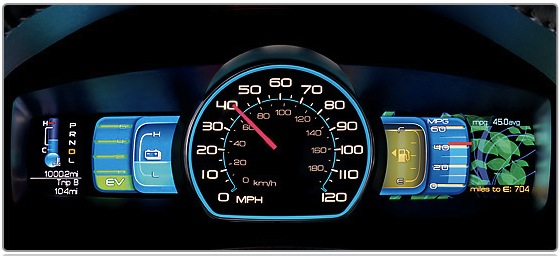 For instance did Ford take it a step further with the latest model of the Fusion Hybrid: they put something akin to a