 Nokia’s N-Gage game service has just been declared dead, well dying anyway. always been a concept that has under-delivered painfully. In its first iteration, the device, it was a gutsy but maybe not entirely thought-through attempt to combine phone and dedicated handheld gaming device (it was always going to lose as one simply looked outright silly even when putting the thing towards ones ear to make a call – even when stood at a Star Trek convention, and that is telling). The “new” iteration, the software platform, struggled to take off. Nokia tried mightily to produce showcases demonstrating the superior gaming abilities of the platform compared to “regular” feature and smart phones but the efforts were thwarted from a number of angles:
Too expensive
It was a costly affair to deliver a game optimized for the N-Gage platform. When there is no proven distribution model that can guarantee decent returns, there would always be limited uptake from developers and publishers.
Too small a niche
N-Gage was always geared towards dedicated gamers. All marketing was directed this way, the positioning was distinctly high-end, no non-game applications were shown (or even contemplated, I guess). The power of the platform thus was funneled into a niche of a niche, i.e. high-end gaming. I would suggest that one could as easily have positioned it as a powerful media platform full stop. One that allows for beautiful execution of any number of simple or complex apps (and a game is basically “only” one app category).
There’s an app for that
 The iPhone then was arguably the final punch. In spite of developer frustrations growing over discoverability within this pile of 100,000+ apps, the platform has spurned exceptional games galore, and not only casual ones either. Real Racing is as punchy a racing title as one will ever get one on a handheld. And with people flogging to the app store in drones (rather than visiting it once to rarely if ever return), it appeared a less risky (and certainly more fashionable) move to leave it at that. Notably, Apple got the positioning piece (see above) right: even though it is a powerful gaming platform in its own right (anecdotally, the good folks at Firemint managed to string Real Racing to up to an impressive 82 fps), it never looked at this as a sole or even the main focus of the platform. There is a good reason why their already famous moniker says
there’s an app for that
rather than
there is a full 3D, 60+ fps, multi-player, high-end, Bluetooth and WiFi-enabled fighting game with dedicated combo mode for that.
And Mark Ollila, Nokia’s Director of X-Media Solutions and a games and general industry veteran, nails all of this down when he says that
One lesson is the complexities of offering rich games content on a global scale. […] How do you handle the billing, the local marketing intricacies and the type of gaming experiences that work in different markets? And what do consumers actually want – is it the high-end games with connected features that N-Gage was delivering, or a much broader catalogue?
At the heart of it is the conceptually different approach of monolithic, super-rich and highly integrated platform versus a more modular approach: in Apple’s app store ecosystem (or in Android’s for that matter), you can integrate most if not all of N-Gage’s features, too: multi-player gaming, communities, trial versions, etc. But you don’t have to. The former lacked flexibility, which made it susceptible to the nimbler, faster moves of a modular system.
 Well then. It at least gives Nokia the opportunity to focus solely on building out the Ovi platform and fix the bugs it has been plagued with at the start. Nokia clearly feels the pains of the rapidly changing market place and it struggles to adapt swiftly (which is – and one should appreciate this – much harder when you are running a product portfolio that has a market share of well double your nearest competitor and stretches all the way from the most basic feature phones to the most advanced smart phones) but it has people that should be capable to turn it around. Not easy, mind you but they’re a mighty player that has shown its ability to innovate numerous times, never forget that.

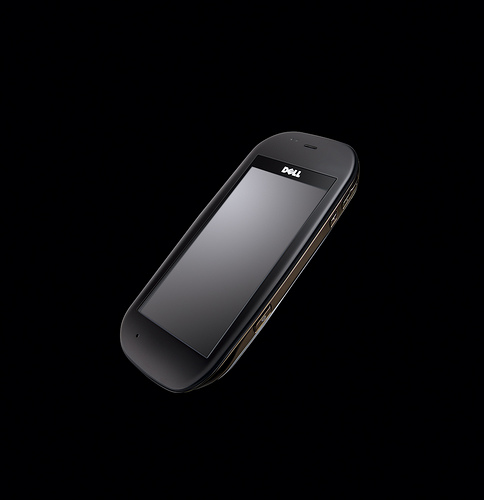
 Dell, after a lot of denials, finally confirmed release of its first smartphone, the Dell Mini 3. The device will run on Android (as well as on China Mobile’s specific Android flavour, called OPhone) and features a 3.5” touchscreen. Otherwise? Erm, not much known. No WiFi for China to be sure, at least not at the start.
 In a move that was ridiculed by some, Dell chose China Mobile and Claro Brasil as its first partners to distribute it. Some sources suggested this may be “crazy” but I am wondering why that is so? Because it’s not – no offence – Idaho? China Mobile has 508m subscribers, that is 200m more than the population of the US. Claro has 28m subscribers in Brazil, its holding company America Movil has 194.3m subscribers. That’s not shabby! And there is larger growth potential in these markets, too. The raised eyebrows may simply come from the fact that this is (or at least appears to be) the first time that a US vendor chose emerging markets as its launch territories. I would suggest that this is only the beginning: it is these markets where the large majority of user growth resides. Good move that.
 Now to the more critical points, and a small one at first: They could have done better on the marketing. Apple shows everyone how it’s done: come out with a bang and woe them. I do not think there is a need to outperform competitors on the technical side but a strong launch allows you to tell your story rather than leave it to a plethora of commentators to pave the way.
 In my last post, I hinted that the
  Why is this more significant? Because it is (like Google/AdMob) a cross-platform play that (unlike Google/AdMob) also expands the basis of business models deployed. Playfish derives the majority of its revenues from so-called virtual currencies, and in particular also from lead-generation deals (which recently have
  It was an eventful week but I shall pick
 From Google’s and Admob’s respective business perspectives, it appears to make eminent sense, too (and I am not privy to their numbers): Admob will be able to bulk up and cement its leadership position in the segment. Its inventory and back-end ad management will be able to dip into Google’s vast resources, which is great for them. Google probably realized that Admob’s strength meant that they would be difficult to beat. And who you can’t beat, you shall join (or, in Google’s case, buy) them. For Google, it is a smart move as it gives them critical mass in an ad format where they have not nearly been as dominant as for other formats and gives them access to a lot of eyeballs.