
Author: Volker Page 52 of 73

Et tu, Juniper?

It must be truly bleak: even the best friend of every young telecoms entrepreneur on the fundraising trail whose reports rarely failed to feature as a footnote in an investment memorandum for the next big digital thing now sounds a word of caution. Juniper (whose reports I still cannot afford) issued its latest report on mobile gaming and it actually reduces (for the first time, I’m sure, even if I haven’t checked) its prior predictions on the growth and size of the sector in the next, erm, 20 years…

They see growth stifled by the restrictive operator business models. Dare I say it? May they be right? They refer to Apple‘s AppStore, which is the anti-christ to every operator’s walled garden: free for all, free price-setting, Darwinian survival of the fittest (or least-charging), thousands of applications, games, etc, etc, and relatively generous revenue shares on top (although 80% of $0.00 is not very much at all).
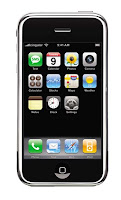
Juniper points however to 2 important and true factors: the tolls demanded by the operators to access their precious customer base are very high indeed considering that many do not provide a very compelling service in return. Secondly, marketing and marketing opportunities on-deck normally – well – suck. This was all well and good as long as their were no alternatives (other than the likes of Jamba, Thumbplay and few others). But with the ascent of the iPhone, everyone seems to erupt into a frenzy of trying to replicate the “beautifully simple and compelling UI” for which the purveyors of the Big Black Turtleneck are so famed for. This, Juniper fears, will lead to players exiting that business (I have heard unconfirmed rumours that SEGA decided to call it day on internal J2ME development following their huge success with Super Monkey Ball on the iPhone). 
Other than that though, not much new. And Juniper would not be Juniper if they would not predict “significant” growth in the next 5 years (conveniently long in order to be basically unpredictable): they see the market to roughly double in the next 5 years, which would be 20% growth per year (on today’s terms), which is not all that bad after all. 

Blyk's CEO speaks

I post on Blyk, and the next day its CEO rushes to give an interview… Was he upset about what he read and unleashed a PR storm to rescue his company to fight sentiment of the blogosphere? Perhaps, perhaps not. Well, maybe not. On the merits, there is nothing dramatically new but it is worth mentioning, I guess, nonetheless. Judge by yourself.

Blyk gets money

I know I have been depriving you lately (the day-job demanding more of my nightly attention than I would like) but this is remarkable: Blyk, the ad-funded MVNO, which I have covered previously (here and here), raised – financial crisis or not – a rather substantial amount from its existing investors, namely €40m (which apparently translates into $50.4m). Now, do they not read my blog? Or do I not get it (as Blyk’s UK MD would probably suggest).

Blyk has by now collected 200,000 subscribers and wants to roll out internationally, namely in Germany (as if the cut-throat market there, including Aldi and Tschibo’s money-scraper MVNOs, wouldn’t be enough), Spain and Belgium, which would constitute decent growth. My concerns over the financial viability still stand though (cf. here): I cannot see them making money from this longer term (unless you mean the really, really long term; then it might work). And perhaps, just perhaps, the words of Blyk’s CEO, Ala-Pietala, who noted (which MoCoNews somewhat fittingly called “ominous”) that Blyk also felt the impact of the world’s financial situation, point that way, too. Is that to say that they might have got money but they don’t make any (or not enough)? Do I get it after all?

Mandalay buys AMV

Twistbox owner Mandalay has bought European D2C firm AMV for $22.8m in cash, shares and deferred consideration. AMV operates the D2C brands Bling et al.. The new European HQ is to be at AMV’s UK location in Marlow, which presumably means a demotion of Twistbox’s Charismatix branch.

The rationale of the deal appears to be this:

The combination of Twistbox’s global on-deck distribution with AMV’s direct-to-consumer expertise uniquely positions Mandalay Media to deliver compelling consumer propositions while maximizing revenues for its wireless operator and content partners,” stated Twistbox CEO Ian Aaron.

Whether or not this position is “unique” does not really matter. And why a D2C offering maximizes operator revenues is at least unclear, too, but hey, who cares? What is true is that Twistbox runs some operator decks and has – through the old Charismatix links and its adult footprint – some decent links on a number of carriers in Western Europe. To bolster this with £10m of D2C revenue (this is the number the AMV website would make us believe) makes sense as the sensitivity of carriers to accept competing offerings outside their decks might well lessen. In this case Mandalay/Twistbox/AMV may indeed be onto something. The remaining question might be if the (current) breadth of distribution they have is enough. But it’s not the end of days…

Mandalay/Twistbox has by now ramped up a decent amount of venture cash (see here for a previous round) and is yet still seen to be breaking into the top tier. Come on, guys!

Playfish fishes for big bucks

Playfish, the social network gaming company founded by wireless industry veteran Kristian Segerstrale, announced a series B round worth a very respectable $17m from Accel Partners and Index Ventures. Playfish boasts 10m monthly users and claims that 4 of its 5 games are in Facebook’s top 10. The company also said it recently joined Google’s in-game advertising solution and presumably banks on capitalizing on this success. No word on financials but they surely are getting their slice of it (just how thick that slice is, I’d like to know). No word either on any mobile activities (which might be coming given Kristian’s background as founder of Macromedia).

Playfish’s mantra is to enable people to play games with their real-world friends via the infrastructure provided by social networks, and I can confirm that this works: I am an avid player of their games, particularly “Who has the biggest brain?” (I am no. 5 amongst my friends so far; a list which is topped by Kristian and I cannot help but think that he might possess cheat codes…).
A round of this size by investors of this pedigree raised in these times deserves our unreserved respect. You rock, guys!

No more Landlines

According to research firm Nielsen (whose mobile arm incorporates what was previously known as Telephia), more than 20m household in the US (0r 17%) have ditched landlines in favour of mobile (or as they would call it cell) phones. It signifies a rather steep increase.


Here’s the highlights of a white paper they published on the issue (which you can download here):

– U.S. cord cutters tend to have lower income-levels—59 percent have household incomes of $40,000 or less.
Smaller households, with just one or two residents, are more likely to cut the cord than larger households.
– Moving or changing jobs are the biggest life events associated with cord cutting: 31 percent of cord cutters moved prior to cord cutting and 22 percent changed jobs.
– Wireless substitutors tend to use their mobile phones more than their landline peers, 45 percent more per phone, but still save an average $33 per month in a household of one subscriber, less $6.69 for each additional wireless resident, when they cut the cord.

Now, what I do find surprising is not the fact but rather the apparent reasons given for “wireless substitution”. It is cost…

On data, Nielsen also speculates:

“Landline wireless substitution may just be the start. […] As wireless data networks improve and speeds become more and more competitive with broadband, some consumers may cut the Internet cord, as well, favoring wireless data cards and other access through carrier networks.”

Now this I understand, and the study shows indeed that wireless-only consumers use the mobile Internet more than twice as often as their primary access to the web than the good old-fashioned rest (11% vs 5%). It will be interesting to see how quick this substitution works though for the masses: people with money tend to retain their landlines, which suggests that a wireless-only solution is still less convenient. With hardware (computers, phones, etc) becoming increasingly able to access multiple wireless standards (i.e. via the mobile networks as well as WiFi, etc), this factor might however be evaporating relatively quickly.


What's a Smartphone?

Application vendor Handango published its 2008 Yardstick report, which one might slag off as some (rather shameless) PR on content consumption on “smartphones”. According to this, 

[t]he Games category leaped from fourth place at year-end 2007 into the second spot behind the Entertainment category.

It also reports that

‘Ringtones’ was the most searched term in the first half of 2008, and ‘games’ was a near second, up from number three in the second half of 2007. ‘Themes,’ ‘GPS,’ ‘weather,’ and ‘music’ also make the list of the top 10 searches.”

Surprisingly then, in none of the measured platforms (RIM, Palm, WinME, Symbian) does a single game make it into the top 10… Now, does that mean that places 11-98 were all games? Hmm…

 I then asked myself what the heck is a smartphone? Mobile advertising guys Admob note that

[t]here is no standard industry definition of a smartphone. We [Admob] automatically classify a device as a smartphone when it has an identifiable operating systen and continually update our list as new phones with advanced functionality enter the market.

Globally, Nokia rules the pack: the top 4 smartphones are all from the Finnish giant (Admob numbers), and all N-Series devices, namely the N70, N95, N73 and N80. In the US however, there is not a single Nokia phone (or rather, as they would put it, “multimedia device”) amongst the top 20 smartphones. According to Handango, 2 Blackberry devices (8830 and Curve) were the top 2 devices, according to Admob (not representative), it was the Blackberry 8100, the Palm Centro and the Blackberry 8300). Globally, these don’t really feature: Nokia has a market share of a whopping 62.4%!  

The more interesting facts are unfortunately from confidential information from the likes of M:Metrics. Without giving too much away, the top devices for games consumption (downloaded) are the iPhone and Nokia’s N95, both with quite some margin ahead of everyone else (and the iPhone with quite some margin ahead of Nokia’s performance monster). This does indeed show that a powerful handset (or at least one with powerful UI) promotes content consumption, which is, I’m afraid to say, old news indeed.

So, no news then?

Page 52 of 73

Powered by WordPress & Theme by Anders Norén