Author: Volker Page 37 of 73

Top 10 Selling Mobile Phones May 2009

World-leading phone accessory maker Krusell has released its monthly top 10 list of mobile phones (based on accessory sales) with Nokia taking all 3 top spots.

1. (3) Nokia 5800
2. (1) Nokia 3109
3. (7) Nokia 6300
4. (2) Samsung SGH-i900/i910 Omnia
5. (4) Nokia E71
6. (5.) HTC Touch HD
7. (6) Nokia 3120
8. (9) Sony Ericsson C702
9. (-) Nokia 6220
10. (10) Sony Ericsson X1 Xperia
() = Last month’s position.

The usual caveats issued before apply again: Blackberry users don’t buy holsters because they either don’t use them (Europe) or use the ones delivered by RIM (US). On the iPhone, my guess would be that users will normally deem themselves too cool to use any that would divert from the purity of their iconic device. So, as always, make of it what you will. It’s at least an indication…

Zed Stretches its Muscles

Spanish mobile content giants Zed is ramping it up in recent weeks. First, it bought UK aggregator / distributor Player X (who just snapped up another chunk of Orange UK’s business), now it is said to have taken a majority stake in a Russian aggregator, namely Temafon (here’s also a link to the Russian article). Temfon is apparently the MCP (Master Content Provider) to the no. 2 operator in Russia, Beeline (or VimpelCom by corporate name).

This would add to their Russian activities that they had inherited via their acquisition of Monstermob, which had a subsidiary in Russia, too, namely Infon, which is said to be the leading aggregator in Russia. Now, the Russian market is a bit intransparent from the outside: a lot of the revenues are being made via data charge sharing rather than download fees. Data charges tend to be rather high, which is why operators appear to let aggregators take the lead in provisioning content. The operators get their share via the data charges anyway… With Infon and now (apparently) a majority stake in Temfon, Zed is positioning itself well, it seems, right at the sweet spot of the Russian market: not by trying to sell expensive (licensed) games via portals but by shipping its predominantly generic, home-made content through the aggregation models prevalent there. Smart!

So where does the whole spending spree that saw Monstermob (and, as part thereof, 9Squared in the US, Infon in Russia and a few more here and there), mobile Flash specialists Mobitween, Player X (with Spanish developer Gaelco in it) and now Temfon in Russia lead Zed?

Monstermob bolstered its D2C business (which was part of a larger consolidation in the space in which Buongiorno also participated). Mobitween helped them in their production efforts and spearheading Flash (which powers e.g. the Mobigamz portal on Verizon Wireless, Player X made sense for their operator relationships (O2 and Orange UK, etc.) and Temfon cements their position in what is likely to become a very large market. The closeness to Beeline will be most welcome, too.

And this, I would posit, currently drives the market of the big aggregators: get close to the operators. All of the larger players, Fox Mobile/Jamba, Buongiorno, Arvato Mobile and now Zed are concentrating a lot on the creation of MCP relationships with the carriers. It makes a whole lot of sense to them of course: the D2C market is cut-throat and low-margin because of the marketing spend required to attract attention from fairly brand-agnostic users. The models introduced to fight attrition, namely the infamous subscriptions, have not helped the name of D2C offerings either. However, since all the aggregators possess powerful content delivery and management platforms as part of their (original) core business, the incremental cost for them to run operator “decks” is lower than for pureplay platform companies who cannot cross-collateralize their platform costs by D2C business. Therefore, the big aggregators should be able to make a profit out of lower margins than others.

And Zed has – again – asserted its muscle and plays in the middle of it!

Zed do go a bit further though (in Russia and elsewhere) in that services extend significantly beyond simple content aggregation. Zed is introducing mobile services that are more comprehensive, from user-based SMS services to multi-platform entertainment formats (e.g. the “Instantly Rich” TVformat). But this probably deserves another post focussed on convergence… 😉


Carnival of the Mobilists # 176

This week’s Carnival of the Mobilists is hosted by the good folks from Taptu and you’ll find it here. This week, you will find an interview by Peggy Anne Salz with the Gypsii CEO, Ajit Jaokar reporting from the LTE World Summit and Russell Buckley’s thoughts on “Humanity 2.0” (intriguing title!). Go on, read and get smart(er)… 😉

Warner Brothers push into mobile!

They’re coming… The big entertainment players are increasingly gearing up to take charge of their mobile destinies. Whereas previously a lot of the big movie studios would simply license out the rights to mobile applications and games to independent game companies (Gameloft and Glu having been particularly active), they seem to increasingly embrace the medium themselves. Sony, Disney, Paramount – they have all recently been self-publishing on the – erm – iPhone. Other mobile platforms? The 98% non-iPhone handsets? Erm, maybe later…

Going a little further, Warner Brothers digital arm plans to release no fewer than 40 iPhone apps in 2009. And besides Warner properties like “Terminator Salvation”, it looks to doing on this platform what it has proven to be quite capable of in others, namely production and distribution. It therefore plans not only to publish Warner-related apps but wants to assert itself as a leading distributor of mobile apps full stop.

It banks on its might and star power claiming that developers would struggle to find Apple’s ear. And there is certainly truth in this as a major studio (with all the marketing muscle that comes with it, may well be of more appeal to Apple when it comes to accentuate the wild growth of its 30,000+ apps on the app store. The return of the old publishing model then?!

But, well, they all do it not on just any mobile but on the iPhone only (I hear you sigh…). So why only the iPhone? 1.x% market share and all? Well, it’s simple and it’s powerful: Warner mentioned that “it doesn’t cost a lot to launch an app”. And that is probably true for the iPhone (at least when you are used to movie budgets). However, it could not be less inaccurate for “classic” mobile: one needs all the carrier distribution agreements, battle handset fragmentation and ends up with a product that is inferior (apps and games on J2ME devices will often fail on the “smallest-common-denominator” rule and lack polish when compared to the iPhone) and much more expensive to produce. Hey, carriers and OEM: another call to simplify and unify your platforms!

YOC buys Bluestar Mobile

Consolidation in the mobile marketing space: German mobile marketing group YOC, a publicly listed company with revenues in Q1/2009 of c. €6m announced it has acquired Bluestar Mobile, the people known to British readers as the guys behind all the wonderful girls of the Sun on mobile (and, no, they also work with others such as the Guardian, Motorola or Bacardi). No price was disclosed. However, since YOC trades in the prime segment of the Frankfurt stock exchange, it will have to provide some details of the transaction in due course…

YOC is a giant in the German mobile marketing market (the vast majority of its revenues comes from its home market) where it runs campaigns for a lot of the marquee brands, including Mercedes, Sixt, Walt Disney, Coca Cola, T-Mobile, Sony, etc. However, its international revenues were rather small: its biggest foreign market was the UK with €400k revenues in Q1. Bluestar, which had built a nice business (according to YOC’s PR “profitable from inception”), will nicely add to YOC’s activities.

It seems the two follow virtually identical business models – full-service mobile marketing firms that run everything from concept, planning and execution of campaigns via inventory management and ad-serving solutions to creation and operation of mobile internet portals.

When you look at YOC’s share price, the strategy appears to work: whilst the German small-cap index dropped more than 40% in the last year, YOC’s stock rose by nearly 20%. All good then!

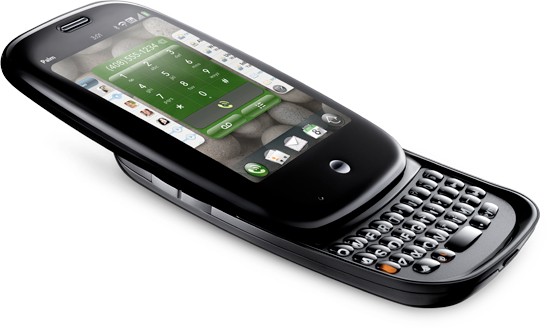
Palm Pre syncs with Apple, and more!

Palm came out with a bit of news that reiterates the old wisdom of joining who you cannot beat. The Pre will apparently be able to sync with Apple’s iTunes and iPhoto apps. Apparently, the Pre makes iTunes think it is an iPod or something. The whole thing apparently fails on the DRM side, so no “old” iTunes for the Pre then… What Apple will say to this? Well, that remains to be seen. They surely won’t be happy. But on the other hand, they will probably want to avoid any in-depth tussle over the question of their proprietary software, monopolization and all.

We also learned that, because Palm Executive Chairman Rubinstein is an old Apple hand, “the engineering culture at Palm bears some similarities to [Apple’s]”. There you have it.

But the Pre is doing even better on the music front: its MP3 player includes onboard support for Amazon’s MP3 Store. Files are downloaded directly over the air to the device. Now that’s pretty cool!
More coolness comes with search: the Pre searches, and then – if you want – it searches some more, in Google, in Twitter, … Neat, very neat!

Now, on to the app store. Oops, it is called “web catalogue” at Palm. How many apps at launch? Um, “a dozen or so”… Ah…

So will it succeed? Of course it will: according to Roger McNamee, managing partner of principal Palm investor Elevation Partners, all iPhone users with expiring contracts will switch to the Pre at 4.25pm. There you have it, again!

Android Wave rolls in

No, this post will not muse over Google’s new Wave announcement today. I rather wanted to give a brief update on the wave of Android devices that is promising to roll in over the course of this year. I had posted on this before (e.g. here and here), and Google, at its Google I/O developer conference gave a hint (yes, funny enough through Yahoo! News…) on the size of the deployments we can expect this year. And its not bad at all: 18-20 Android phones this year tells us Andy Rubin, Google’s Sr. Director for Mobile Platforms. The article then goes on to quote a number of analysts on earth-shattering insights but let’s leave these aside.

Android’s advantage was always going to be two-fold:

  1. As an open-source platform based on a Linux kernel it would be a) cheap and b) stable. This is invaluable for handset manufacturers as it reduces their development costs for new handsets significantly. I have no hard numbers but the rumoured ones are fairly high…
  2. Because it is a stand-alone OS rather than a combo of hardware and software (as the iPhone or – at least for the time being – Blackberry devices are), it will be used and deployed by a plethora of manufacturers rather than only one. And, well, this results in many more devices in the market (think MS DOS vs. Apple OS).

And this is now starting to show…

In terms of increase of “smart” phones (and these will, I would suggest, in the future include models we would today class as “feature” phones) this is seriously good news. How a slick and versatile operating system can spurn extended use of a mobile device beyond voice and SMS was impressively shown by the iPhone (8% smart phone market share equal 43% of web requests). Others are catching up (cf. here and here) and the more is the merrier when it comes to providing devices consumers actually can use. Avoid the term of “educating the consumer”; the consumer is quite educated but if people need a customer service helpline to even open the box (courtesy of a cider ad in the UK), one must not be surprised that people do not use it. Ease of use rules and well-made operating systems support that.

Page 37 of 73

Powered by WordPress & Theme by Anders Norén