
Author: Volker Page 29 of 73

Enter One-Click on Mobile – Amazon & Handmark

Here’s a nice deal: smartphone content specialist Handmark integrates Amazon’s new mobile payments service into its mobile content stores. This includes, most notably, also the famed (and sometimes damned) 1-Click functionality whereby users can (just like on iTunes; Apple licenses the 1-Click patent) buy content with just one click. The store will then use whichever credit card they have previously entered. To mobile users, bruised and tired of multiple clicks and onerous navigation to purchase a single piece of content, this is a true piece of added value (and one that was often hailed on Apple’s benchmark app store).

From what I can see, Apple still leads in the fewest number of clicks but Amazon’s offering comes relatively close. Amazon’s service seems to offer a wider range of functions though: a user can pay, reserve, settle, run refunds, cancel, etc, etc, and, last but not least, a fairly established and recognized dispute resolution system, all through the Amazon API. Rather neat indeed! The transaction fees then are a dream for every mobile content provider: in the ranges customary for mobile content ($0.99-9.99), the fees range from 1.5%+$0.01 for Amazon Payments balance transfers to 5%+$0.05 for credit card payments. This, dear carriers, equates to a revenue share to the provider of 90-95%!

We will arguably see a whole range of app store providers taking this model up, in particular amongst those without a prior billing relationship. Carriers might be tempted to license the model, too, in order to facilitate the order flow (although I doubt that they will adapt the revenue shares, too): I would be surprised if Amazon could not adapt the back-end to integrate with a carrier’s billing module (although those commercial discussions would surely be interesting…).

It is a compelling case of transferring an existing brand with proven ease of use to the mobile web (where it will thrive first) and app stores the world over.

Unsung Heroes – SendMe Mobile Looks at $150m revenues!

With smart phones, app stores and the likes being all the hype, some of the commercially more successful mobile entertainment companies over the past several years tend to be, well, maybe not forgotten but dropping out of the limelight. I am talking about direct-to-consumer (D2C) providers.

Mobile D2C has been a much-maligned segment: Jamba/Jamster (now Fox Mobile), Zed, Buongiorno (or rather its Blinko consumer brand), Thumbplay, Playphone, and then the ones that have been gobbled up by competitors or fallen by the wayside over time such as Movilisto, Jippii, Monstermob, I-Touch, etc, etc. And the bad name was, at times, fully justified. Various subscription scandals, resulting class actions, general discomfort by consumers on how to handle this new type of service offering (and how to get rid of it again), they’ve had it all.

But what they also have is a real business. Just about the only awe-inspiring numbers the mobile content space has seen came from D2C players: whereas numbers are – as usual – a little hard to come by, Zed had previously been reporting monster revenues, Thumbplay is said to be the US market leader and grew from 2007 to 2008 by a cool 275%, Jamba was past the $600m mark already back in 2005 (I do not have more current numbers).

There are companies however that tower over much, much better known mobile entertainment companies but largely escape the hype, and one of them is SendMe Mobile. Their founder & CEO Russ Klein recently revealed the company’s revenues, which are a not too shabby $10m — per month — and looking to ramp up for a cool $150m p.a. by the end of this year! So Russ’ company, which was founded only in 2006 and which deals with the relatively mundane end of mobile content outsells probably the vast majority of mobile entertainment firms on the planet. So who has heard of them? Many, many of their customers, I suppose.

SendMe has raised around $35m in venture capital to get here and doesn’t expect to needing anymore. SendMe also runs a mobile social community (MBuzzy) and has a reverse-auction service (SoLow). And that’s it. Easy, huh? I tip my hat, Mr Klein!

Carnival of the Mobilists #194

Ahead of CTIA later this week, this edition of the Carnival of the Mobilists is being hosted by Tsahi Levent-Levi on his VoIP Survivor blog. This week brings an incredible line-up of topics and contributors: A couple of posts on mobile advertising (including mine pleading for engagement as a crucial factor of ad success), the ideal app store, mobile learning and a whole host on the use of mobile apps in the workplace (including one with a Blackberry in a bakery!) and corporate environment in general plus a look on service and feature requirements for mobile phones in the developing world.

All very good indeed! So head over and set aside a good hour to read! You’ll find it here.

droidcon: Android Conference, Berlin (4 Nov 2009)

As Android continues to roll out (at least 18 devices by year-end), the ecosystem around it starts to sprout, too. To highlight this, an Android-centered business and development-oriented conference, Droidcon, will hit Berlin on 4 November, and I will be giving a keynote on licensing models and open source (full programme here).

It looks like a very exciting event, so I’d like to encourage everyone to come (there are 4 parallel tracks, so you do not have to listen to my ranting…)! Register here (and, no, I do not earn a commission).

I’ll post a little preview on what I will be talking about more specifically ahead of the event, so stay tuned.

The Future of Advertising is in Engagement!

A lot is being said about mobile marketing, mobile advertising, capturing “consumer’s” imagination (if not only their eyeballs). And everyone says: “yes, I get that, social, mobile, always-on, always with them, cool!” Online ad spend outstrips TV already (at least in the UK), and mobile is arguably the next big thing; it is so much cooler, too: personal, accessible, always-on!).

So how do you execute? Banner ads? Text ads? Virals? “Ah, yes, virals are cool, I heard about them!”

There’s a busload full of mobile advertising networks out there, blind, premium blind, premium (check here for a great overview). And what do they do? Well, banner ads, text ads, the usual. Does it work? Anecdotally, sort of… Most developers and publishers I know that engage in this sort of activity make their money in two ways: either they are being commissioned by an advertiser to do it (good because you’re being paid!) or they use it as complementary (sic!) revenue; on a stand-alone basis, it would not feed them.

Why is the conversion not soaring? After all, mobile allows for unprecedented targeting (IF you do it. See here how not to do it): users have their phones always with them, it is always on, you can fall back on historical behaviours, etc, etc.

I would posit that it is because most advertisers still think of it in terms of consumers: beings that sit on the other (sic!) end of the message and who consume whatever I, advertiser, want to tell them. It is not, alas, true engagement, and this is where arguably the future lies.

So how do you engage? Many options. A good one is by being sincere (Zappos, the online shoe retailer that was recently acquired by Amazon, is a great example). Another one is by engaging rather than preaching. Not so easily done with banners. Easier done with something more interactive. Such as – an example – games and apps. On Apple’s app store, there are some great successes for this type of thing: German car manufacturers seem to be good at this! Audi did one, German developer Fishlabs did a couple of games for Volkswagen, Artificial Life for BMW, and then there is Waterslide Extreme, which is basically a Barclaycard ad (and badly executed: they could so easily have accommodated the RFID function, which the original cinema and TV ad is meant to promote; alas, they ignored it!) which despite its shortfalls was incredibly successful. But these are exceptions to what I think might well become the rule. On the app side, there are e.g. Pizza Hut and Gap that were recently featured (for free!) in Apple ads. Wow!

It seems obvious when you think about it: games truly engage (users – not consumers! – interact with them actively) and they can do so in a much more subtle manner (less invasive). At the same time, the user (not: consumer) spends a lot more time with the brand than with a banner ad.

It is, alas, a space of unknown dangers and unprecedented adventure: never-before seen creatures (scil. formats) and strange folks (scil. developers) roam weird landscapes (scil. mobile platforms). This is how brands and their agencies often experience mobile. They "get" it, don’t get me wrong but they are still fairly unfamiliar with it. And because the big pots of gold sit with the brands and they don’t want to risk cutting access, they’ll rather (and rather too often) stick with what they perceive as the trusted old paths. It’s not so good then that the freshest fruit grows on the trees in this new land and no longer in the wastelands of banner ads…

Watch this space then. It will only be a question of time (I hope) before we’ll be seeing a new wave of non-intrusive, interactive, fun brand engagement. And games and apps will lead the way!

O2, Orange/T-Mobile, and now Vodafone: iPhone everywhere in the UK!

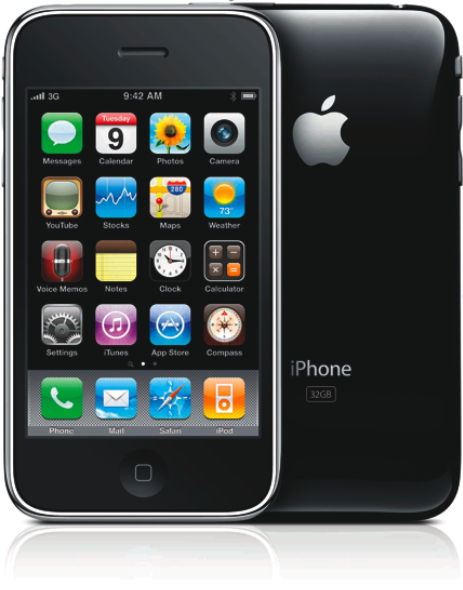
After the news broke that Orange will add the iPhone to its roster from just before Christmas, today we read that Vodafone UK will do the same, only a little later, some time in Q1/2010. Vodafone said that not having the iPhone was basically the reason for losing 200k customers in the last quarter alone. Vodafone had previously been shipping the device in 12 other territories.

With Orange and T-Mobile merging their UK operations, the new set-up which sees basically all large operators offering the device should make for some juicy deals. Analysts reckoned the contract tariff for to come down by £4-5 per month. Orange did not say anything specific but “indicated” that it would be cheaper than O2’s deals.

According to the article, Virgin Mobile (an MVNO that sails on the Vodafone network) is also “understood” to be desperate to secure the right to sell the phone. Happy days…

Mobile Browser-Based Flash Games?

Today, I read a press release from UK firm MoMac who announced the launch of a browser-based games platform, which uses Flash Lite. I had been looking at the use of Flash Lite for mobile gaming quite a while ago (2 years back in fact; see here and here). The front-runners on this (not browser-based but downloadable) was Mobitween, a French company that was bought by Zed last year. Back in 2008, the estimated install base of Flash Lite on mobile phones was already approaching half a billion, so just ever so slightly more than there are e.g. iPhones. In principle, all good.

But where did it go from there? uGenGames, the company’s original user-generated games site, seems to be stuck where it was back then. There is still the showcase of mobiGamz, a Flash-Lite-based gaming portal on Verizon Wireless. But otherwise? Nothing much…

So MoMac will do it in the browser then. I don’t think it makes that much of a difference but, given my early enthusiasm, wondered where the pitfalls (of which there apparently are some; otherwise it would have taken off more forcefully) might be. So where then?

I have argued in the interim the advantages of applications vs mobile web, and this still stands: apps often will give better usability and navigation tailored to the input constraints of (small) handsets when compared to browser-based solutions.

Discoverability might be another – albeit perhaps short-term – constraint: people are not (yet!?) used to looking for games (or other “applications”) on the web. That is arguably one reason of the huge success of the app store: it does what it says on the tin and it is very easy to discover.

Billing would be the third big differentiator: Apple managed what probably only a brand of Apple’s power can command, namely that people happily and without second thoughts sign up with credit cards and all via iTunes. To replicate this somewhere on the open seas of the wide web is almost certainly wishful thinking at best. The only other companies who have as easy a billing interface are the carriers who will almost always be more control-minded than independent service providers might wish for. MoMac claims that

the first casual games portal to go live on major MNO’s in October

and that might change things in this department a little. However, it will arguably take a few of those major MNOs in order to make it worthwhile for developers to address the platform.

A fourth point – and this is following from the above – is content. MoMac seems a little light on this side. It claims the availability of 30 games through its partner Booster Media and, with no disrespect (!), they do not seem to have the most compelling stuff available. This of course is nothing that comes with the concept but perhaps with the (current) offering, the announcement of which I believe might actually have come a little early because of this.

Anyway: the principle is (still) great, and I really wish them all the very best. Keep me up to date, guys; I’d love to publish a retraction of my take here…

Page 29 of 73

Powered by WordPress & Theme by Anders Norén