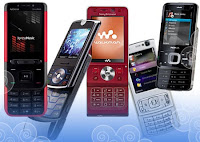
 The title of this post is not meant in any way derogatory but with all the hype about the iPhone it is sometimes easy to forget that we are talking about a niche product that will probably remain a niche product (albeit a powerful and cool one!). In the rest of the world (feature phones aside), a few consortia are fighting for the open-source market, which is – let’s face it – a considerably larger piece than the small premium segment served by Apple.
LiMo Foundation

LiMo boasts a
membership based comprised of the Who’s Who in mobile. Powerhouses from around the world like
Vodafone,
Orange,
Verizon Wireless,
NTT DoCoMo,
Telefonica,
SFR,
TIM and
SK Telecom,
Samsung,
NEC,
LG,
Panasonic,
Huawei,
Motorola, and
ZTE (and quite a few more) are all in there. LiMo has released an SDK
a while ago. Now though, they decided that enough is enough and that the world should know that their OS was actually making headway. In 2009, there will be new handsets based on LiMo’s s
tandards released by Orange, Telefonica, Vodafone, NTT DoCoMo, SK Telecom and Verizon Wireless. Now, that’s a
statement. Non-phone devices are in the works, they say…
There are already more than 20 LiMo phones out there (without very many people having realized it). They include such mundane devices like Motorola’s U9, ROKR EM30, ROKR Z6 and ROKR E8 as well as the RAZR2. Panasonic and NEC pboth produced a whole raft of devices for NTT DoCoMo. See here for a
list of available phones.
Symbian

Symbian of course is coming from a differen
t mould: having been (co-)owned by Nokia for, like, ever, there are already over 200m devices running on its OS. After going open-source, they are working on consolidating the sister formats S60, UIQ and MOAP(S) now into one. Membership-wise, they’re not doing badly either: they target to having more than 100 members by year-end.
Membership with them is only $1,500 p.a. It remains to be seen to what extent they will extend their handset footprint beyond Nokia though. Little has been heard so far…
Android
Both foundations felt compelled to state their cause, also in response to Eric Schmidt’s continued mantra that 2009 will be very, very strong for Android. The Open Handset Alliance had gone off to a well-publicized start with the T-Mobile G1. They recently announced that it had sold 1m devices (regarding which some people pointed out that Apple shipped as many iPhones on the first weekend), and are now gearing up more devices for launch (Vodafone got its hands on the
HTC Magic). Samsung, LG, HTC and Sony Ericsson have all
announced Android devices this year, and the first Samsung (I7500) has just been officially
confirmed.
Multiple Membership
Wait a minute? Samsung? Weren’t they part of the LiMo foundation? Well, yes, and that is part of the problem: a lot of the big players have their fingers in all the pies (and why should they not?). This is favouring Apple since they are a single organization producing hardware and software. It could also be argued that it is favouring Android because Google throws so much marketing and PR behind it. However, maybe not. The big OEMs and the big carriers all work according to their own agenda. And this might very well be a very different one to Eric Schmidt’s: to an OEM, production cost, stability and versatility without impacting standardization are key. To a carrier, a lot will (also) ride on the ability to customize the handset so as to give it a distinct branded feel. Less PR from someone like Google makes it easier to them to focus on their own brand.
So: rock-solid, clean code, transparent and clear SDKs, no hidden hooks will mean that a lot of the feature phones that create the vast majority of handset sales (even if sales of the “classic” J2ME ones had been declining in 2008 when compared to smartphones) will quite possibly see a larger and larger move towards the open platforms. It makes it cheaper to produce and, with Apple having given the world the app store idea, content should flow in sooner or later. They “only” need to keep the standards, well, standard!
The iPhone is of course looming large, and it is the one device that has shown the old school of the telco world how 21-st-century marketing can impact market perception and sales. They have also all realized that this might actually be a very good thing, hence the eager discussions many are purported to be having on getting their hands on the next generation. However, last time I looked, the streets were not full of Porsche Boxsters either. Quite a few Hyundais, Fiats, Peugeots, BMWs, Volvos, well, you get it…
 It was today, 30 years ago, that NTT (now NTT DoCoMo) launched the world’s first commercial mobile cellular telecoms network in Tokyo with 88 base stations and, boy, did we come a long way since. Take fees for a start: there was a $2,000 sign-up fee and then a monthly fee of $300. On top of that, you would be charged $1 per minute voice. A handset weighed in at a cool 10kg (more than some budget airlines allow you as hand luggage these days; but then you would probably only fly First if you had one of those…). Nokia was still into wellies at the time, I think… 😉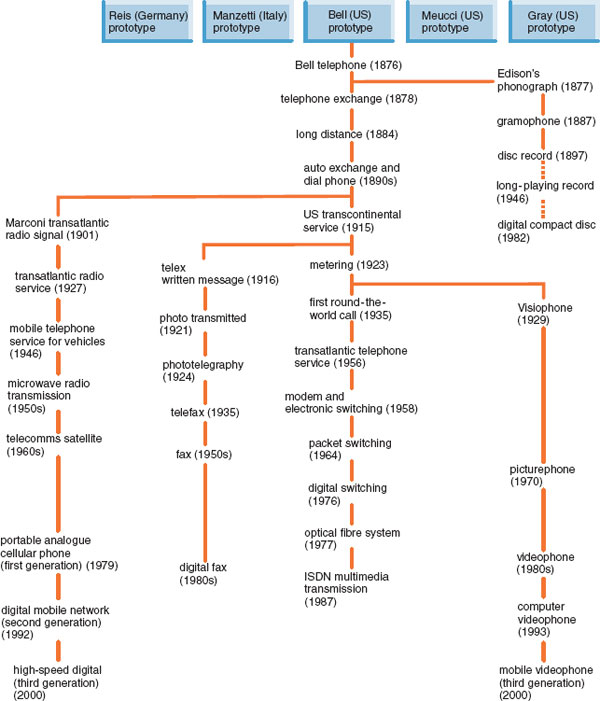
 The conference formerly known as Symbian Smartphone Show (or something along those lines) is back this year as the Symbian Exchange & Exhibition (or SEE09). It kicks off this Tuesday in London’s Earl’s Court Exhibition Grounds and boasts a rather impressive line-up:


