Angry Birds Or Wings of Distribution

A lot has been written and said about the “gaming” phenomenon that is Angry Birds and the meteoric rise of its maker, Rovio, from Finnish minion to a powerhouse that it is today: 1.7 billion people can be reached, by my own back-of-the-envelope calculations, there will be on average (!) more than one Angry Birds game installed on every iPhone, etc, etc. It claims more than 263m monthly active users and has a YouTube channel that boasts more than 1 billion views (and which is, funnily enough, still run by “Rovio Mobile” rather than “Rovio Entertainment”). As of late, they also are their own ad agency.

More Than a Game

However, whoever thinks that Angry Birds is just the Crazy Frog of the smartphone age, think again: The company was astonishingly quick to turn its games into a lifestyle brand. And it does so with a refreshing chuzpe and gusto: It has announced a feature film. Now, this many have done (or tried). However, Rovio was not content to flog a license to one of the big studios. Oh, no. It hired top talent itself: John Cohen (“Despicable Me”) and David Maisel (“Iron Man”) joined and Rovio will produce the whole thing itself. Lock, stock and barrel.

The challenge for branching out in other verticals used to be distribution: how on earth will you get your movie into cinemas? If you don’t launch on 6,000+ screens in the US, you are not a AAA release (which is certainly what Rovio is after). But then, the same was said on theme parks (there are now more than 20 of those), soft drinks (Rovio outsells Coke and Pepsi in Finland and rolls out the drinks  across other countries quickly) or merchandise (yes, you can not only find them on pop-up stalls outside the Ferry Building in SF but also in Toys’R'Us). You can – of course – also get an Angry Birds pre-paid debit card!

And they did it (well, most of it) entirely on their own.

Angry Birds Toons: Widest Reach Ever – On Day 1

Now then, last week, the birds descended unto Austin for the annual digital bonanza that is SXSW and announced Angry Birds Toons, their new animated series. They also announced how they will distribute. And this caused a few gasps (and probably red ears in and around Hollywood)…

They did a few traditional syndication deals in Australia, India, France, Germany, Brazil, Norway, Finland, Indonesia, Korea, Ukraine, Chile, etc. But the big things is this: because, you know, they’ll push it down the pipe to their entire install base. I reckon this will make them the most widely distributed animated series anywhere in the world. Bar none. Instantly. I bet some network execs get sweaty palms when calculating the data that will hit their networks…

Direct Reach

And this is why Angry Birds is a lot more than a gaming phenomenon: Rovio has a direct channel to more consumers in the world that anyone I can think of. What if Coca Cola, Disney, GM, the NFL, GE, Exxon, whoever would want to speak to their fans directly? Big campaigns, many millions of ad dollars, no direct channel back to gather feedback – unless you count their respective Facebook pages and Twitter accounts but, hey, those are a lot smaller than that and, most importantly, they ride on someone else’s platform where they compete with a ton of other brands, pictures of kittens, babies and snow and a plethora of status updates. Rovio simply adds a button to all those games and keeps expanding its grasp of user attention.

Very impressive indeed, my friends!

Amazing Alex? Really amazing?

Now, to get this out of the way: I am a Rovio fan, and I have been for much, much, much longer than most. I have published their very first game – Darkest Fear – and I have published a few of their pre-Angry Birds titles after that. So do not accuse me of Rovio-phobia; there is none…

So, I hope you will understand that I was pretty excited when they announced their first post-Angry Birds title, Amazing Alex. Alas, am I excited? No, not really. Now, don’t get me wrong: it is a beautifully balanced, nicely polished game. Nothing wrong with that. But is it really something über-special? As in Angry-birds-we-will-show-them-special? Erm, I think not.

You say though that they are on #1 in 30+ countries and on #2 in 30+ more (or so the Mighty Eagle tells me over Facebook and Twitter). You say that this amounts to an astonishing success, an impeccable launch. And, yes, I agree. But, aside of the impressive launch power and impeccable marketing and all, is it great? I think not. And, yes, I am disappointed. Rovio has been one of my favourite studios, long before Angry Birds. It is why I have been behind them with previous games, why I tried to push them when their talent had not been amplified by their awesome and unprecedented success of Angry Birds. But… Someone who wants to replicate Walt Disney needs to do better. Folks, you have to follow Mickey with Donald. Is Alex Donald? I think not…

I do hope – sincerely – that they will pull it of. Not because my day job at RIM requires me to stay in their good books, but because I believe that the birth of a new creative powerhouse outside of old-school Hollywood is a seriously good sign for the world, and last but not least because Michael, Peter, Andrew et al are really good people! But I do not think Alex is nearly as amazing as Donald Duck is (or Bugs Bunny for that matter) and I am hoping they will bring it with future iterations!

Come on, my Mighty Eagle and other birds: we really could do with a new Disney; it’s been way too long…

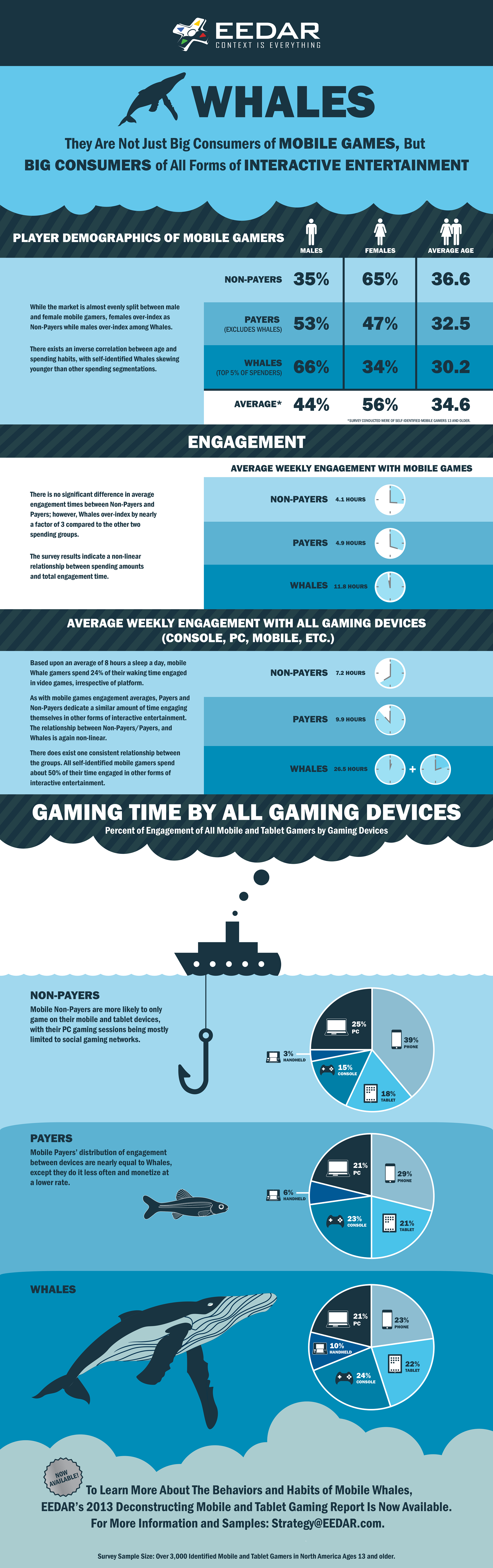
The (Big) Business of Mobile Games [Infographic]


OK, this suffering a little from the usual simplification inherent to this seemingly favourite pastime of many, namely of creating infographics, but I thought there were a few interesting bits in there nonetheless, so enjoy… :)

little-games-big-business

Angry Birds fly ever higher…

A fresh new year and it is time for the latest numbers of the Angry Birds phenomenon, and they are impressive indeed!

Most mobile game developers would be quite happy if their game would clock more than 5m downloads. Hell, they would probably throw a massive office party for that! Well, Rovio made more than that in a day (OK, it was Christmas Day): 6.5m copies of the various Angry Birds games (paid and free) were downloaded on 25 December 2011 alone. Woah!

The formidable Stuart Dredge treats us to some more background on Angry Birds. To cut it short: by December 2011, Angry Birds had more than 600m downloads. That is more downloads than people living in all of North America – all the way from Alaska down to Panama! About 1/3 of those are monthly active, 1/8 daily.

Given that they also make money (seemingly nearing $100m in revenues) and not only from games but from selling 1m toys and 1m t-shirts per month, too, it is perhaps understandable that they are said to have rejected a $2.25bn acquisition offer by Nasdaq newbies Zynga. I can understand that they may not have been too thrilled to work under the hard-charging (according to some, too hard-charging) “CityVille-ains” but I still wonder if that would not have been a worthwhile cash-in (though it would arguably have been a share deal and Pincus only knows what on which valuation of Zynga that would have been based!).

Rovio has great plans, they are hiring senior entertainment talent (Dave Maisel of Marvel fame for instance), they are diversifying quickly, they execute with adorable flawlessness. But they have not yet shown that they are capable of repeating the creative spark with equal vigour and verve. On the one hand, they are a very, very talented bunch (I published games by them previously: great content and lots of polish). And they have some serious reach now, which gets them a lot of promotional punch. They have also been great in getting out on as many platforms as possible to make sure to fuel the brand as a true mass market proposition rather than contentedly sitting on iOS only and being happy with that niche (bear in mind that J2ME is still many times larger than iOS in terms of reach; for brand awareness of a consumer brand, this is a crucial factor).
However, it is a hit business, isn’t it? And I doubt there is a recipe (or that Rovio has it): Anecdotally, Chillingo, the publisher of the original Angry Birds on iOS (subsequently acquired by EA), uses its Chillingo label for the “premium” games and their Clickgamer for the rest. Angry Birds was published under the Clickgamer label. So did anyone know? I don’t think so.

I would love to see them thrive because they deserve it: they are a hard-working and lovely bunch. So go, my good folks, mighty Eagles, Albatrosses and the whole swarm!

Conference: Games For Brands

A fairly wonderful conference will open its doors on 27 October in London, UK, namely Games for Brands, an event where we will do just that: investigate if and to what extent games may work for brands. Just speak to Barclaycard (their Waterslide Extreme game [done by Fishlabs] did more than 14m downloads on iOS) or Volkswagen (multiple games by Fishlabs [again]) for the Polo and others and a special VW Golf GTI edition of Real Racing by the recently acquired Firemint).

The event features a fairly cool line-up, too, including speakers from:

  • Rovio (they of Angry Birds fame)
  • Channel 4
  • Google
  • PlayGen
  • BBC
  • EMI
  • King.com
  • LoveFilm.com
  • Tate
  • Wellcome Trust (yes, they’re the Glaxo Wellcome guys)
  • Aegon
  • Matmi (they did games and apps for instance for Lily Allen, Gorillaz, United.com and Vimto – the seriously mixed-up fruit)
  • and, yes, I will be talking again, too (but when don’t I?)

I also have a goodie for the readers of this blog: four of you can get a very special discount and attend for £95.00 only. Tempted? Contact me (either via e-mail or Twitter or through the contact form here).

It’ll be a good one, so come along! :)

Conference: Mobile 2.0 Europe – Open Ideas (Barcelona)

The ever industrious Rudy de Waele and his team are staging the next version of Mobile 2.0 Europe in beautiful Barclona on 16/17 June 2011. Last year’s version was awesome but this year they seem to have upped the ante significantly again. Staged in Telefonica’s mindblowing R&D centre Diagonal 00 (just look at the picture, for heaven’s sake!) and boasting a speaker line-up that should everybody get going!

It’s a developer conference, so none (or little) of the usual preaching but you will get more hands-on workshops on everything from app store marketing to HTML5 development. And all this in summery Barcelona! Go on, sign up here!

And if all that is not enough, here’s a selection of the people that will speak with you, work with you, talk to you (a full speaker list is here):

  • Peter Vesterbacka, Rovio (yes, he, the Mighty Eagle of the “Angry Birds” guys)
  • Daniel Gurrola, Orange
  • Sanyu Kirulata, Blackberry
  • Reimund Schmaid, Nuance
  • Carlos Domingo, Telefonica I+D
  • Jose Valles, BlueVia (Telefonica)
  • Lucas Allen Buick, Synthetic (they of “Hipstamatic” fame)
  • Matthias Sala, Gbanga
  • Andy Goodman, Fjord
  • Caroline Drucker, Soundcloud
  • Vincent Hoogsteder, Distimo
  • Andreas Constantinou, Vision Mobile
  • Tom Hume, Future Platforms
  • John Roberts, Quostodian
  • Yes, and yours truly will also be there :)

See you in the sun very soon! :)


Mobile Games Publishing in 2011

I have been blogging way too little recently, so here’s – finally – a bigger one again.

What is a Publisher?

I have recently been asked more and more what the role of a publisher in mobile gaming is today. I mean, heck, there are now even websites proclaiming the (traditional) publishers’ death. On the other hand, venerable old and ruthless new ones are on a spending spree acquiring – seemingly – studios and smaller publishers by the dozen: In the past year or so, EA gobbled up Playfish, Chillingo and Firemint (and probably a few more I don’t know of). Zynga, even hungrier, absorbed XPD Media, Challenge Games, Conduit Labs, Dextrose, Bonfire Studios, Newtoy, Area/Code and Floodgate Entertainment. So what is right?

According to Wikipedia, a videogame publisher is (was?) someone who

publishes video games that they have either developed internally or have had developed by a [...] developer. [...] They usually finance the development [...]. The large video game publishers also distribute the games they publish, while some smaller publishers instead hire distribution companies (or larger video game publishers) to distribute the games they publish.

Other functions usually performed by the publisher include deciding on and paying for any license that a game may utilize; paying for localization; layout, printing and possibly writing of the user manual; and the creation of graphic design elements such as the box design.

Pretty old-school stuff, you say? Erm, yes. Broken down from its beautifully naive pseudo-scientific language, we arrive at the following:

  1. Publishers pay for development (i.e. absorb the development risk). This could also be classed as project finance.
  2. Publishers pay for licenses, another case of project finance – unless of course they pretty much own (legally or, through long-term licensing relationships, factually) certain IP.
  3. Publishers provide a bit of gloss and lots of marketing around a title to help it on the way.
  4. Publishers – sometimes – distribute.

Is the Same in the Digital Realm?

Now, the Wikipedia definition pretty much focuses on traditional console and PC publishing, it seems (box art anyone?). And this is where the new world sharply departs. No box art, no Walmart or GameStop deals are required if digital distribution is in place. How difficult can it be then for the more modern, more evolved (?) world of digitally distributed and, perhaps (but only perhaps) even more specifically for mobile games?

Nos. 1 and 2 above are pretty much arbitrary parts of the puzzle: you can get money from many places (or not of course) but it is a financing game, and video games could be called a specific (because intrinsically hit-driven) asset class. That is to say, these are not unique attributes.

No. 3 is a combination of money, know-how, experience and network. The more complex the landscape the higher the value of a specialist in the field.

No. 4 is, well, arguably a much easier game when you can feed your distribution channels from your own desk – via the Internet. However, again, the more channels you need to serve, the more complex the landscape, the higher the value of someone "who knows".

Nos. 3 and 4 are – arguably – what made Chillingo (based in the same honest North-West English town as I am) what it is (or, prior to its acquisition by EA, was): Chillingo seems to have had a knack of identifying good or at least decent games and promote them effectively across digital channels. Alas, their biggest hit, Rovio’s Angry Birds had not much good to say about them in terms of support. And indeed, if one looks at what Rovio did with its hit title outside of the Chillingo relationship, one can argue about the value add it had received from its publisher. But then again, Angry Birds seems to have been one of a kind, and there are other titles Chillingo brought to reasonable success that may not have had the same success – be it for lack of a Mighty Eagle such as the fearless and tireless Peter Vesterbacka or otherwise.

Changed Metrics

Chillingo, alas, is not where it’s at, I think. The war is being fought over those (in)famous MAUs – or monthly active users. You see, if you can command those hundreds of millions and parade your own wares by them, the likelihood of your next game becoming a success rises: Digital connectivity solves the dilemma of publishing of old, and that was to attract the attention of the gamer (your customer!) for your next release.

In a box-product world, you had to shout again, and very loudly, in order to have your customer part with his hard-earnd monies for the benefit of your title rather than your competitors’. This is – arguably – why EA Sports sponsors UK football (scil. soccer) broadcasts: "please, God, let people not defect to Konami’s PES from my very own EA FIFA".

Now, Zynga laughs all the way to the bank on this: if you played FarmVille, you will not have come around of realizing that CityVille was out. And you would also get additional points if you also played Zynga Poker. The result? Well, check the top-10 games charts for Facebook games for yourself. Suffice to say that Zynga is – according to the second market – worth more than Electronic Arts… Why is that? Eyeballs, addressable users, dollars spent per acquired user. That the business model is a little different for console games than it is online, doesn’t really matter for the argument here: you can drastically reduce the user acquisition costs if you play it smartly, so no need to take in $39.99 per game in order to break even. $1 or $5 will be just fine, thank you very much.

The above is also the reason for the spending spree of the publishers, I would suggest: if you can buy eyeballs and get a studio with proven skills (just check out either of Newtoy or Firemint on the mobile end), and you can combine it with a mechanism to attract people to future releases, there is a much better chance you can recoup your investment on that future release (effectively de-risking nos. 1 and 2 from the above list).

And now for Mobile!?

Zynga, EA’s Playfish and Crowdstar have shown that you can tweak the fortunes your way if you smartly combine game releases, updates and promotions to work with each other. But how is it for mobile? Backflip Studios, which rose to fame with a simple but well-executed game ("Paper Toss"), claimed to have had racked up more than 2m daily active users and 50m total downloads, mostly driven through promotion of its own titles inside, well, its own titles. Did it have a publisher? No. Does it have a very smart CEO who solved nos. 1 and 2 above and knows how to play no. 3 itself? Yes. So what about no. 4, distribution? Well, on iOS, that is a non-issue: one distribution channel to bind them all. However, on Android, it still falls short of a copycat, "Toss It", who were there earlier, are as ingenious and still rule. And elsewhere? Not much.

But we don’t have to rely on one case alone, and one by a small – though incredibly smart – studio no less. Look at Zynga’s performance on mobile. It is mediocre at best. EA though? Not so bad. What do they do? Well, apply the good old publishing principles learned in the olden world.

And this is where the specific complexities of mobile come into play: mobile is fiendishly complex. On the OS side, there is iOS, Android (in an increasing number of iterations), Windows Phone 7 (with some added spice since the announcement of their Nokia partnership), Blackberry, Samsung’s bada, and then maybe BREW, perhaps still a little bit of Symbian and J2ME. But then there are also the still mighty gatekeepers, the mobile operators. And then you will see that users tend to want to have it their specific way, ideally localized. The plethora of channels thus created makes it tough on a developer to maneuver its way through…

There are tools that can aid progress (and, yes, our very own Scoreloop provides some of them) but it is important to recognize the complexity of it all. Reaching users and convincing them with compelling offers is key to success in any world. It is important to bear that in mind in mobile, too. And if you think you cannot walk it on your own, a publisher might just be the right partner for you.

Changed Weighting

Since 1. and 2. above might not be such a big thing anymore (mobile titles can be developed for less – and, yes, I know this does not necessarily apply to the likes of "Galaxy on Fire" or "Real Racing") and 3. might be manageable but 4. might (not: always is) still be a key reason to part with some share in order to reach the user, convince the user, be able to bill the user.